 Watch on YouTube
Three questions before you negotiate
Most negotiation advice starts at the table. Deals in film, television and music start earlier, with a decision about whether this buyer, this price and these rights are worth the time. This reading route follows that sequence through three Media CFO reviews. Robert Mnookin helps you decide whether to engage. Chris Voss helps you learn what the other side needs. Igor Ryzov helps you notice pressure and keep your position. The guide then compares the three books and turns them into a one-page plan for a licensing deal.
Decide whether
Use Mnookin to weigh interests, alternatives, costs and whether a deal could be carried out.
Understand the other side
Use Voss to turn listening and calibrated questions into information.
Hold your ground
Use Ryzov to recognise pressure, silence and concessions made by accident.
1. Decide whether the deal deserves a negotiation
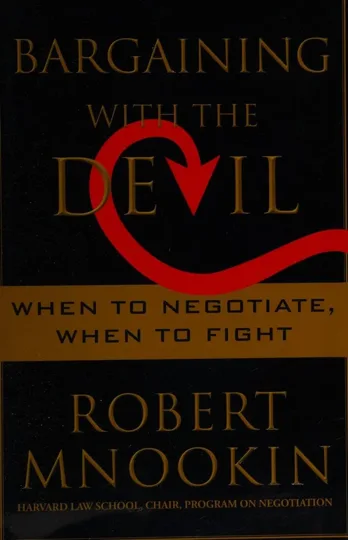
Read: Bargaining with the Devil. Our review calls it the book that asks the prior question: should you be negotiating at all? Mnookin argues that people refuse to negotiate too often, but he treats the exceptions as real. Harvard’s Program on Negotiation summarises his test as five questions: each side’s interests, each side’s alternatives, whether a deal could serve both better than those alternatives, the cost in money, time and reputation, and whether an agreement could actually be implemented (PON book overview).
The alternative is the yardstick. The Program on Negotiation describes your best alternative to a negotiated agreement, or BATNA, as a source of power and a measure of a deal’s quality. The article cites James Sebenius’s advice to treat it as a “no-deal option”, whose consequences include costs, risks and foregone benefits (Katie Shonk, PON, 2019). Write that alternative down before anyone discusses price.
Proportion is part of the decision. Manatt partner Lindsay Conner put it plainly in his 2019 Media CFO interview: “Some things just don't deserve 10 weeks of negotiation. Some things do.” Legal time, management attention and delay are costs in Mnookin’s sense. Our review notes Mnookin’s advice to consult others, because you are the least reliable assessor of your own position. Guirec van Slingelandt described the same habit, taking a question to a partner before acting: “When we have a question, we go back to the partner and say, ‘Listen, is this okay?’” A second view is a quick check on the alternatives and costs you have written down.
2. Find the information on the other side of the table
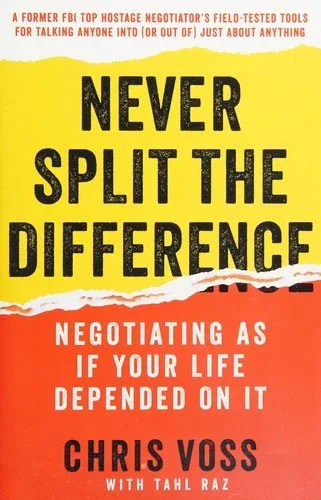
Read: Never Split the Difference. Voss starts from the view that people want to feel understood before they move. His tools are mirroring, labelling and calibrated questions that begin with “how” or “what”. Each one is a way of getting a counterpart to tell you something you do not yet know. As our review puts it, the leverage sits in what you can get the other side to tell you.
In media deals, the missing information is often the rights definition. Claire Hungate began as a barrister in the BBC’s in-house legal team and later worked in business affairs at production companies. She told Media CFO that whether the buyer was the BBC, Netflix or Amazon, these were “basic rights negotiations” over “different pipes and different windows and different territorial breakdowns”, and that “everyone used different rights definitions”. Ask what a buyer means by each right before you price it. How will you use the programme after the first window? What would a shorter term change for you? Which territories matter most to your audience? Questions like these reveal the interest behind a request. They also prepare the ground for the distribution guide’s rights map, which separates medium, territory and term.
For a written preparation format, Voss’s company publishes a Negotiation One Sheet, the companion to the book’s appendix. The download page asks you to complete a form.
3. Recognise pressure and keep your position
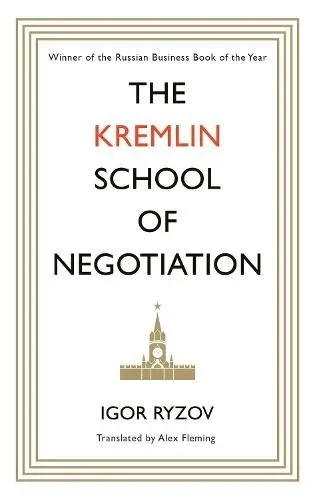
Read: The Kremlin School of Negotiation. Ryzov writes for the counterpart who is not looking for shared gains but measuring how much you will give up. His first rule is silence: the person who fills a pause usually hands over information. He then works through the real motive behind a demand, lowering tension without conceding, and saying no without ending the relationship. Canongate’s English edition presents the historical “school” as legend (publisher record). Judge the book on its exercises, which is how our review reads it.
Information discipline connects Ryzov to the Harvard material. The Program on Negotiation advises against revealing a weak alternative and warns that urgency or an open schedule can give it away. Even a strong alternative, disclosed early, can sound like a threat (PON, “BATNA Strategy: Should You Reveal Your BATNA?”). In a production or licensing negotiation, a delivery date, a cash-flow gap or an unsold territory is exactly the kind of fact a hard counterpart is listening for.
Mnookin, Voss or Ryzov? How the three books differ
| Question | Bargaining with the Devil | Never Split the Difference | The Kremlin School of Negotiation |
|---|---|---|---|
| Core question | Should we negotiate at all? | How do we learn what the other side needs? | What do we do when they are testing how much we will concede? |
| View of the counterpart | An adversary whose interests and alternatives can be analysed | A person who wants to feel understood | Someone who may not be acting in good faith |
| Main tools | Compare interests, alternatives, costs and implementation; consult others | Tactical empathy, mirroring, labelling, calibrated questions | Silence, finding the real motive, structured refusal, preparation |
| Reach for it when | A dispute, a difficult counterparty, or a deal that may not be worth its cost | Information is missing and the relationship matters | Deadlines, pressure, or a counterpart who keeps taking without trading |
| Keep in mind | A decision framework, not a script for the meeting | Assumes the other side can be moved by being understood | The “Kremlin school” origin story is packaging; the exercises carry the value |
The books disagree in a useful way. Voss believes the person across the table can be moved by being understood. Ryzov assumes some of them are simply measuring what you will surrender. Mnookin asks whether you should be at the table at all. Read together, they cover the decision, the method and the adversary.
Prepare a one-page negotiation plan
This invented example shows how the three books fit on one page. It is a teaching exercise, not a market rate, a standard deal or advice on a real transaction.
The situation
An independent producer has finished a feature documentary. A streaming service offers $150,000 for exclusive worldwide rights in all media for seven years, half on signature and half on delivery. The producer also holds a written offer of $60,000 from a broadcaster for one territory and three years. A sales agent estimates $70,000 of further licences in other territories, at a 20% commission, but none is contracted. The two routes cannot both be taken.
Value the no-deal option (BATNA) before the offer
| Line | Calculation | Value |
|---|---|---|
| Written broadcaster offer | One territory, three years | $60,000 |
| Estimated further licences | Sales agent’s estimate, not contracted | $70,000 |
| Less sales commission | 20% × $70,000 | −$14,000 |
| Net further licences, if achieved | $70,000 − $14,000 | $56,000 |
| Producer’s assumed chance of achieving them | Judgement, recorded in advance | 50% |
| Expected receipts from modelled alternative sales | $60,000 + 50% × $56,000 | $88,000 |
| Streaming offer | Worldwide, all media, seven years | $150,000 |
| Difference in modelled receipts before rights and timing adjustments | $150,000 − $88,000 | $62,000 |
These receipts do not establish a walk-away price. The 50% is the producer’s own judgement, so record it before talking to either buyer; afterwards it tends to drift towards whatever the producer already wants to do. The table is only a partial comparison: it leaves retained and returning rights unvalued and does not discount receipts for their timing. The $88,000 is therefore not a reservation price for the worldwide offer. The broadcaster route returns its territory after three years and leaves other rights to sell. The streaming offer ties up every right, everywhere, for seven years. Timing matters too: half the fee arrives only on delivery, and the production cash-flow guide explains why that can matter more than the headline.
Turn the numbers into a plan
| Heading | Entry | Where the habit comes from |
|---|---|---|
| Decision | Explore the offer. Compare the value of both complete rights packages before deciding whether the fee is sufficient. | Mnookin: compare the deal with the alternatives |
| Terms worth the time | Fee, rights scope, length of term, return of unused territories and payment schedule | Lindsay Conner: match the effort to what matters |
| Questions to ask | “How will you use the film after the first window?” “What would a five-year term change for you?” “Which territories matter most to your audience?” | Voss: calibrated questions |
| Information to protect | The size of the broadcaster offer, the delivery deadline, any cash-flow gap | Ryzov and PON: do not hand over your alternative |
| Walk-away test | Not yet set. Value retained and returning rights, net delivery costs, timing and risk on a comparable basis before setting a reservation price. | BATNA as the benchmark |
| Second opinion | Ask a colleague or adviser to challenge the 50% estimate before the meeting | Mnookin; Guirec van Slingelandt |
The plan identifies the work still needed before a decision. Compare the expected net cash flows of both routes over the same period, including the value of rights retained or returned, and discount for timing and risk. Record uncertain values and test a range of assumptions. Then set a reservation price for the agreed rights package. The fee, term, territories and payment schedule remain connected negotiating variables; a higher headline fee alone does not settle the comparison.
Questions readers ask
Which negotiation book should I read first? The one that matches your next problem. Start with Mnookin if you are unsure whether to engage, Voss if you need information from a counterparty you will deal with again, and Ryzov if you are already under pressure. For the full sequence, read them in the order above: decision, method, adversary.
Is The Kremlin School of Negotiation worth reading? Yes, if you negotiate with people who are more experienced or less cooperative than you. Our review of The Kremlin School of Negotiation values its exercises on silence, motive and refusal, and reads the “Kremlin school” origin story as packaging. Pair it with Voss, whose approach it usefully contradicts.
Is Never Split the Difference only about hostage negotiation? No. Voss draws on his FBI kidnapping cases, but mirroring, labelling and calibrated questions work in ordinary commercial conversations. Our review of Never Split the Difference found they survive contact with ordinary business: mirroring works as well on a supplier as it did on a bank robber.
Do these books replace legal advice on a media deal? No. They improve preparation and conduct. The signed agreement, its rights definitions and current professional advice decide what a deal actually means.
Connect the reading to the archive
Hear the practitioners in full: Claire Hungate on business affairs and rights deals, Lindsay Conner on Hollywood transactions, and Guirec van Slingelandt on building a group of media companies with partners. All three interviews date from 2019. For a dealmaker’s view from the agency side, read our review of Who Is Michael Ovitz?. Once the terms are agreed, the film finance reading list follows the deal into structure and participation statements.
Explore the three full reviews through the covers above, or browse all 50 book reviews.