 Watch on YouTube

Choose the book that answers your next question
Start with the problem on your desk. Vogel helps you compare entertainment sectors. Moore helps you understand the structure of a transaction. Epstein explains a historical studio business model. Daniels, Leedy and Sills take you into the participation statement. They overlap, but they are useful at different points in the work.
Jump to the two-quarter participation statement →
Understand the business
Read Epstein for a narrative entry point, then use Vogel for the wider economic framework.
Understand the deal
Use Moore to connect financing, rights, documentation and control.
Understand the statement
Use Movie Money to examine contractual definitions, deductions and participation reporting.
Participation accounting: the percentage needs a definition
A participation gives someone an agreed share of a defined financial result. The percentage alone does not explain the payment. Read the definition of the base, the permitted deductions, the recoupment conditions and the reporting provisions together. WIPO’s From Script to Screen, second edition discusses revenue waterfalls and the importance of understanding how receipts are shared. Its reporting and audit discussion also explains why the underlying agreement matters.
| Assumed deal | Calculation | Payment |
|---|---|---|
| 5% of $100,000 defined receipts | 5% × $100,000 | $5,000 |
| 5% after $80,000 permitted deductions | 5% × $20,000 | $1,000 |
The numbers are invented to isolate the effect of the definition. Actual agreements may use different bases, deductions, tiers and timing. Neither calculation tells us whether the underlying receipts and deductions have been reported correctly.
Keep residuals and participation separate
The Writers Guild of America West describes residuals as compensation for reuse of a credited writer’s work under the relevant agreements. That is a different question from a separately negotiated participation. Do not treat a participation statement as a substitute for checking applicable residual obligations.
Read with a statement beside you
After reading Movie Money, take a sample statement and identify the reporting period, opening balance, current receipts, deductions, recoupment balance and amount payable. Put a question mark beside any line you cannot trace to a definition or supporting record. This turns reading into a set of questions for the production’s accountant or adviser.
For the administration of payments, pair that exercise with the collection-account guide. For the financing that precedes those receipts, start with the production cash-flow guide. The covers above and the reviews below lead to the four complete book reviews.
Work through a participation statement
A statement should let you move from the agreed definition to the amount due, then reconcile that amount to cash. This deliberately simplified, invented example follows one film through two quarters. It is not a real production’s accounts or a standard form of deal.
Write the assumed definition before doing the arithmetic
Assume a participant receives 5% of positive cumulative receipts after the deductions below. Receipts mean cash actually received by the distributor from licensees and exhibitors, after their own shares; they are not consumer box office. The agreed distributor fee is 20% of those receipts. Documented release expenses are deducted at cost, followed by a fixed $100,000 production-cost recoupment amount. There is no interest, overhead, reserve, tax, foreign exchange, advance, other participant or cross-collateralisation in this example. A negative balance carries forward but does not create a participant debt.
Identify receipts
Quarter one: $120,000. Quarter two adds $180,000. Cumulative receipts: $300,000.
Apply the definition
Deduct the fee, allowed expenses and production costs once in the cumulative calculation.
Reconcile payment
Calculate the cumulative entitlement, then subtract participation already paid.
| Statement line | Through Q1 | Q2 movement | Through Q2 |
|---|---|---|---|
| Defined receipts | $120,000 | $180,000 | $300,000 |
| Distribution fee (20%) | −$24,000 | −$36,000 | −$60,000 |
| Allowed release expenses | −$30,000 | −$10,000 | −$40,000 |
| Production-cost deduction | −$100,000 | $0 | −$100,000 |
| Participation balance before zero floor | −$34,000 | +$134,000 | $100,000 |
| Positive cumulative participation base | $0 | — | $100,000 |
| Cumulative entitlement at 5% | $0 | — | $5,000 |
| Participation paid before this statement | $0 | — | $0 |
| Amount due under this statement | $0 | — | $5,000 |
Why not $6,700? Quarter two contributes $134,000 after its fee and new expenses, but first absorbs the $34,000 deficit brought forward. Applying 5% to the quarterly contribution alone would overstate this participant’s entitlement by $1,700. Charging the $100,000 production cost again in Q2 would make the opposite mistake.
Follow the $5,000 from statement to bank
Assume the agreement requires a statement and payment within 60 days of quarter end. A 30 June close gives a 29 August deadline. Suppose the bank shows a $3,000 transfer on 28 August. On 29 August, $2,000 remains outstanding: $5,000 due less $3,000 received.
How it ends: in this invented example, the payer’s remittance advice identifies a final $2,000 against the same statement. The bank credits it on 5 September. The participant has now received $3,000 + $2,000 = $5,000, so the unpaid balance is $0. The last instalment was late; the entitlement never changed. On a real statement, keep the contractual due date and both bank value dates so the late payment remains visible after the balance clears.
Ask for evidence behind each line
| Line | What to reconcile | Question to resolve |
|---|---|---|
| Receipts | Licensee statements, cash ledger and bank deposits by title, territory and use. | Does the definition recognise cash received or amounts earned? Are any reported sales still unpaid? |
| Fee | The signed definition and the correct receipts base. | Does the fee apply to every category? Have any upstream shares already been removed? |
| Expenses | Invoices, allocation schedules and any approval or cap. | Is the expense allowed, supported and charged only once? |
| Recoupment | Opening balance, new permitted costs and amounts recovered. | Does the closing balance agree with the prior statement and the contract? |
| Payment | Cumulative entitlement, prior payments, remittance advice and bank receipt. | What is due, what has arrived and what remains unpaid? |
The exercise is Media CFO’s own. Use our Movie Money review to choose the accounting reference, then compare the worked assumptions with your own signed definition. Collection-account administration concerns how received money is allocated; it does not replace checking the amounts reported upstream. For a parallel rights-and-royalties exercise, continue to the music-rights reading route.
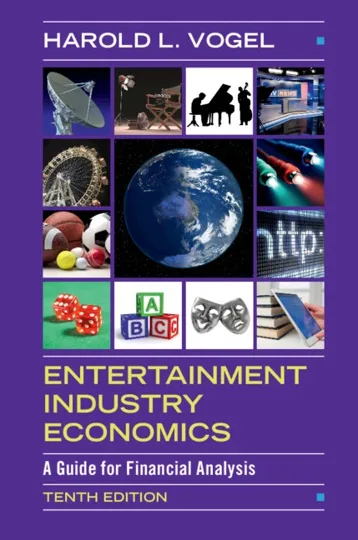
For the wider industry: Entertainment Industry Economics
Harold L. Vogel’s reference work is the broad starting point. Choose it to connect film with other entertainment sectors and understand the economic and accounting framework around the business. It is the reference route for readers who want a framework they can return to.
Read the Entertainment Industry Economics review.
For deal structure: The Biz
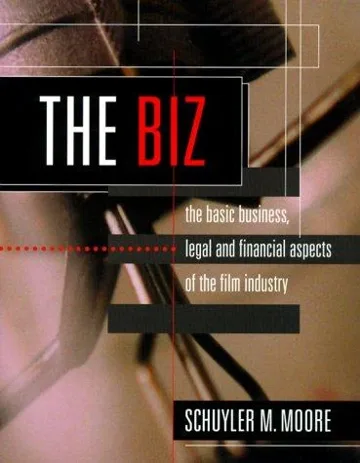
Schuyler M. Moore’s book focuses on the business, legal and financial structure of filmmaking. Choose it when your question concerns the way a deal is assembled. Pair the full review of The Biz with the 2019 Sky Moore interview for the author’s career and practitioner perspective.
For studio economics: The Hollywood Economist 2.0
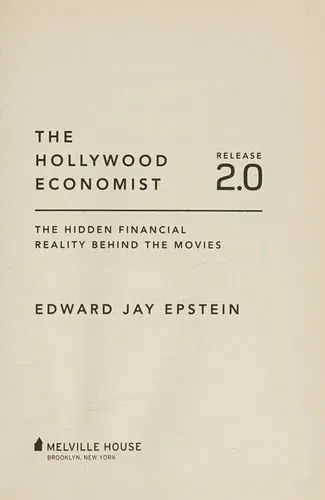
Edward Jay Epstein offers a more narrative introduction to the business behind public box-office figures. Choose this as a historical entry point into studio revenue models before moving into more technical reading. Read The Hollywood Economist review.
For participation accounting: Movie Money
Bill Daniels, David Leedy and Steven Sills address the definitions, deductions and accounting behind profit participation. This is the specialist route for reading participation statements and understanding how contractual economics reach the accounts. Read the Movie Money review, then connect it to the collection-account interview.
Use the reviews to choose an edition
Each review covers a particular work and context. Check the edition discussed and the edition available to buy, especially for tax, accounting and market details. The reviews include purchase links; the disclosure page explains the site’s affiliate arrangements and giving policy.
Browse all book reviews or start with the film-finance interviews.