 Watch on YouTube
Follow the right before following the royalty
A familiar recording can involve several different businesses: the writer’s composition, the recorded performance, publishing administration, recording ownership and the services that license each use. This reading route helps a finance reader identify the asset, follow the agreement and reconcile the resulting money. It uses three existing Media CFO reviews, then pairs them with primary sources.
Name the asset
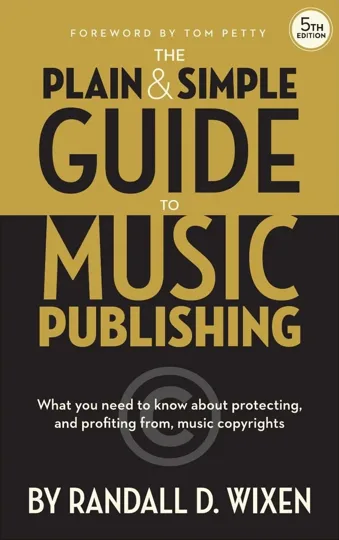
Start with Randall Wixen on publishing and the composition.
Trace the money
Read Chris Cooke on streaming licences and the intermediaries between use and payment.
Read the agreement
Use Ann Harrison to examine UK music contracts and who controls each decision.
1. Composition and recording are separate questions
The U.S. Copyright Office’s musician guide and explanatory video distinguish a musical work—music and any accompanying lyrics—from a sound recording. They are separately protected works and can be owned and licensed by different parties. Do not infer the publishing owner from the name of the performing artist.
The musical work
Composition and lyrics → writer and publishing interests → the relevant publishing licence and collection route.
The sound recording
A particular recorded performance → recording owner and relevant performer interests → the applicable recording licence and payment route.
Read: The Plain & Simple Guide to Music Publishing. Our review explains why Wixen is a useful starting point for the composition side and the distinction between ownership and administration. As a practical exercise, take one song and list its writers, publishers or administrators, recording artist and recording owner in separate columns. Mark uncertain entries as unresolved rather than filling them from memory.
2. One stream can enter different accounting systems
Read: Dissecting the Digital Dollar. Cooke’s subject is the chain between a streaming service and the people ultimately paid. Use the review to identify the book’s scope, then follow one royalty category through an actual statement. Avoid applying a single per-stream amount to every right, service, territory and agreement.
| Organisation | Documented role | Boundary to keep visible |
|---|---|---|
| The MLC · United States | Administers blanket mechanical licences for eligible streaming and download services; matches reported usage to musical works and pays the relevant rightsholders. | This is the composition’s digital mechanical route. It is not a recording-owner royalty statement or a complete account of every music income stream. |
| PPL · United Kingdom | Licenses specified recorded-music uses for recording rightsholders and performers, including public playing and broadcasting. | PPL explicitly excludes on-demand streaming of specific tracks on services such as Spotify from the rights it manages. |
Sources: The MLC’s explanation of its role and PPL’s rights remit, checked 21 October 2026. These are examples, not a worldwide collection directory. Start every reconciliation with the territory, use and right; the correct collection route follows from those facts.
3. Match the statement to the agreement
Read: Music: The Business. Our review approaches Harrison as a UK contracts reference. For each agreement, make a one-page record of the rights granted, territory, duration, approvals, administration charge, permitted deductions, reporting frequency and audit provisions. Keep the edition’s date visible and check current primary guidance for changes since publication.
A percentage becomes useful only after the base is understood. Is the line gross income collected by an administrator, net receipts reaching a publisher, or a recording royalty after contractually permitted deductions? Do not apply a publishing share to recording income or assume the same recoupment balance governs both accounts.
Try a small statement reconciliation
Where did the last $50 go?
It arrived in a second transfer. Here is the whole invented example. The administrator collects $1,000 and the agreement allows one deduction: a 10% administration fee, or $100. The songwriter is owed $900.
On 30 September, the songwriter’s bank shows $850. At that point the $50 is still owed; the first bank entry alone cannot tell us why. Now suppose the remittance advice lists two transfers against the same statement: $850 on 30 September and $50 on 2 October. The October bank entry confirms the second payment.
Closing balance: $900 due − $850 − $50 = $0. The later $50 is the rest of the songwriter’s royalty, not a second fee. When checking a real statement, match the remittance references to the bank dates before deciding what a difference means. These dates and figures are illustrative.
Keep the work identifier, recording identifier where relevant, territory, usage period, payment period and currency beside the numbers. This makes it easier to distinguish missing registrations, mismatched usage, delayed reporting and contract deductions. For a longer cumulative example, use the film participation-statement walkthrough; its assumed waterfall must not be transplanted into a music contract.
From music rights to touring finance: Nigel Burke’s early career
In his 2019 Media CFO interview, Nigel Burke recalls his first music-industry assignment: helping to look after the Three Tenors’ world tour while working for the concert promoter’s accounting advisers. He describes concerts in London, Stockholm and Japan, each with different tax consequences. Further music-industry work and corporate finance assignments followed before his move into film.
For the management decisions around touring, see Paul Allen’s Artist Management for the Music Business.
His account adds the live-business perspective to this reading route. A tour brings its own accounting and tax questions alongside an artist’s publishing and recording income. The useful connection is to keep the activity, contracting parties and territory clear before following the money. Burke’s recollection concerns touring finance; it does not explain how to calculate publishing or streaming royalties.
Connect the reading to the wider entertainment business
Roland Wieshofer’s original 2019 conversation offers the broader entertainment-CFO perspective. It is a financial-leadership interview, not a music-royalty tutorial. For film producers, the distribution rights map supplies a parallel habit: specify the rights, medium, territory and term before forecasting receipts.
Explore the three full reviews through the covers above, or browse all 50 book reviews.