 Watch on YouTube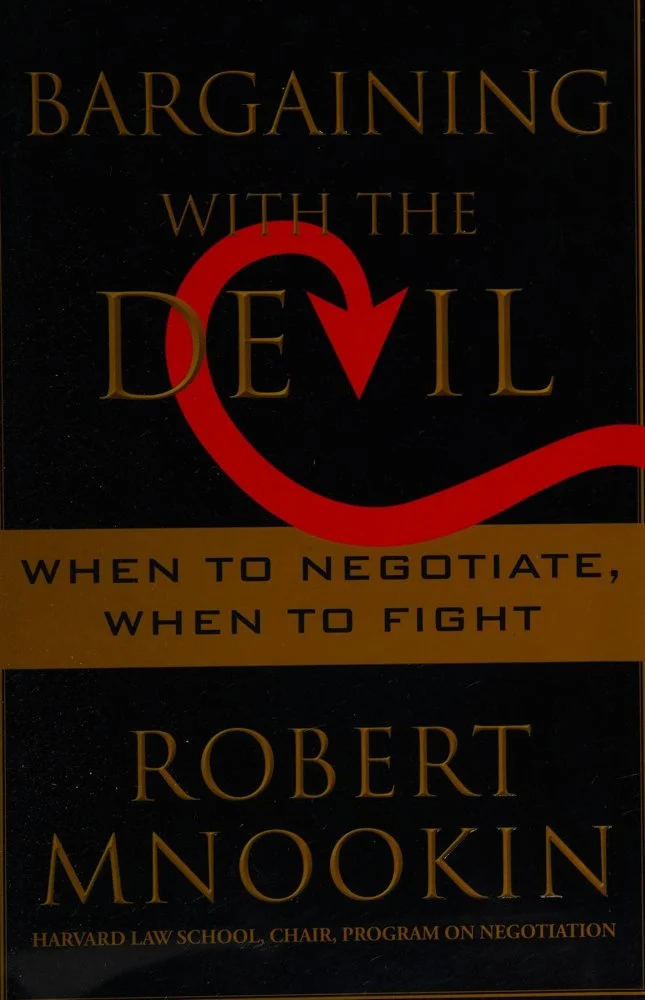
Every negotiation book on this shelf teaches you how to negotiate. This one asks a prior question that the others largely skip: should you be negotiating at all?
Robert Mnookin ran the Harvard Negotiation Program for years, which makes him an unlikely person to write a book about the limits of negotiation. That is exactly what gives it authority.
What the book actually covers
Mnookin's subject is the decision that precedes tactics: whether to engage with an adversary at all, or to refuse and fight. He is clear that both instincts are dangerous. The reflexive fighter destroys value out of principle; the reflexive negotiator legitimises adversaries and gives away positions that should have been defended.
He builds the argument through eight case studies, deliberately spanning the extreme and the ordinary — Churchill's decision in 1940 not to explore terms with Hitler, Rudolf Kasztner's negotiations with Eichmann, apartheid-era South Africa, and then a set of business and family disputes at a scale most readers will actually encounter.
The analytical core is a framework for the decision. Systematically compare the expected costs and benefits of negotiating against those of fighting. Interrogate your own motives, since the decision is usually being driven by emotion presented as principle. Consult others, because you are the least reliable assessor of your own position. And recognize that there is a presumption in favor of negotiating that should be rebutted rather than assumed — Mnookin's conclusion is that people fight too often, not too rarely, but that the exceptions are real and identifiable.
The moral dimension is handled seriously rather than waved at. Negotiating with someone can confer legitimacy, and that cost is genuine even when the arithmetic favors a deal.
Why you should read it
Read it because the decision to engage is the one nobody trains for. Enormous amounts of professional energy go into negotiation technique and almost none into the prior question, which is frequently the more consequential one.
Read it for the self-interrogation framework. Mnookin's insistence that you examine whether your refusal to deal is a judgement or an emotion is uncomfortable and useful, and it applies as much to a commercial dispute as to his historical cases.
And read it as the third leg of a negotiation set. Chris Voss teaches you to move the person across the table by understanding them. Igor Ryzov assumes some of them are simply measuring what you will surrender. Mnookin asks whether you should be at the table at all. Together they cover the decision, the method and the adversary, and no one of them is sufficient.
Key takeaways
- The decision to negotiate precedes the technique. It is the more consequential choice and receives almost none of the attention.
- Both instincts are dangerous. The reflexive fighter destroys value; the reflexive dealmaker concedes it. Neither is a strategy.
- Interrogate your own motive. Refusal to deal is usually emotion presented as principle, and you are the worst available judge of which it is.
- Legitimacy is a real cost. Negotiating can confer standing on an adversary, and that belongs in the calculation even when the numbers favor a deal.
Meet the author
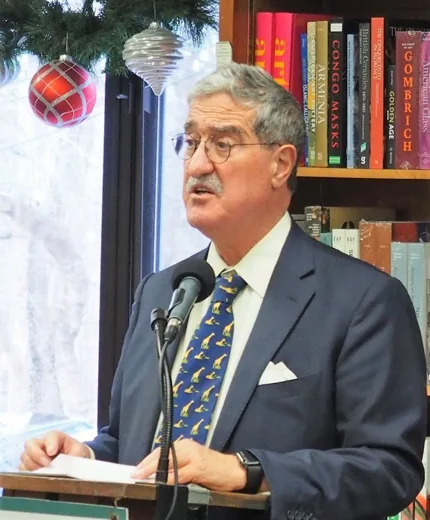
Robert Mnookin is a professor at Harvard Law School and has directed the Harvard Negotiation Research Project, spending his career on dispute resolution and the theory and practice of negotiation. He has written extensively on conflict, family and commercial disputes, and international conflict resolution.
Bargaining with the Devil: When to Negotiate, When to Fight was published in 2010 and is the most contrarian of his books, precisely because it is written by someone whose institutional life has been devoted to the case for negotiating.
Get your copy
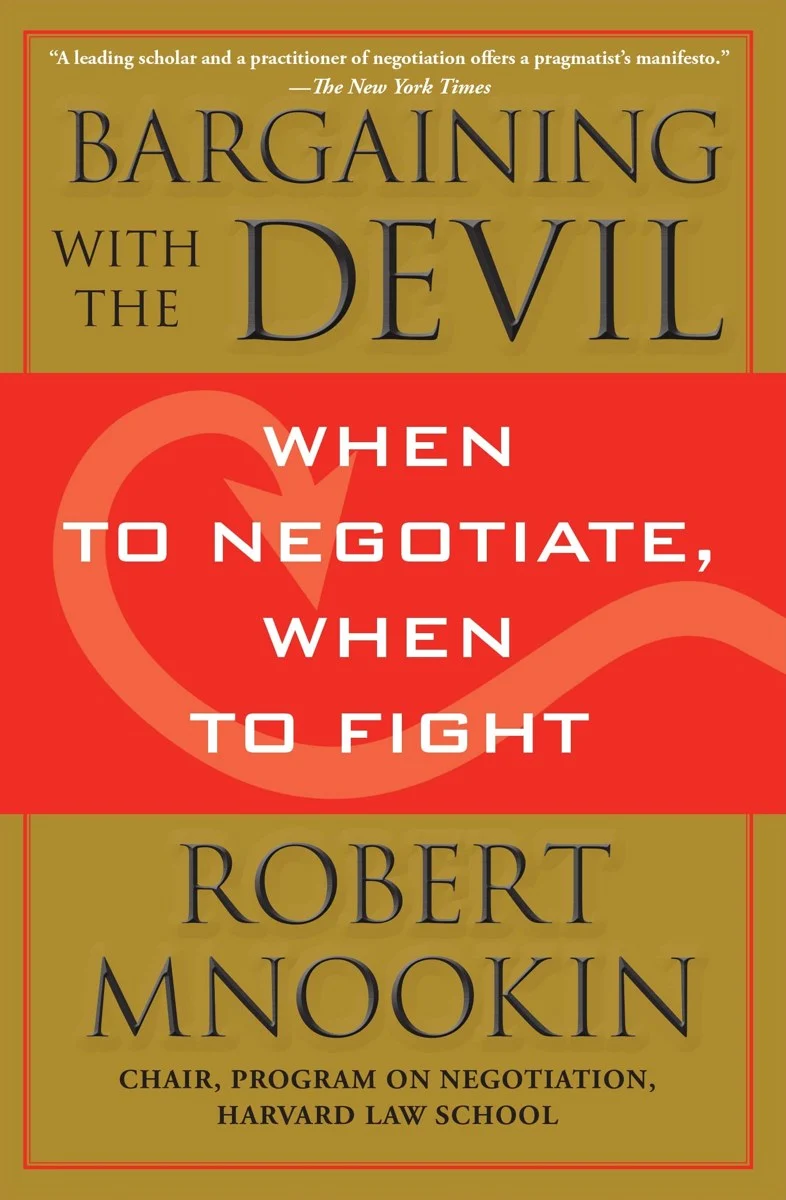
Bargaining with the Devil
Where the proceeds go
Some book links on this site earn a commission. Every penny of it goes to the American Cancer Society.
The American Cancer Society funds cancer research, runs free patient-support programs, provides lodging for patients traveling for treatment, and staffs a 24-hour helpline. You do not need to buy a book to help.
This review contains affiliate links. As an Amazon Associate I earn from qualifying purchases, and all commission is donated — details on my disclosure page.