 Watch on YouTube
Every few years a well-known actor or writer sues a studio, claiming that a film which grossed hundreds of millions of dollars has somehow, according to the studio's own accounting, never turned a profit — and that their share of "net profit" is therefore zero.
They are usually right that something is wrong, and usually unable to prove exactly what. Movie Money is the book that shows you exactly what. It is the technical manual for Hollywood's creative accounting, written by people who do this for a living.
What the book actually covers
This is a working reference on how film profits are defined, calculated, contested and audited. It is not a narrative and does not pretend to be. It is for people who need to understand a studio profit-participation statement well enough to challenge it.
The core subject is the gap between gross and net. A film's gross receipts are large and visible. By the time a series of contractual deductions has been applied, the "net profit" on which many participants are paid can be nothing at all. The book works through those deductions in detail: the distribution fee the studio charges itself, the distribution expenses, the interest charged on the negative cost, the overhead loaded onto the production, and the way these interact and compound.
The critical distinction the book makes clear is the difference between gross participation and net participation. Gross players — the stars and directors with the leverage to demand a share of receipts before deductions — get paid. Net players — almost everyone else — are paid from a pool that the accounting is structured to keep at or near zero. Understanding which side of that line a deal sits on is the single most important thing anyone entering a participation agreement can know, and the book is unusually direct about it.
There is substantial material on auditing: what a participant is contractually entitled to examine, what studios typically resist disclosing, and where the recurring points of dispute lie. This is the practitioner's core — the part written for the person who has to actually check the statement.
Why you should read it
Read it if you will ever be near a profit-participation deal, on either side. This is the reference that tells you what "net" actually means before you agree to be paid in it, and that knowledge is worth a great deal more than the book costs.
Read it if you audit or advise. The chapters on what studios disclose, what they resist, and where the recurring disputes lie are a genuine field guide to a contested and deliberately opaque process. There is very little else written at this level of specificity.
And read it as the technical floor beneath the more readable books on this shelf. Edward Jay Epstein tells you, entertainingly, that a hit can be a paper loss. This book shows you the precise mechanism, line by line, so that you can find it in an actual statement. Epstein is the why; this is the how.
Key takeaways
- "Net profit" is a defined term, not an accounting result. It is constructed by contract to sit near zero, and agreeing to be paid from it is frequently agreeing to be paid nothing.
- Gross versus net is the whole game. Which side of that line your participation sits on matters more than the percentage attached to it.
- The deductions compound. Distribution fee, expenses, interest on the negative, overhead — the order and interaction are where the number disappears.
- Auditing is a contractual right with practical limits. Know what you can examine and where studios habitually resist before you need to exercise it.
Meet the authors

Movie Money is written by practitioners rather than journalists. Its authorship is grounded in the actual practice of entertainment accounting and profit-participation auditing — the discipline of examining studio statements on behalf of the people the statements are calculated against.
David Leedy was a noted entertainment accountant and the originator of the core material, which has been carried forward and updated across editions to reflect changes in how studios structure and report participations. The book has been a standard reference in its niche for years precisely because it is written from inside the audit process rather than from observation of it.
The result is a book with no interest in storytelling and total interest in the mechanism — which, for its purpose, is exactly right.
Get your copy
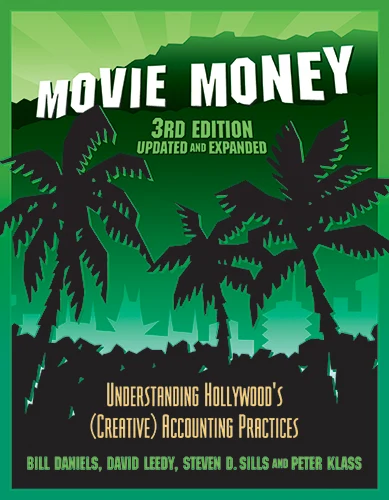
Movie Money
Where the proceeds go
Some book links on this site earn a commission. Every penny of it goes to the American Cancer Society.
The American Cancer Society funds cancer research, runs free patient-support programs, provides lodging for patients traveling for treatment, and staffs a 24-hour helpline. You do not need to buy a book to help.
This review contains affiliate links. As an Amazon Associate I earn from qualifying purchases, and all commission is donated — details on my disclosure page.