 Watch on YouTube
There are two copyrights in every song. One in the recording, one in the composition. Most people in the music business understand the first one reasonably well and the second one barely at all.
The composition side — publishing — is where a substantial share of the money lives, and it is genuinely harder to follow. Randall Wixen runs a publishing company and wrote the short book that explains it.
What the book actually covers
Wixen starts where everyone should: with the distinction between the composition and the sound recording, and the separate rights that attach to each. From there he works through what publishing income actually consists of.
Mechanical royalties, paid when a composition is reproduced. Performance royalties, collected by societies when a work is publicly performed or broadcast, and split between the writer's and publisher's shares. Synchronisation licenses, negotiated individually for use in film, television and advertising — the highest-value and least systematic of the categories. Print. And, increasingly, the streaming income that combines mechanical and performance elements in ways that took the industry years to agree on.
He explains the publishing agreement types clearly: full publishing, co-publishing, administration deals, and what each means for who controls the copyright and who collects. The distinction between owning a copyright and administering it is one of those things that seems obvious once explained and causes enormous confusion until then.
Wixen is direct about industry practice in a way an academic would not be. He runs a publishing administration company, and the book reflects a practitioner's view of which arrangements serve writers well and which do not.
The virtue is brevity. This is a short book about a complicated subject, and it stays readable without becoming vague.
Why you should read it
Read it if you are anywhere near catalog valuation. Publishing rights have become a genuine institutional asset class, and understanding what actually generates the cash flows — which royalty types, collected by whom, on what lag, with what decay — is the difference between assessing a catalog and accepting a broker's multiple.
Read it for the composition-versus-recording distinction, which is the single most consequential concept in music rights and the one most frequently muddled. Anyone advising an artist, a label or an investor needs it precisely.
And read it because it is short. This is the fastest route to competence on the publishing side available, and it pairs naturally with Chris Cooke's Dissecting The Digital Dollar, covered here, which takes the streaming money flows further.
Key takeaways
- Two copyrights, two revenue streams. The composition and the recording are separate assets with separate owners, separate collection systems and separate economics.
- Publishing income has distinct categories with distinct behavior. Mechanical, performance, synchronisation and print collect differently, on different timelines, through different intermediaries.
- Ownership and administration are not the same thing. Who controls a copyright and who collects on it can be entirely different parties, and the deal type determines which.
- Sync is the outlier. Negotiated individually and worth disproportionately more per use, it is the least systematic and most valuable category.
Meet the author

Randall D. Wixen is the founder of Wixen Music Publishing, a publishing administration company representing songwriters and catalogs. He has spent his career on the publishing side specifically — the composition copyright, its licensing and its collection — rather than on the recording side that dominates most music business writing.
That practitioner position is the book's authority. He wrote it because the clients kept needing the same explanations, which is the best possible reason for a reference book to exist.
The Plain & Simple Guide to Music Publishing has been through several editions, updated as the streaming royalty structures have settled.
Get your copy
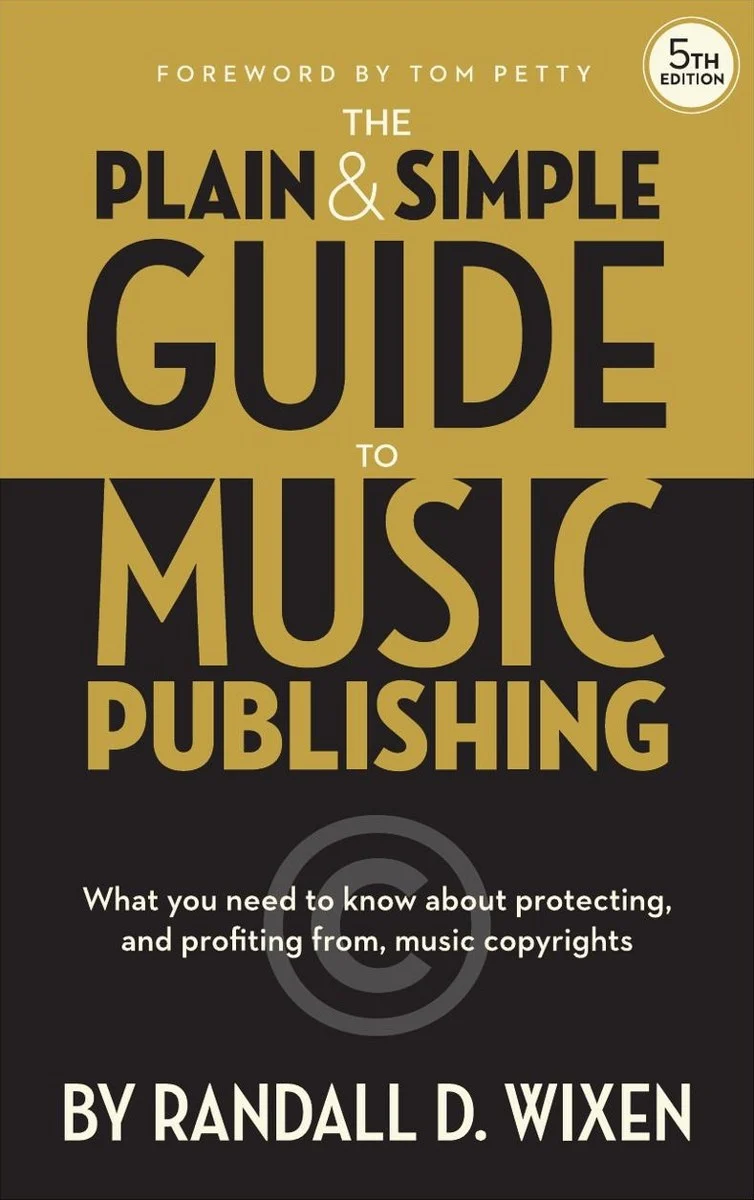
Plain & Simple Guide to Music Publishing
Where the proceeds go
Some book links on this site earn a commission. Every penny of it goes to the American Cancer Society.
The American Cancer Society funds cancer research, runs free patient-support programs, provides lodging for patients traveling for treatment, and staffs a 24-hour helpline. You do not need to buy a book to help.
This review contains affiliate links. As an Amazon Associate I earn from qualifying purchases, and all commission is donated — details on my disclosure page.