 Watch on YouTube
 YouTube
 Apple Podcasts
 Spotify
 RSS
RSSThe conversation
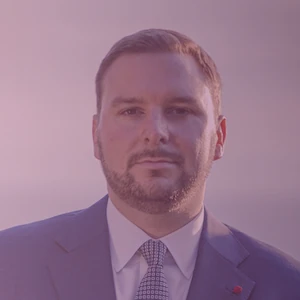
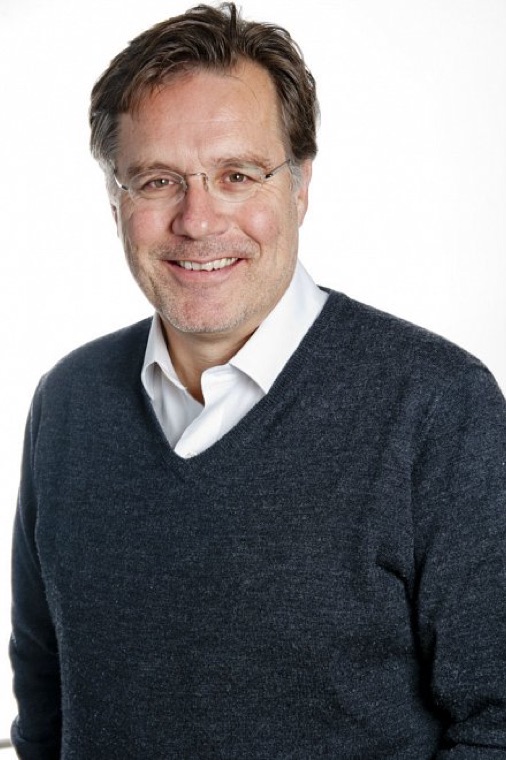
Tobias Jaeger: Today we are joined by Robbert Aarts. Robert is Co-CEO of Fintage House, one of the largest collection account management firms in the world. Robbert worked as a lawyer, and later as banker at [inaudible 00:00:12]. He joined his now co-CEO Niels Teves 20 years ago and helped build the company into the global leader it is today.
Tobias Jaeger: Robbert, welcome to the program. Thank you for being here.
Robbert Aarts: Thanks for having me.
Tobias Jaeger: Right off the bat, I want to ask you, obviously, you work in a very exciting part of the individual that holds enormous amounts of mystery for people that aren't in it. How often did you have to explain revenue collection to people in the industry and outside of it?
Robbert Aarts: How would I best describe that, you know? I wouldn't consider it the most exciting part of the business because that's more related to the actual filmmaking, but we operate on the financial side of the business so we see a lot of revenue streams from a variety of sources. In that sense, it may be exciting for people but money is money. It's refundable, and we've just built a business in making sure that the money, which is being paid by people in the industry, and people exploit movies and TV series and music, as a matter of fact, to actually get their money. I'm not sure how people perceive it but they should look at it as something, just as a necessity, because often without our involvement it is not as clear cut and check-and-balances as it should be.
Tobias Jaeger: Yeah.
Robbert Aarts: I'm not sure how people outside of the industry look at what we do, but I'm not sure they even know what we're doing because we're very low key and we don't speak to a lot of people, outside the industry for sure, about what we're doing. In the industry, people, I think, kind of acknowledged our importance but it's not necessarily as magical as it may seem from the outside.
Why collection accounts developed
Tobias Jaeger: Tell me a little bit about, historically, how did the need for this arise? Was it just in a period where IP owners or rights holders were just not paid and then they were looking for help? How did this come about?
Robbert Aarts: Yeah, we had a functionality within the bank I used to be part of called ABN Amro Maes Pearson where we would be receiving a large amount of cash on behalf of either producer or a sales company or a financier. All the money, basically, got collected there and then, all of a sudden, because we were also in the film financing activity at the time, people said, "We would like you to split the money between party A, B, C and D." I said, "But, that's not what we're supposed to do here. We're not getting paid for that."
Tobias Jaeger: Yeah.
Robbert Aarts: Then we looked at the necessity. In my travels to Los Angeles I realized that a lot of people were not getting what they were supposed to get, because either the money would be paid to the sales company or it would be paid to the bank or it would be paid to the producer or to some other entity and then the other beneficiaries, through the money, would not see the revenue. There was a clear need for some sort of independent third-party which is, until today, one of the businesses we're engaged in and involved in.
Tobias Jaeger: You mentioned the bank, is that how you got into the industry?
Robbert Aarts: Yes. I used to be a lawyer before that and I had a fair amount of entertainment work, but actually the money side of it was something I bumped into when I joined the bank.
Tobias Jaeger: Okay. When you were a lawyer, you were already in the entertainment industry or working with entertainment clients?
Robbert Aarts: Yeah, there was a lot of people who were set up through the Netherlands which was originally for taxation reasons and later for completely unrelated reasons, like the Rolling Stones, YouTube, and bunch of other, let's say people had organized a business there, and my firm represented a lot of these people. They are now, today, they're completely there for unrelated reasons, because it's a very good set up for business to be operating from Amsterdam. This has completely changed over time, but that's how I had my first clients in the entertainment industry.
Tobias Jaeger: First taste.
Robbert Aarts: Actually, if you really want to know, one of the first clients I dealt with on the film and TV side was a company Calco, which has been long gone but that was back in '92.
Tobias Jaeger: Wow, okay. When you moved to the bank, you were like, "This is actually still a fun industry," and then [crosstalk 00:04:47].
Robbert Aarts: Yeah, but I had a complete deep dive at that point. I said, "I want to focus on this business," and in such a way that the bank thought I was kind of completely out of control because banks hope that you will do everything they tell you to do, so this you year you have to run that office or next day you have to work in that division and none of that was what I was interested in. Once I focused on this business, I actually never left. After a number of years, which were not my best years because I didn't want to work for the bank anymore. It took us awhile to basically buy the business from the bank back in 2000.
Tobias Jaeger: It started almost like a business unit in the bank and carved it out to create it [crosstalk 00:05:34].
Robbert Aarts: Exactly. We bought it because we believed that it didn't really fit the profile of the bank, because apart from, let's say, what is now called Fintage Collection Account Management, we were building six, seven other businesses which we still have or have sold in the meantime which had nothing to do with banking related businesses. The banks, at that point in time, were getting more focused on what their actual business was in the entertainment space. What we were doing was completely out of the control of what the typical banking service would, like we had the music publishing company as the example. The bank didn't know what to do with that, and rightly so, because it doesn't fit in any of the boxes they had to create for the central banks around the world.
Tobias Jaeger: Yep. I saw awhile ago you sold the music division. How did that come about?
Robbert Aarts: You know, I'm a very proud entrepreneur and I've never had an outside investor in any of our companies. We always were ... Its always been me and my partners. We had built a business, which people call Artist Performers Reality business or what they call Neighboring Rights in Europe which generates the revenue, not for the writers of the songs, but for the performers itself. There's a different group of collecting societies around Europe and, when nobody was focusing on that, we built that business from, let's say, 2003 with our bare hands.
Robbert Aarts: In entry, about 80% of any artist in the world was our client from the Elvis Presley estate to Justin Bieber, Taylor Swift, Rihanna and Ed Sheeran. They're all clients. We said, "Okay," when all of a sudden other people are realizing, including Sony and some other company's, realized, "Okay, we missed that business completely," and they went after our clients. They started offering big advances, which we couldn't and didn't want to match because of the way we are structured as a company.
Robbert Aarts: We basically said, "Okay, this might be a good time to sell," which turned out to be absolutely fabulous. It was very well timed, so it got us out of the music business but we were still up a few feet in that business because we're, for instance, the largest provider of the digital delivery of songs to Spotify through a company we own, a big minority interest in [Colt Fucca 00:08:14] which is based in Amsterdam. We have a number of other music-related ventures which we're working on and which we may launch shortly, but that's on the music side, right.
Tobias Jaeger: Apart from the music business, obviously you have a group of companies. How do you personally split your time between the different ventures or initiatives? How do you make sure you stay focused while giving everyone the attention they need?
Robbert Aarts: You know, in the end, it is the business is only so strong as the people you hire to run it, right?
Tobias Jaeger: Mm-hmm (affirmative).
Robbert Aarts: I've the luck to have hired people who have worked for us, and for me, for a very long time. I have a very trust-worthy relationship with a lot of the people. A lot of the businesses, actually most of them, can basically do without me these days, so they run on their own. Obviously, whenever there's an issue, that our clients need to receive a phone call or I need to solve a problem, I get involved. On a day-to-day basis, I'm no longer involved in the individual businesses in Europe because the whole Fintage business is currently being ran by my partner who used to run the music side and I'm much more in a, let's say, of a role of an architect finding new opportunities. Other than that, I spent a lot of time on this credit card business, which we started in the US for film and TV production, which is called Cachet Card, and that is very rapidly growing, pretty dominant business which we started about six years ago.
Tobias Jaeger: Yeah.
Robbert Aarts: In the end, I'm closely involved with Fintage activities but not as the ultimate responsible person anymore.
Tobias Jaeger: How was that for you? I'm guessing it was kind of a gradual process of being really hands-on, as you said, kind of building it with your bare hands and then moving into this role. Was that something gradual or did you just sit down at some point and said, "You know what, I want to transition into that role."
Robbert Aarts: It's kind of funny. I started as a very detailed drafter of agreements in corporate law firm, then I went for a bank, and I had to whatever that bank was asking me to do. Although, in silent protest, and doing my own things. Once I bolt the company together with my partner, I basically decided that I would have to manage it for at least, let's say, 10 years or so, which I did. By doing that, I realized I pretty much suck at management. I'm a great leader, I believe, but I'm not a good manager. In the end, that's what led me to do what I'm currently doing. I basically develop ...
Robbert Aarts: By the way, my partner as well, but I really enjoy finding new ways of making money in the industry by finding niches which other people haven't found. If you really look back, its all been intuitive and instinctive; nothing was like, "Okay, I now have to do something." I've always been believing that business develops itself and you have to be ... You bump into the opportunity, that's one thing, but then, even if the idea is great, you still need to have the proper people to run it. I will never, ever, even if people give me a 100 million in capital, start a business without making sure that I have the exact right person to run it.
Tobias Jaeger: Interesting, yeah.
Robbert Aarts: Without it, it's just not worth it because you can't make big progress unless you have the right people.
Tobias Jaeger: This is something I noticed when, obviously I know the company for quite a while, and have dealt with different people in the organization, and one thing that always struck me was that whoever I spoke with at the company, if felt more like it was a family rather than a company. I'm wondering, in creating that culture, is that just a byproduct of what you just described, that you're like, "Hey, I just want to assemble great people," or was there a more deliberate plan of saying, "Look, no, we're going to ... this is how I want it to go," because you also mentioned how much you dislike the bank culture. You know, that's very hierarchical and you get the oldest flow from top to bottom.
Robbert Aarts: Don't get me wrong, I do appreciate what banks do. It's just not how I fit in that whole culture. I believe that if you treat people properly, and I see in the US that you can treat people very poorly, I've seen that many times, but you know ... If you have to write people, and there's a mutual trust and, you give them responsibility they need, they will use it to everyone's benefit and also to my benefit as the ultimate owner of the company together with my partner. It's purely organic, and either people work for us for less than a year or they stay for a relatively long period of time.
Tobias Jaeger: Forever.
Robbert Aarts: Forever, if you want, yes. Yeah, there's some people who I've worked with for over 20, 25 years, yes, in the company.
Tobias Jaeger: Wow. That's quite uncommon, I think, in this industry. Yeah.
Robbert Aarts: I know, certainly in the US where I spend a lot of my time.
Tobias Jaeger: Yeah. Speaking of that, I think, also you're one of the few companies, or group of companies, that it feels like you're innovating all the time. You mentioned this with the credit card, and I want to talk about that in a second. Do you think that's part of the ability? I mean, it's very technical often, as you described as well, finding these little niches of opportunity that you need that kind of team or people for that to be able to innovate.
Robbert Aarts: You know, frankly, I think in terms of innovation, that comes from the top particularly. The business plan is very simple, any of our business plans, like whether it's the music business which I just described whereas, if it works for the estate of Elvis Presley, it also works for Justin Bieber because they have rights and they need representation. The same applies to the Collection Account Management business because, if it works for you, it works for other people as well. The same applies to a credit card business. It's all, in the end, what we have found, what we have done successfully is figure out a way to copy whatever service we create.
Robbert Aarts: Every service, if you think of it, is a very extremely simple in its set up, an idea, but it's extremely complex to do it properly and then become the dominant partner in that business. That is what is my pride, really, in the business and that's what, which I never realized. If you would ask my high school friends who would be the least likely become an entrepreneur, they would have mentioned me.
Tobias Jaeger: Really? Why is that?
Robbert Aarts: I don't know, but I didn't show them anything that would make them feel I would be starting a variety of companies when I was in my 40s. Don't forget, I only became an entrepreneur when I was 42, so it's not like I started as an entrepreneur. I went through this whole process through a law firm, banks and then buying the company from the bank.
Tobias Jaeger: Do you feel like that was your training leading up to that moment when you decided, "Okay, I'm going to do something myself," or did you have the idea before that already, but you were like, "Oh, I don't know if I want to do this."
Robbert Aarts: It's kind of interesting. That's a good question because I never, the way I operate, I never think through what I do. No, it comes to me and I say, "Okay, this sounds great. I should do that." I'm not very good in planning. I just, ideas pop up in my head. I've been trying to figure out what happened to me when I was with the bank and then all of a sudden I want to own a company which we then bought for a lot of money, literally three months after 9/11 while the whole world was collapsing.
Tobias Jaeger: Jesus, yeah.
Robbert Aarts: I never had one second of doubt in doing it. By that time, I actually had decided. I had become the entrepreneur which I am today.
Tobias Jaeger: Interesting.
Robbert Aarts: That was, how many, 17 years ago, so I'm 59 now.
Tobias Jaeger: Yeah. You could make the argument whether it was the best or the worst time, certainly in terms of valuation, like it can't get worse than this.
Robbert Aarts: Yeah, but they didn't give us a cut or a reduction on the [crosstalk 00:17:31] price because we negotiated it beforehand.
Tobias Jaeger: Oh.
Robbert Aarts: There was a bigger risk, but we were so convinced about ourselves and we just went for it.
Tobias Jaeger: Yeah. Do you feel that approach is helpful also in launching new initiatives like the credit card? It sounds like, correct me if I'm wrong, that you spent two, three years developing it but you actually just look at something, and you're like, "Hey, this is an opportunity. We should do that," and then six months later it's a reality?
Robbert Aarts: Yeah, I would have wished that I would have come up with that idea. We would have never started that business without someone coming to me; in this case it was Kurt Woolmer who was a partner in film finances, the completion one company. He, and his partner, invited us for dinner in Cann, and my partner Niels Teves and I went there, and he said, "We would like to consider starting this credit card business with you guys because you are always very good in finding new ways of making money and we suck other than offering completion bonds at which we are the best in the world." When we went home in the car, we said to each other, "It just sounds like complete ... What a nonsense idea."
Robbert Aarts: It wasn't my idea, but then I said, "Let me check with one of my guys," with our guys who had worked with starting our music business, Paul Rogers, who went on his own and became a producer for awhile. I called him the next day. He was based in Nashville. I said, "Paul, what do you think? I got this approach. You probably will agree with me that it's complete BS. Let's not do it." He said, "I told you this two years ago. You didn't want to listen to me." I said, "Paul, now you're getting me interested. Now you have to write a business plan to make this work," and he did.
Robbert Aarts: That was about six, seven years ago, and now we have, in the US and Canada, we have a market share of about 80%, 1,700 productions; anything from Black Panther to the Kardashians is using that card. It has been an incredible journey. Based on that, we're now doing a lot of new things in that space as well.
Tobias Jaeger: Yeah. Speaking of new ...
Robbert Aarts: That's the tech company.
Tobias Jaeger: Yeah. Speaking of new things, I think you're the only one that accepts cryptocurrencies for the payments that you receive. I think you announced that a short while ago. What was the process leading up to that? Obviously, that takes, also, consideration, I guess.
Robbert Aarts: Yeah, but, yet, we're not taking any risk. If people are willing to pay by cryptocurrency, and there are people that are willing to accept it, who are we not to agree to that? As long as people don't ask us to take the risk of converting cryptocurrencies to fiat currencies, because that's not what we will do.
Tobias Jaeger: Oh, I see.
Robbert Aarts: It may look more exciting than what it is in practice. You have to, any of our business, none of our business until any risk taking. We are very careful in not crossing that line.
Tobias Jaeger: Yep.
Robbert Aarts: We would never do that in the credit card business, which is pre-funded cards, and we would never do that in this business either. We are open to ... We have created an infrastructure to do it. If people want to use it, it's fine, but we're not going to take the conversion risk.
Tobias Jaeger: Yeah. I understand now, because, obviously, it makes sense if you're just kind of facilitating their transfer and the receiver says, "Yeah, pay me in [inaudible 00:21:22]."
Robbert Aarts: Of course, you need to be able to facilitate it but that's what we can. Yeah.
Tobias Jaeger: How come, though, you mentioned the risk management, was there something specific that influenced that decision because you could get a credit department or risk department, higher 20 more people, let people pay for that, but you said, "No, we're not going to take any risk on there."
Robbert Aarts: No, but that's ... Once you make the choice, implicit choice, not a very explicit choice, because I don't think I'd ever discuss this with my partner even. We just never took on any outside equity from people because we wanted to stay independent and make sure that we could do the best possible job and not be kind of having to bow to the wishes and requests and requirements of having capital to fund your company. It just didn't feel right and I think it's the best thing we ever did because the moment you sell a business, like we did with the music business, you don't have to pay a whole sort of people for unnecessary reason because they were kind of funding the company and you have to pay them ridiculous interest rates, et cetera. It ends with the people who actually built the business, rather than with financiers of it.
Tobias Jaeger: Yep. I think, for a lot of people starting up, but also especially in the US, I think the focus on accepting venture capital is much bigger. Usually, I guess, one of the reasons is always, "We want to grow faster." Do you feel like, by making a choice of not accepting outside money, you also accepted sometimes that things would go a bit slower or different, that the control was that much more important than becoming the biggest in five minutes?
Robbert Aarts: No capital means you have to build with your bare hands; that's basically what you do. By the way, it doesn't mean we're not using capital. We just use capital we make in our own other businesses and reapply it to other industries and other new initiatives. We use capital, but our own capital. We don't use other people's capital. We accept the fact that the organic growth is slower, perse, and that's fine. The flip side is that you actually can spend a lot of time setting it up properly without being forced by an investor just to develop speed and try to get it going as quickly as possible and forget certain details.
Robbert Aarts: You're right, in the US, it's like very usual what we do. In Europe, it's a little bit more. As we operate mostly with American companies, in terms of clients, it is obviously we're pretty unique the way we have set it up. It feels great because I can decided every day what I want to do. Literally, I can wake up in the morning and say, "Okay, what am I going to spend my time on today?" I don't have to worry about financiers on my back. We use what we have and we're very careful in how we spend it.
Tobias Jaeger: Yeah. You just mentioned your location as well, of course, you're Dutch, so I'm assuming Amsterdam or the Netherlands as a hub was a natural choice. If you had to set it up again today, would you still go for the Netherlands? Do you feel like you have an edge being there as a hub?
Robbert Aarts: That's a good question. For us, it was not a big discussion because Niels and I are both Dutch citizens. We live very happily with our families in Holland. The good thing about Holland and the Netherlands is that it is not being seen as a threat by any of the other countries. If you're a French company, the English will see you as a threat. If you're a German company, the French will see you as a threat. We are in between these three big countries and we are pretty close with all of them, and we're all business. It's, as a country, the Netherlands is probably one of the most efficient countries in the world and there's great transportation means. The Dutch have built their business based on international trade. What we do, and just go out and find business around the world is something which is kind of in the genes of the Dutch.
Robbert Aarts: I would probably do it again. Unless I would be born German, I would probably done it in Germany or would be born US. I may have set it up differently. It's basically what we did, because we started our business life there in Amsterdam.
Tobias Jaeger: Having lived there for about eight years, I [crosstalk 00:26:28].
Robbert Aarts: I didn't know that.
Tobias Jaeger: I miss it quite a bit, yeah, because the spirit you describe, I think, is something that's very important for the DNA of any organization and having that spirit of going out and saying, "I will." We serve, but there's no iron or ore in our ground.
Robbert Aarts: We have nothing. Yeah, we have gas. We have natural gas, which we're running out of. We have no home market either, so we have to go out.
Tobias Jaeger: Exactly, yeah. Speaking of, and I'm quite curious about this, speaking of the past, if you could go back in time and tell your 20 year old self something, what would that be?
Robbert Aarts: Oh, my god. That's a tough question. I would have said to him, probably I would say, "Don't be afraid. It's going to be fine." I was much more defensive at that age, but I've learned. Basically, I've built my confidence over the last, let's say, 30, 40 years and that has become quite an asset for me because it has liberated myself, you know? I'm kind of a free-thinker, more than I realized when I was 20. I think it has helped me tremendously. I've achieved, and I'm not there yet, but I've achieved already much more than I thought I would achieve when I was 20. I thought I would be working in some boring place, whatever that is, so I don't know. I've changed quite a bit over time. Probably in my 30s, probably most.
Tobias Jaeger: Do you feel like just kind of trusting your gut more or listening to yourself more is one of those things that you developed by kind of trusting more, like initially you think of something?
Robbert Aarts: Yeah, that's what I've learned. I've learned to trust my gut, instinct, my intuition and always ... I did a lot of bankruptcy law when I was in the law firm.
Tobias Jaeger: Oh, wow. Okay.
Robbert Aarts: My father was a politician, so we were ... I wasn't trained as an entrepreneur. I just saw risks everywhere. Seeing that risk everywhere can either make you scared to do business, or say, "Okay, I know I have to be very careful how I do it but, if I do it, and I know what I have to stay away from, it can be very successful." That's kind of what I've done.
Tobias Jaeger: Yeah. Of course, I think it's quite to the point of what you described, being exposed to something like this, at that age, I think also makes you aware of what can go wrong. As you said, you can either say, "Okay, I'm never going to touch this," or, "Let me navigate this."
Robbert Aarts: I went complete for the navigation, completely for the navigation, and I never realized I would do that; certainly not as a 20 year old.
Tobias Jaeger: When you apply your gut now, what are some of the trends or develops you see happening in the industry where you go, "Oh, I think this is something to pay attention."
Robbert Aarts: It's very clear that there's a lot of stuff changing, right, so the independent industry is going through tremendous changes. If you don't change with it, you will have an issue with that. I'll give you an example, so we have a business which collects royalties from [inaudible 00:30:01] and from, let's say, society for [inaudible 00:30:06] transmission and black tape levies and video rentals, which is a, I would call, a legacy business. Gradually, you see the network television advertising go down and it moves to a digital content, like on YouTube and some other places and, of course, the whole subscription. I'm specifically focusing on the advertising base now.
Robbert Aarts: We started the business a few years ago, which is moving and migrating with our clients to this space where we actually can also represent them and making sure that they collect advertising income from YouTube and Facebook. If you're on YouTube and Facebook, you constantly see advertising, interruption, or video, so the income from that source is growing tremendously. We have created a business called Lasso who's going after that revenue stream. That's a very rapidly growing business.
Tobias Jaeger: That started from something quite legacy, as you put it.
Robbert Aarts: Yes, you look at legacy and then you move into more tech-driven, more current businesses, and you still maintain the other businesses but you have to follow where the market is going and where the world is going.
Tobias Jaeger: Yes. Have companies like Netflix and Spotify, have they made your job easier or harder or just different? As they were coming in, how did that change things for you?
Robbert Aarts: I think it has ... We traditionally had a business where there's a lot of very strong sales agents. Obviously, with Netflix, producers tend to go directly to them. The good thing for us is that Netflix always was paying over time, so they paid over a four year period. The people would then still come to us to basically divvy up the money for them because they wanted to have someone to have access and be there for the next three years when Netflix would be paying. We've done similar things with Amazon, et cetera. Obviously, it changes the business tremendously. I think where this is all going, and yet it's kind of cyclical if you think of it, because now, of course, all the new parties coming up, like Apple, Disney, Disney Play, I think it's going to be called, Hulu, not so much YouTube, the Red, I don't think that will be ... I believe they already announced they're not going to be in the big game.
Robbert Aarts: All these people are going to develop content, so for a producer it's great. I think they will have more choices. They can negotiate one against the other, hopefully, as more services emerge. We need to make sure that we stay relevant in that remit, in that environment. I think it's, in the end, that's the cyclical part about it. You used to have a, let's say in the US, I'm not sure who would be the equivalent to Comcast in Germany, but let's say in Holland you have UPC or Zigo, and in the US you have Comcast and Verizon, you would have a subscription and then you would have all these.
Robbert Aarts: I'm convinced that within the next few years there will be packages of where all the different services, the over-the-top services, like Netflix, Amazon, et cetera, will all be sold as one package and then you add a sports channel, some news channels and some other stuff and then you basically have all new package as a consumer to buy into. I do not think consumers will buy individual subscriptions to about six, seven services. That's simply not going to happen. On top of that, you have the local services, of course, which is not even Netflix, Orbit, I'm not sure what ... I forgot what the Germans are, but I'm sure there're these services locally.
Collection accounts and unpaid revenue
Tobias Jaeger: Yeah. This brings me to a point I've been wondering about. It's maybe a bit technical. When you talk about the collection activities, and I guess it's a two- fold questions; one is, what do you do when somebody isn't complying? You can't, I guess, send a big mean looking Russian guy to collect it at the door. How do you do this globally? Obviously, you're active around the world.
Robbert Aarts: Yeah.
Tobias Jaeger: How do you keep track of everything and every market where there's something to be gotten?
Robbert Aarts: You know, that's a good question. There's a misunderstanding about what we do in terms of a service. The misunderstanding is the following, we are being hired by the participants, not to collect money, but basically to make sure that the money is in a safe place once its been paid by a local distributor, by Netflix or anyone else. We will make sure that people get their amount due according to the agreement they've entered into.
Robbert Aarts: Sometimes, of course, typically the sales agent has that obligation to do that and they are getting paid to do that. Although, often they don't like to do it but they know they have to do it. It's their role, because they picked the distributors. They picked their partners around the world. Sometimes they call us and say, "Could you help us with this because we have trouble collecting it." That's one thing, and then we help them but it's not part of our actual service.
Robbert Aarts: The other thing, what we see, once in awhile, and unfortunately more often than we think, because we're in touch with the entire world in terms of those licenses and the money streams coming from all over the world, we find out that someone has been paying to a wrong account, not the account we control. What we do in a situation like that, we will very, how do you say it, confidentially speak to the people who we believe "made a mistake" and try to correct it before going wide with the idea that someone has been stealing money.
Robbert Aarts: I think that's often the best way of resolving it. We don't, perhaps we shouldn't be doing it, but we feel it's the best way of doing it. Again, it's not our obligation. Only once it's in the account, we have an obligation that starts, that's what we do.
Tobias Jaeger: How do you keep track of that all over the world? Fintage House, as far as I know, doesn't have hundreds or thousands of employees. Do you just feel like your regional office with someone that knows their stuff on the ground, that's the best way to cover the world or how do you ensure that you don't have a blind spot somewhere?
Robbert Aarts: Let's be clear, we have people all over the world. We have people in North America. We have people in South America. We have people in Middle America, in Mexico as a matter of fact, Japan, Australia, and various places in Europe. I don't think you need it really, because this is such a global industry where everyone meets each other at markets. Everything leads, in the end, to Los Angeles, frankly. Even if there's a German production, and you really want to go international, there's always a US angle for that, and where there's a US angle, there's always LA, so we see a lot of ...
Robbert Aarts: We don't see it as regional thing. We see it as kind of a centralized functionality, because we deal with them on hundreds of films every year with all these different distributors, mostly for films which are generated out of Los Angeles or have an axis with Los Angeles. People are very careful to get cross with us because it's just not a right way of doing it. We don't have a black list, but they want us to stay. When people realize, "Oh, I got busted," they usually correct what they are supposed to do.
Tobias Jaeger: Do you feel like ... The role you play almost sounds a bit like Switzerland. You know, neutral.
Robbert Aarts: I call it Dutch, if you don't mind.
Tobias Jaeger: Okay.
Robbert Aarts: I'm not so fond of the Swiss system. I think we're more transparent, but in the end we are relatively independent as well as a country. That's where we are.
Tobias Jaeger: Yeah.
Robbert Aarts: I can tell you, quite sometimes, we get requests from people, so we have been, "We have given you 10 of our last films and you need to help us with this and you need to pay the money to us." He said, "But ... " I asked him, "What is in the agreement? The agreement says something else, but it wasn't agreed between us. It's in the agreement. We cannot do anything for you. Just imagine if we would do the same thing for you if you were on the other side." You cannot be on a sliding scale. Once you start sliding, you get into trouble. We try to be whiter than rice or holier than the pope. I'm actually quite proud of that, because I think people may say, "I don't think so," but people may say, "You don't do everything as fast or as correct as what you ... " I think we do.
Robbert Aarts: I think the most important thing is that people trust us that we will do the right thing under any circumstances. We have to, because we have clients and people we're paying all over the world because US films can be financed with Australian money and Canadian money. There's many ... This is a global industry.
Tobias Jaeger: Yep. Do you feel like, if you didn't exist, it would be mayhem?
Robbert Aarts: I think someone else would have invented it. I think we invented it in Los Angeles. There was some rudimentary structure for it in the UK before that collection account business. In the US, we clearly, it took us about eight years to get it started. You have to bear in mind, often the business we start have a lot of resistance from the people who are supposed to receive the money themselves. Historically, that was the sales companies. They would sit on the money and then they would have to pay, at some point, they would have to pay other people but nobody wanted that. We had to convince the sales agents, this is a long time ago, basically that it's good for them and for their credibility if they would work with us. That's what they've done.
“We had to convince the sales agents, this is a long time ago, basically that it's good for them and for their credibility if they would work with us.”
Tobias Jaeger: Looking ahead, what's next in store for you or the company? I know you must be working on some initiatives to extend the portfolio. What do you feel like are areas that you want to tackle next?
Robbert Aarts: I'm working very concretely on, basically, repurposing of our software for the credit card business into other verticals, whether it's music touring or it's construction, completely outside the industry. We're looking at that. I'm actually also looking at creating some sort of composer agency in Europe to represent composers because there's a mismatch between composers and producers, not locally, but internationally. We may be putting some money in a company like that. Mostly, what we're doing is ... There's more, but some of that I cannot disclose yet because in an NDA or something like that.
Robbert Aarts: There's two key things we do now, which doesn't apply, by the way, to this composer agency, although businesses we do will be heavily tech-driven which is a change from the beginning, from when we started and, two, we will not be more than a very active investors. We don't want to run it ourselves anymore, other than the stuff we already have. I think that's ... We want to use what we have and the knowledge we've built and the trust we have in the community and the network we have to build these new businesses. We will always do it with people who say, "Okay, we want you to be involved and help us to grow this because you know how to do it."
Robbert Aarts: If people come to us with those ideas, and I invite everyone to do that, and they can use our skillsets, we will certainly do that.
Tobias Jaeger: When you think of these new initiatives, you mentioned construction, obviously something very [crosstalk 00:43:07].
Robbert Aarts: It has nothing to do with entertainment.
Tobias Jaeger: Yeah, how do you switch between those two things? Do you have any knowledge or are you like, "No, I don't need to."
Robbert Aarts: I don't need ...
Tobias Jaeger: Don't tell me too much about that.
Robbert Aarts: No, don't tell me much. I didn't know ... Let's be very clear, six years ago I didn't know anything about production. I didn't know anything about the credit card business. I didn't know anything of the requirements to actually start a company like that. We just dove right into it and we did it, right? Construction business makes, without going into detail, makes a lot of sense because it's also project- based. If you're in film production, it's a production, right? It's a project; you spend all the money over relatively short period of time and then you close down the production. The same applies to construction. People in Hollywood Hills are redecorating their house for five, ten million, that is not an exception. That is an example. They spent the money over six, nine, or a year time period.
Robbert Aarts: For me, that's all the same. We have to repurpose the software we've built and change the category catering and wardrobe to lumber or some other categories, right? In the end ... By the way, I'm just the ideas guys and then other people will tell me it's complete crap what I'm saying or whether it's something which makes sense and then they go with it. Usually I've been right in my assessment, that it works. We're working on a very exciting venture, which I cannot say anything about at this point. If that things happens, that is completely ... People will completely understand it because it fits with what we've been doing.
Tobias Jaeger: Perfect. Let's talk about that next time.
Robbert Aarts: Yeah.
Tobias Jaeger: Thank you so much for your time, for being here, for the amazing advice.
Robbert Aarts: Thank you, Tobias. Yeah, it's interesting as always. I always get easily excited if I can speak about what keeps me awake during the day and during the night.
Tobias Jaeger: Yep, perfect. We'll talk about it next time then.
Robbert Aarts: Thank you.


 LinkedIn
 Instagram
 X
X