 Watch on YouTube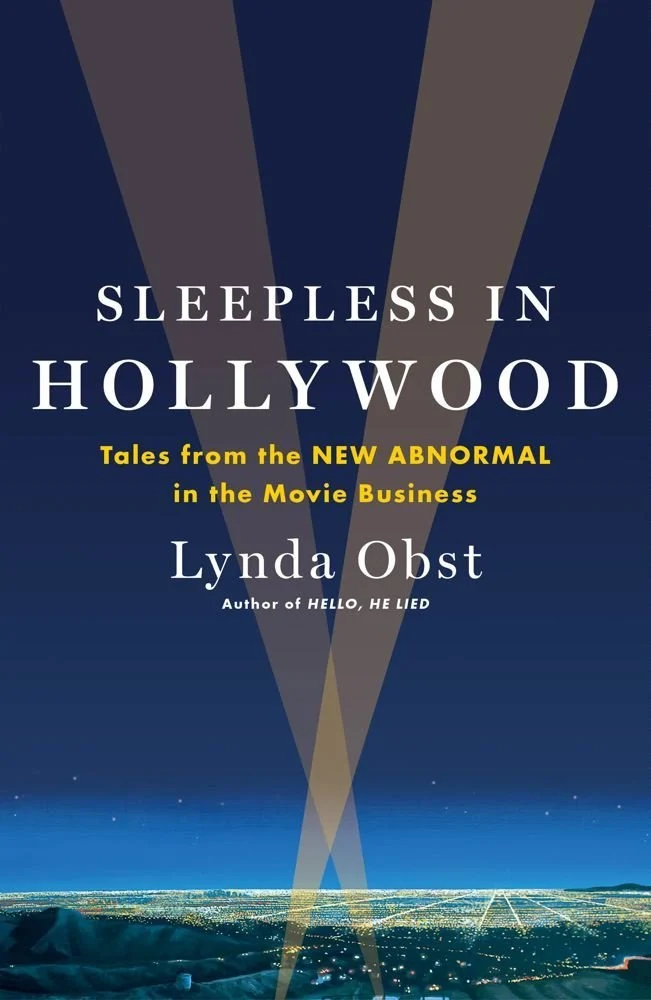
Peter Chernin, who used to run Fox, told Lynda Obst that the DVD business had represented about half of a studio's profit.
Half. And then, over roughly five years, it went away.
That single fact explains most of what has happened to the film business in the last fifteen years, and Obst is the person who went and found it. She was not an analyst or a journalist. She was a working producer who noticed that the films she had spent thirty years making could no longer be greenlit, and set out to find out why.
What the book actually covers
Obst's term for the current state is the New Abnormal, on the grounds that Hollywood was never normal to begin with. The book is her attempt to work out how the industry got there, built from her own experience plus interviews with people running the studios.
The mechanism is the DVD collapse. Home video had quietly become the profit engine that funded everything else, including the mid-budget, star-driven, adult film that had been the industry's staple. Digital distribution and piracy removed it. What was left could not support the same slate.
The studios responded by chasing the revenue that remained, which was international. Films that travel across languages and cultures are not talky adult dramas — they are spectacle, franchise and recognisable IP. So that is what got made.
She adds a second cause that most accounts miss: the 2007 to 2008 writers' strike. The disruption gave studios cover to shed the standing production deals that had housed producers, directors and writers on lots with development budgets. Those deals did not come back. An entire layer of the industry's infrastructure was removed during a stoppage and never rebuilt.
Her summary of what emerged is tentpoles and tadpoles — enormous franchise pictures at one end, films made for between a hundred thousand and ten million dollars at the other, and a hollowed-out middle. Later editions carry a new introduction on the seasons that followed and what she expected to come next.
Why you should read it
Read it as the middle panel of a triptych you may already own. Anita Elberse argued in 2013 that concentration beats diversification in entertainment. Ben Fritz demonstrated in 2018, using Sony's leaked internal documents, that the studio which did not concentrate lost. Obst, writing in the same year as Elberse, supplies the thing neither of them does: the causal mechanism, found by a practitioner asking her own colleagues why her job had stopped working.
Read it because it is a finance story told by someone who is not in finance. A revenue line vanished and a production culture died behind it. Obst did not have the vocabulary of a capital allocator and worked it out anyway, which makes the book unusually legible to people on both sides of that divide.
And read it for the interviews. She had thirty years of access and used it. Studio heads talk to her in this book with a candour they do not extend to journalists, because she was one of them and because she was asking about a problem they were also living inside.
Key takeaways
- A single revenue line held up an entire creative category. DVD was roughly half of studio profit, and the mid-budget adult film died with it. Follow the money before diagnosing the culture.
- International reach dictates content. Once foreign box office became the marginal revenue, spectacle beat dialogue as a matter of arithmetic rather than taste.
- Disruption is when structures get removed permanently. The writers' strike was the occasion for shedding production deals that never returned.
- Tentpoles and tadpoles. The middle of the market is the part that vanished, and the middle was where most of the good films were.
Meet the author
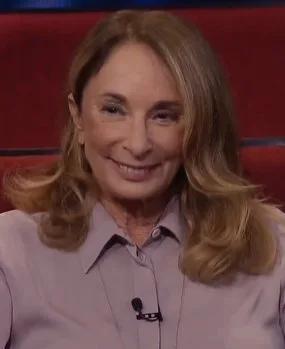
Lynda Rosen Obst was born in New York in 1950, studied philosophy at Pomona College, did graduate work at Columbia, and was an editor at the New York Times Magazine before moving into film.
She started as associate producer on Flashdance, founded her own production company in 1989, and over three decades produced around twenty projects — The Fisher King, This Is My Life, Sleepless in Seattle, One Fine Day, Contact, Hope Floats, The Siege, How to Lose a Guy in 10 Days, and Interstellar with Christopher Nolan in 2014.
Her first book, Hello, He Lied, came out in 1996 and described the industry at the height of the system this book documents the end of. Sleepless in Hollywood followed in 2013. She was also an Oscar columnist for New York magazine with the critic David Edelstein, and spent much of her career advocating for women working in the business.
She died at her home in Los Angeles on 22 October 2024, aged seventy-four. Her son, the manager and producer Oly Obst, described her as a trailblazer and a fierce advocate for women.
Get your copy
Sleepless in Hollywood
Where the proceeds go
Some book links on this site earn a commission. Every penny of it goes to the American Cancer Society.
The American Cancer Society funds cancer research, runs free patient-support programs, provides lodging for patients traveling for treatment, and staffs a 24-hour helpline. You do not need to buy a book to help.
This review contains affiliate links. As an Amazon Associate I earn from qualifying purchases, and all commission is donated — details on my disclosure page.