 Watch on YouTube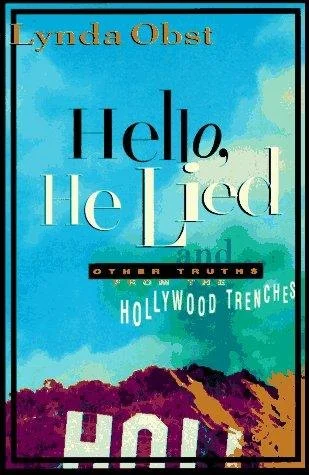
This is a 1996 field manual for getting a film made in Hollywood, written by one of the best producers of that era, and almost none of its practical advice still applies.
That is not a criticism. It is the most interesting thing about it — because the author is also the person who documented the death of the system she describes here. She wrote the autopsy herself, seventeen years later, and called it Sleepless in Hollywood.
Read them in order and you have something rare: one industry, one intelligence, two decades apart, before and after.
What the book actually covers
It is a memoir and a survival guide braided together, and the braiding is the point — every rule comes attached to the situation that produced it.
Obst had come to Los Angeles from the New York Times Magazine, worked her way up to associate producer on Flashdance, and by 1996 had The Fisher King, This Is My Life and Sleepless in Seattle behind her. The book is written from the position of someone who has learned the rules the expensive way and is prepared to say them out loud.
The mechanics she describes are of the old studio system at its height. How a project gets set up and what a development deal actually is. How to manage a star, an agent, a director and an executive who all want different films made. What a producer's actual job is, which is mostly holding a thing together through years of other people trying to kill it. How to survive being lied to, which the title handles with more grace than most books manage in a chapter.
There is a substantial thread on being a woman doing this in the 1980s and 1990s, and it is unsentimental. She was one of very few, she names the cost, and she does not perform either grievance or triumph about it.
What happened next
The world in this book had roughly a decade left.
The mid-budget, star-driven, adult film — the exact thing Obst was expert at making — was funded by a revenue stream that has since evaporated. DVD sales at their peak represented around half of a studio's profit. When that collapsed, the economics underneath the entire category collapsed with it, and the studios moved decisively toward enormous franchise films that travel internationally.
The 2007 to 2008 writers' strike accelerated it. Studios used the disruption to shed the standing production deals that had kept producers like Obst housed on lots with development money and staff. That arrangement — the thing this book assumes as background furniture — largely stopped existing.
What replaced it, in her own later phrase, is tentpoles and tadpoles: vast franchise pictures at one end, micro-budget films at the other, and very little in the middle. Sleepless in Seattle would struggle to get made today, and Obst spent her second book explaining precisely why.
Why you should read it
Read it as the before picture. If you want to understand what actually changed in the film business, you need a clear account of what it was changing from, and this is the best one written from inside the working level rather than the executive suite.
Read it for the producer's job description, which has survived better than the deal mechanics. Holding a project together across years, managing people whose interests do not align, absorbing risk that appears nowhere on a balance sheet — that has not changed and is not well documented anywhere else.
And read it for the writing. Obst was a magazine editor before she was a producer and it shows on every page. This is considerably funnier and better constructed than the genre usually manages, which is why it was a bestseller and why people who have no interest in film production still finish it.
Key takeaways
- The producer absorbs the risk nobody prices. Years of unpaid development, held together by one person's persistence, is the job under the job.
- Relationships were the operating system. The 1996 industry ran on standing deals, personal loyalty and lot-based housing arrangements — a structure that has since largely gone.
- Being lied to is a working condition, not an aberration. The title is advice, and the book treats deceit as weather rather than betrayal.
- Read it with the sequel. Her second book is the only complete account of what happened to everything described here.
Meet the author
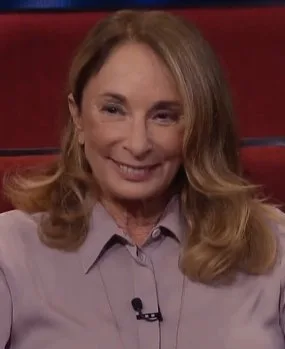
Lynda Rosen Obst was born in New York City in 1950 and raised in Harrison, in Westchester County. She studied philosophy at Pomona College and went on to graduate work at Columbia, then became an editor at the New York Times Magazine before moving into film.
She began in the industry as associate producer on Flashdance, founded Hill/Obst Productions in 1986 and Lynda Obst Productions in 1989, and produced somewhere around twenty projects over the following three decades — Adventures in Babysitting, The Fisher King, This Is My Life, Sleepless in Seattle, One Fine Day, Contact, Hope Floats, The Siege, How to Lose a Guy in 10 Days, and, in 2014, Interstellar with Christopher Nolan.
She also wrote an Oscar column for New York magazine with the critic David Edelstein, and was a persistent and public advocate for women working in the industry.
Hello, He Lied & Other Truths from the Hollywood Trenches was published in 1996 and was her first book. She died at her home in Los Angeles on 22 October 2024, aged seventy-four.
Get your copy
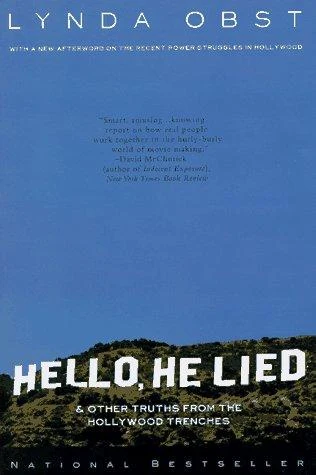
Hello, He Lied
Where the proceeds go
Some book links on this site earn a commission. Every penny of it goes to the American Cancer Society.
The American Cancer Society funds cancer research, runs free patient-support programs, provides lodging for patients traveling for treatment, and staffs a 24-hour helpline. You do not need to buy a book to help.
This review contains affiliate links. As an Amazon Associate I earn from qualifying purchases, and all commission is donated — details on my disclosure page.