As one of the biggest movie franchises released its latest instalment, we looked at the economics of the Star Wars intellectual property and why global box office numbers are not always what they seem.
By Tobias Jaeger · First published on Medium on · 2016 interview · Exact recording date unconfirmed
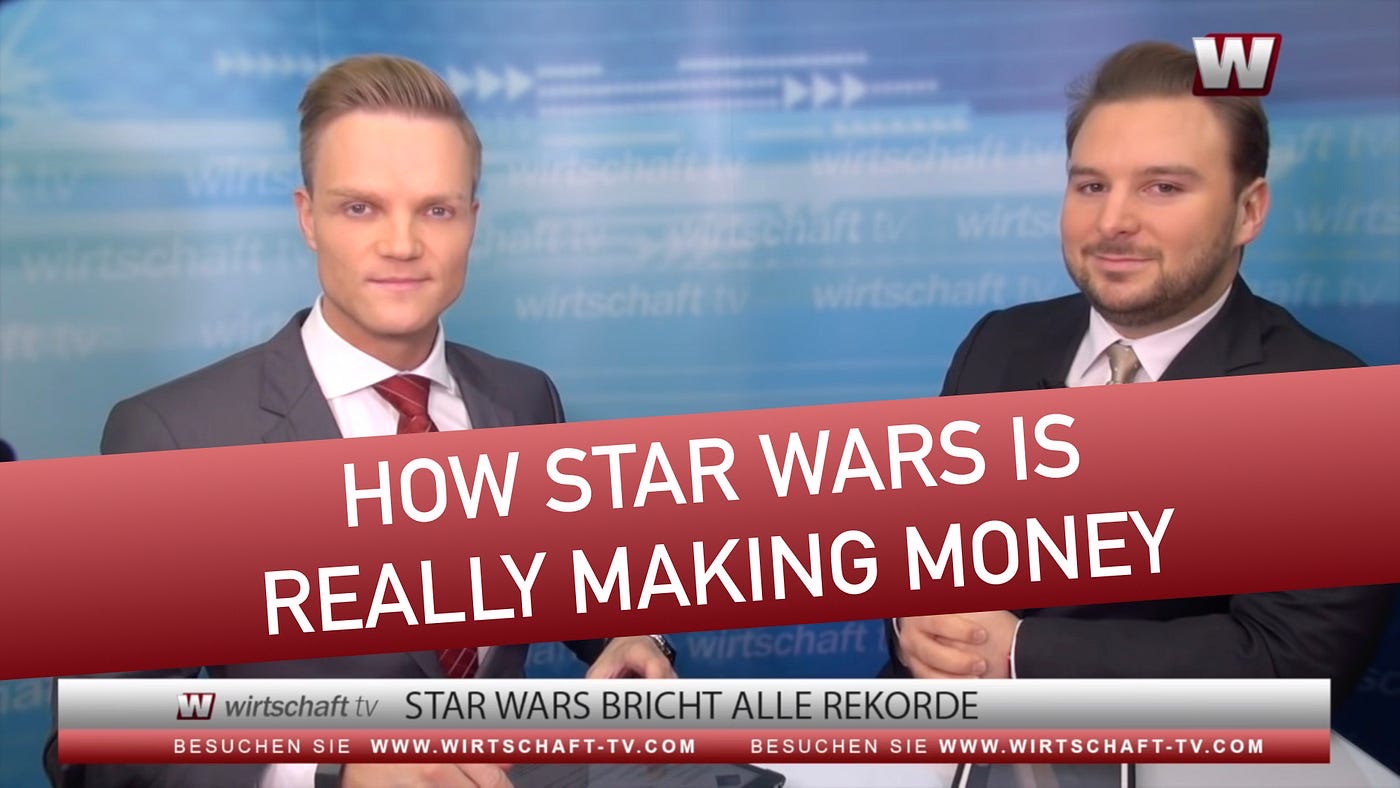
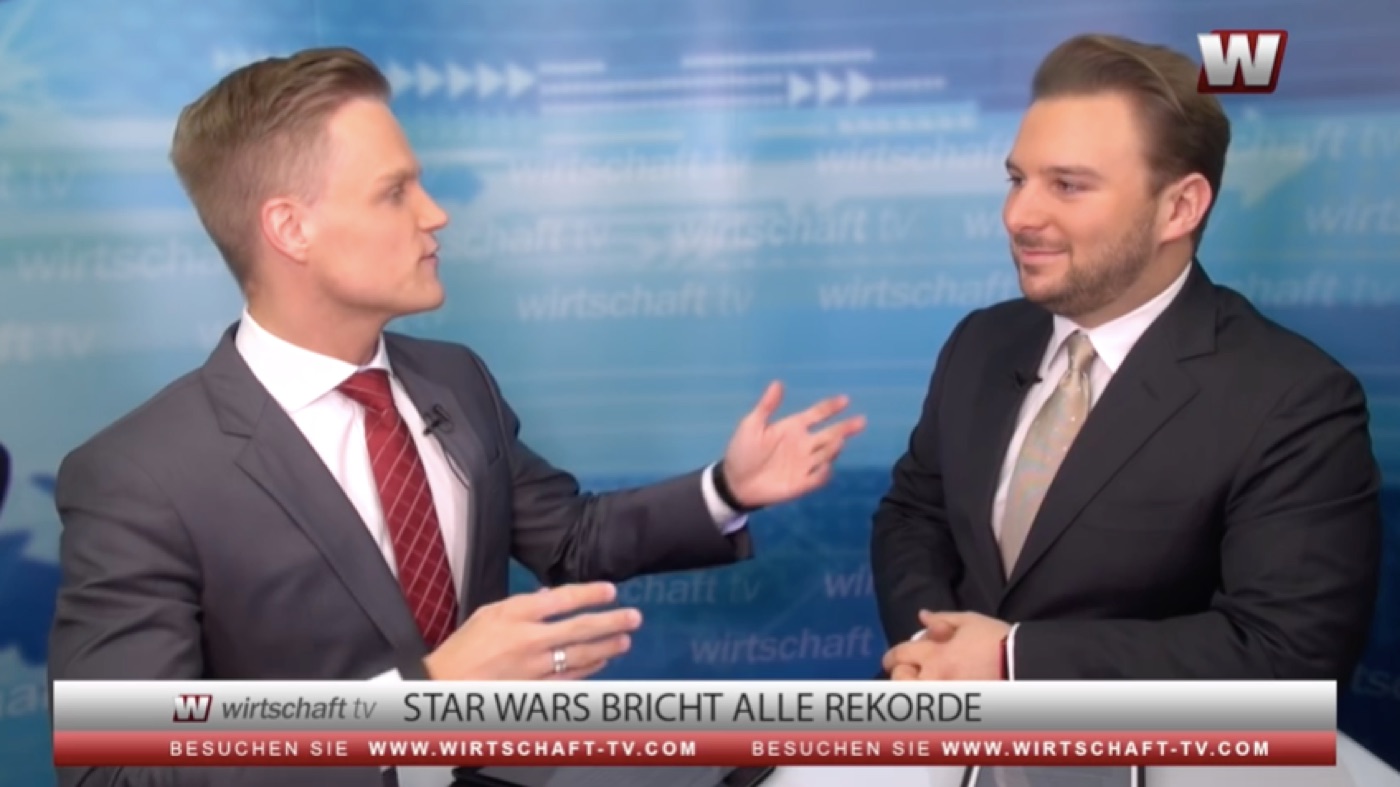
Manuel Koch, editor-in-chief (left), and Tobias Jaeger (right). Still: Wirtschaft TV
Tobias Jaeger sat down with Inside Wirtschaft editor-in-chief Manuel Koch to talk about Hollywood studio revenues and how Star Wars is really raking it in. For decades Star Wars has enthralled fans and manifested itself in modern culture. In this interview we look behind the curtain at the economics that drive the franchise.
“Box office numbers are tricky and often misleading for the industry outsider. Half of the revenues the film is generating remains with the exhibitor, the movie theatre operator.”
The original interview in German, “Kinokassen klingeln: So verdient Star Wars Geld”, on Wirtschaft TV’s YouTube channel.
The conversation below is a translation of the interview, which was recorded in German for Wirtschaft TV.
Manuel Koch: Welcome to Wirtschaft TV, straight from Berlin. Our guest today is Tobias Jaeger. He is an investment banker in the film and entertainment industry. Thank you for being here!
Tobias Jaeger: Thanks for having me.
Manuel Koch: “May the Force be with you” is what we are talking about today. The Force Awakens is the latest instalment of the Star Wars franchise and has made over a billion dollars to date. Did the film break any other records?
Tobias Jaeger: Yes, the film is an absolute record breaker. Not only has it broken the record for the fastest billion at the box office, but it has also pushed Titanic from the throne of the most successful movie of all time. But you have to take a close look at the box office numbers. This film has it all: most screens booked, biggest IMAX release ever. The most remarkable thing is that these are the numbers before the movie has opened in China. It hasn’t even started there yet. It’s absolutely staggering how this film went through the roof.
Manuel Koch interviewing Tobias Jaeger, then at AXIOM Venture Capital. Still: Wirtschaft TV
Manuel Koch: The film also had the best opening weekend of all time. It made roughly $500 million in the first four days after its release. What does that mean economically?
Tobias Jaeger: Box office numbers are tricky and often misleading for the industry outsider. In the film and television industry you differentiate between independents and studios. There are about five or six studios in the world that can make such a film all by themselves. Doing it themselves means making a huge upfront investment in the project. So when you look at the records the film is breaking after release, you have to keep in mind the huge investment that was made up front. The box office can be a misleading indicator of the commercial success of a film. Half of the revenues the film is generating remains with the exhibitor, the movie theatre operator. In the case of this film, it has been a good one for the exhibitors. Before the producer receives any money from the exploitation of the film, the distributor has to be paid, and so on. That means the net receipts for the producer or rights holder are much, much lower than what we read in the papers. The studios profit from the fact that they own most of the value chain, with the exception of exhibition.
“A couple of years ago Disney had to pay $4 billion for the whole shebang and they are definitely still in a phase of recoupment of their investment.”
Manuel Koch: So a lot of the record-breaking revenue has to be shared? Disney was the producer of the film. How come Disney stock is not going through the roof?
Tobias Jaeger: There are several reasons for that. Foremost, most informed investors remember the huge price tag Disney paid for the Star Wars franchise. They had to pay for all the rights to the Star Wars name and then some. A couple of years ago Disney had to pay $4 billion for the whole shebang, and they are definitely still in a phase of recoupment of their investment. That obviously puts a lot of pressure on the company, and while it’s a hit-driven business, not all releases live up to that expectation.
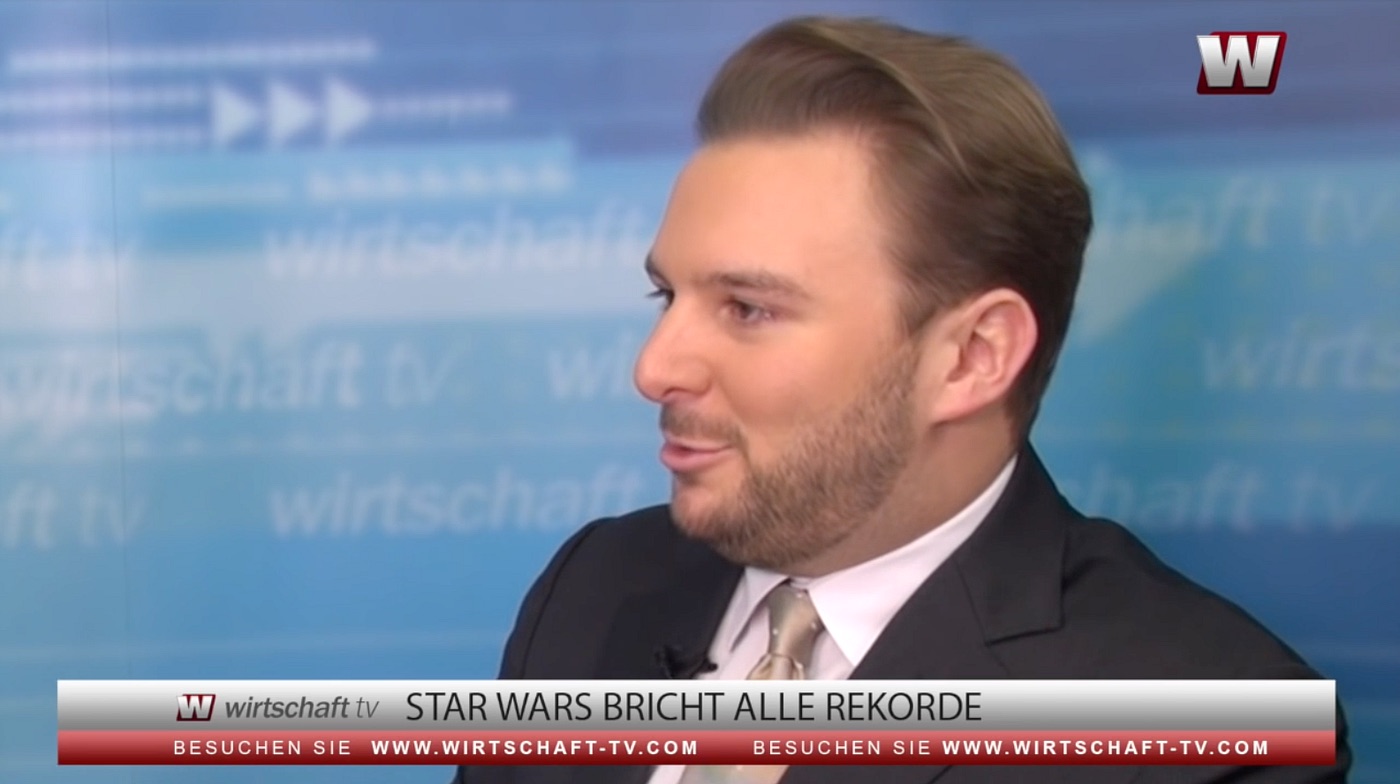
Tobias Jaeger explaining the financial models of Hollywood studios. Still: Wirtschaft TV
Manuel Koch: So how about merchandising? It seems that has become even more meaningful than the film itself.
Tobias Jaeger: Yes, that’s right. Merchandising is of the utmost importance for a property like Star Wars. When you see that it has made a billion at the box office, you can safely assume it’s just the start of the money flow. It will be released on Blu-ray and DVD and digitally, on subscription video on demand (SVOD), transactional video on demand (TVOD) and download to own. The film alone has several great revenue streams. They will likely be smaller than the theatrical revenues, but there is a long tail. That is great, but also tricky for the studios: their huge investment is upfront while the revenues flow in over time. There is a rule of thumb that after seven years there is a small uptick again, when, for example, a new instalment of the franchise is released and people re-watch the previous ones, or a new generation of viewers discovers the film. But coming back to the question: yes, merchandising is a huge driver of revenues. Take Toy Story, made by Pixar, which Disney bought for $7.4 billion in 2006. Toy Story 3 made about $500–600 million in home entertainment and about $1 billion at the box office. When you look at the licensing revenues, though, all the merchandising, the bedsheets, the underwear, the toys, you name it, you can see it’s a clear multiple of the box office and home entertainment together. It’s pretty safe to assume that the revenues from Toy Story 3 made a huge contribution to recouping the purchase price of Pixar for Disney.
“These acquisitions are always pricey but if managed right, like I think Bob Iger is doing, they can be very rewarding, as you can see from the example of Star Wars.”
Manuel Koch: So how can investors participate directly in such a success?
Tobias Jaeger: The shares of these companies are freely available, of course, so anyone can buy Disney shares, but you have to pay attention to the corporate structures of these entertainment companies. Disney owns some great companies, but the performance varies. Disney has been on a shopping spree over the last years. After Pixar, they also bought Marvel with its 8,000 characters. These acquisitions are always pricey, but if managed right, like I think Bob Iger is doing, they can be very rewarding, as you can see from the example of Star Wars. Investing in single properties is also possible but a lot more complex. If an investor is interested only in merchandising, there are also publicly traded companies that work primarily in that field.
Manuel Koch: Tobias Jaeger, film and entertainment investment banker, thank you for being here and sharing these insights with us. Have fun watching, whether on the couch or at the movies. Until next time.
This historical interview is presented in its original context. The exact recording date has not been independently confirmed; the video’s publication date does not establish when it was recorded. Manuel Koch is a German TV host, stock market commentator and CEO of Inside Wirtschaft.

 Watch on YouTube
 Entertainment Wire