 Watch on YouTube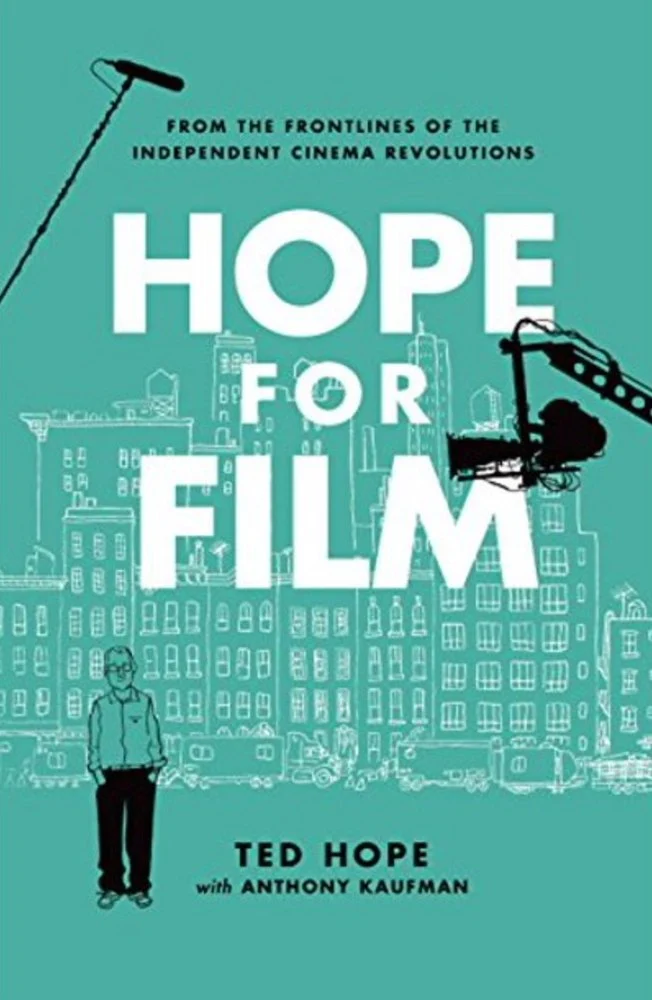
Ted Hope produced somewhere north of seventy independent films — Ang Lee's early work, American Splendor, In the Bedroom, 21 Grams — during the period when American independent cinema went from a movement to an industry to a problem.
Hope for Film is his account of that arc, written by someone who was in the room for all of it and is unusually willing to say what did not work.
What the book actually covers
The first half is the working life: how the films got made, which is mostly a story about assembling money from incompatible sources under time pressure. Hope is specific about the mechanics — the pre-sales, the gap financing, the soft money and tax incentives, the festival premiere as a sales event rather than a celebration.
The second half is the argument, and it is a pessimistic one. Hope contends that the independent film business as it existed in the 1990s and 2000s was structurally unsustainable: too many films, too little distribution capacity, financing models that depended on outcomes nobody could predict, and a value chain in which the producer absorbed the risk while others captured the return.
He is unusually honest about the personal economics. Producing seventy films did not make him rich. The producer's position in the independent chain is the one with the most exposure and the least protected upside, and he says so plainly rather than romanticising the role.
What lifts it above complaint is that Hope keeps proposing alternatives — direct audience relationships, different financing structures, new distribution arrangements. Some of these have since happened. Some have not. Reading it now, with the streaming era fully arrived, is an exercise in seeing which of his proposed futures materialised.
Why you should read it
Read it for the independent financing mechanics. Pre-sales, gap financing, soft money, minimum guarantees — these are the actual instruments of independent film finance, and Hope explains them from the position of someone who has assembled them under pressure rather than described them from outside.
Read it for the producer's-share problem. Hope's account of who captures value in the independent chain, and why it is rarely the person carrying the risk, is directly applicable to anyone structuring a deal at that end of the market. It is also a useful corrective to the studio-side accounts elsewhere on this shelf.
And read it as the independent counterpart to Lynda Obst's Sleepless in Hollywood, covered here. Obst documents the collapse of the studio middle; Hope documents the parallel crisis at the independent end. The two together describe what happened to everything that was not a tentpole.
Key takeaways
- The producer carries the risk and rarely captures the return. Hope is direct that seventy films did not translate into wealth, and structurally explains why.
- Independent finance is assembly, not funding. Pre-sales, gap, soft money and equity from incompatible sources, held together under deadline. Understand each instrument separately.
- The festival premiere is a sales event. Treating it as a celebration rather than a market is a category error with financial consequences.
- Too many films, too little distribution. His structural diagnosis of the independent sector's oversupply problem has largely been borne out.
Meet the author
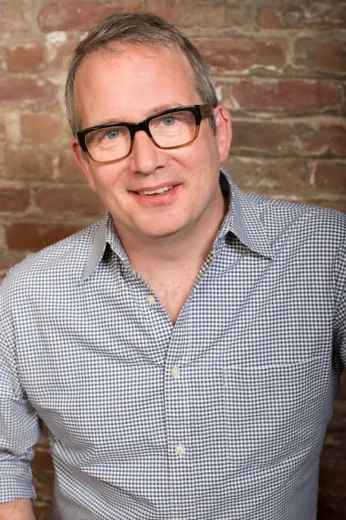
Ted Hope is one of the most prolific producers in American independent film, with credits including The Ice Storm, The Brothers McMullen, In the Bedroom, American Splendor, 21 Grams and Adventureland. He co-founded Good Machine, the production company that launched Ang Lee's career, and later ran the San Francisco Film Society.
He subsequently moved to the platform side, holding senior content roles at major streaming services — a transition that makes his perspective unusual, since he has occupied both the independent producer's position and the buyer's.
Hope for Film: From the Frontline of the Independent Cinema Revolutions was published in 2014.
Get your copy
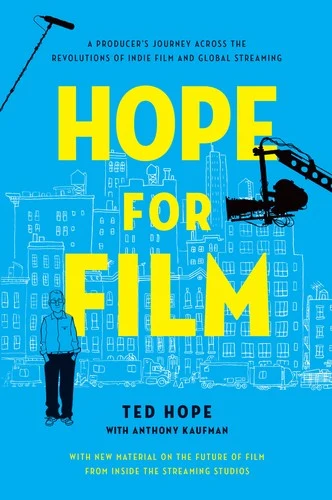
Hope for Film
Where the proceeds go
Some book links on this site earn a commission. Every penny of it goes to the American Cancer Society.
The American Cancer Society funds cancer research, runs free patient-support programs, provides lodging for patients traveling for treatment, and staffs a 24-hour helpline. You do not need to buy a book to help.
This review contains affiliate links. As an Amazon Associate I earn from qualifying purchases, and all commission is donated — details on my disclosure page.