Billion-Dollar Mega Mergers in the Media Industry: What’s Next for Big Buyers like AT&T and Sprint?
With mega mergers like AT&T’s $85 billion bid for Time Warner and a possible Sprint–T-Mobile US deal, the question “What’s next?” was more pressing than ever. Manuel Koch of Inside Wirtschaft asked Tobias Jaeger about US and European media M&A and where it might lead.
By Tobias Jaeger · First published on Medium on · 2017 interview · Exact recording date unconfirmed
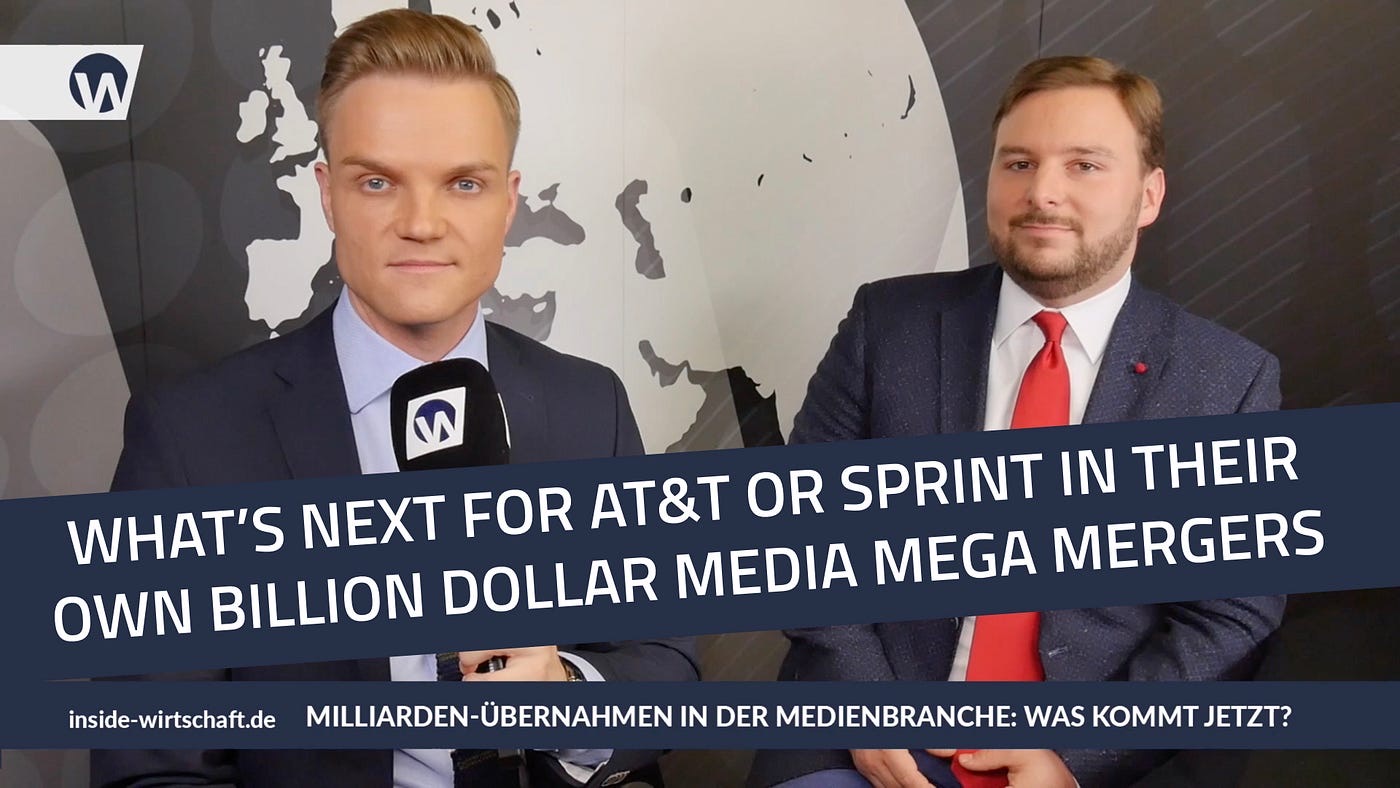
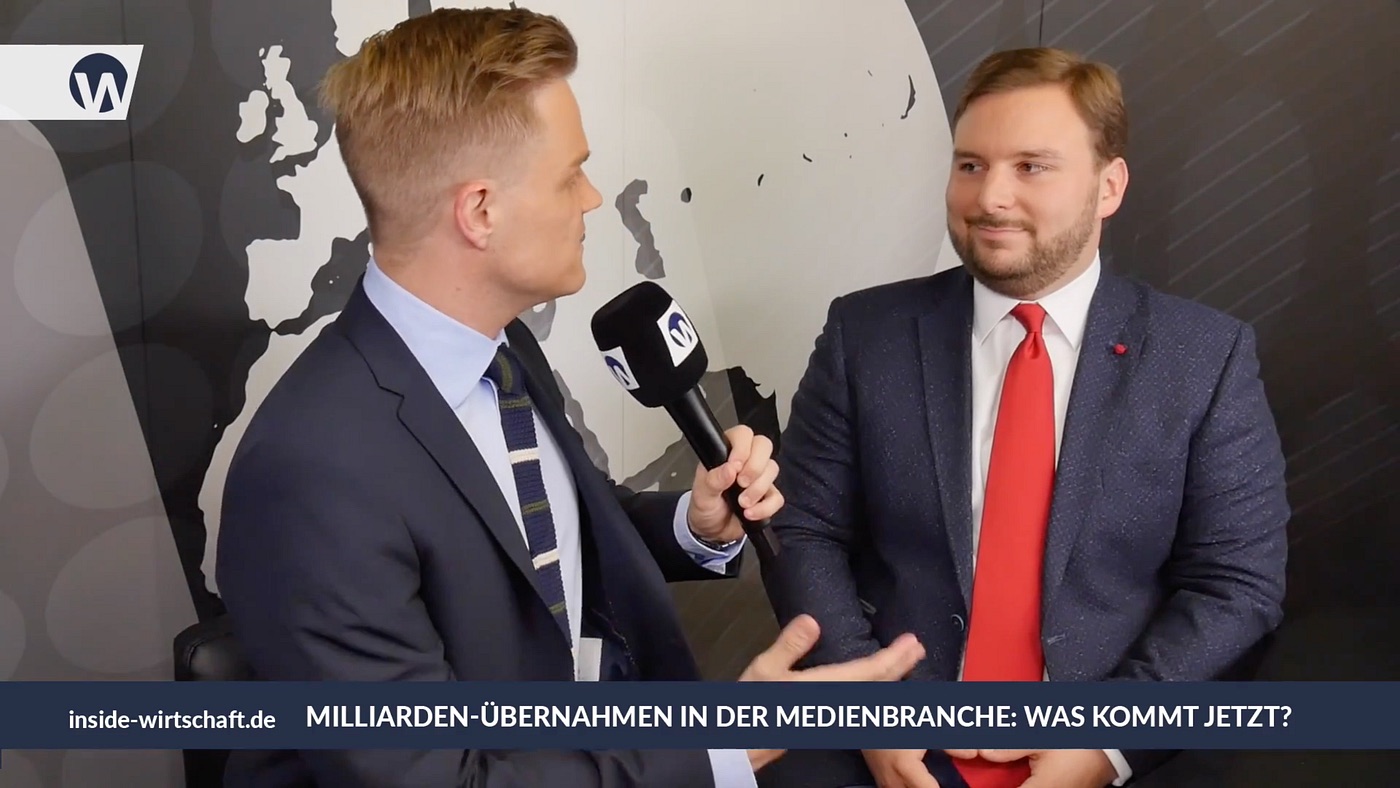
Manuel Koch (left) and Tobias Jaeger on Inside Wirtschaft, August 2017. Still: Inside Wirtschaft
Tobias Jaeger sat down with Inside Wirtschaft editor-in-chief Manuel Koch to discuss merger and acquisition trends in the media and entertainment industry. With big telecom companies such as AT&T and Sprint pursuing their own expansion strategies, Manuel Koch asked Tobias Jaeger what is driving these deals.
“The price tag is just amazing. On the other hand, and that is always the hope in a merger, the new company will have brand new synergies and efficiencies and will have it easier to earn back the purchase price.”
The original interview in German on Inside Wirtschaft’s YouTube channel.
The conversation below is a translation of the interview, which was recorded in German.
Manuel Koch: Welcome, ladies and gentlemen, to Inside Wirtschaft. Today we are taking a closer look at the media industry. There are many mergers in progress: telecom giant AT&T is about to buy media giant Time Warner for a reported $80 billion. Joining us is Tobias Jaeger, investment banker at AXIOM Venture Capital. Thank you for being here. What is your assessment of the mergers ahead? Is this a shift in the world of media?
Tobias Jaeger: Yes. The shift we are seeing is that these huge companies, which own so many customers directly through their network and mobile service, have woken up to the fact that they must offer content directly. Buying a media company with a ton of content and a huge library creates great synergies that can be leveraged to offer subscribers content more efficiently. I believe this trend will continue. Those who already have direct subscribers or customers will keep looking for ways to extend their services by offering content they can deliver directly.
“Those who already have direct subscribers or customers will continue to look for ways to extend their services by offering content that can be delivered directly.”
Manuel Koch asking about the AT&T–Time Warner deal. Still: Inside Wirtschaft
Manuel Koch: So at a time when viewers are moving away from linear television and watching Netflix instead, these companies have to make sure they don’t fall behind?
Tobias Jaeger: Exactly. Subscribers, and consumers in general, demand that they can consume everything, including content, anywhere, anytime, on any device. They don’t want to be confined to a television set or even cable. So for a company like AT&T that is already everywhere, it makes sense to buy someone that has the content.
Manuel Koch: It looks like Sprint is next in line and has expressed interest in acquiring T-Mobile US, a real cash cow for Deutsche Telekom. What’s your take on the potential synergies in the telecom industry?
Tobias Jaeger: The reports of Sprint looking at an acquisition, whether T-Mobile US or Charter Communications, reflect something we are seeing worldwide at the moment. Every major mobile network seems to be exploring its options. In France, for example, Orange has just launched its own content division to produce originals. Faced with an AT&T–Time Warner merger, a company like Sprint doesn’t have many options. It will have to examine the market carefully to decide whether to expand its network by buying another provider or, in the case of Charter Communications, buy a cable company that also has amazing reach and market penetration in the US.
“It looks like every major mobile network around the world is exploring their options.”
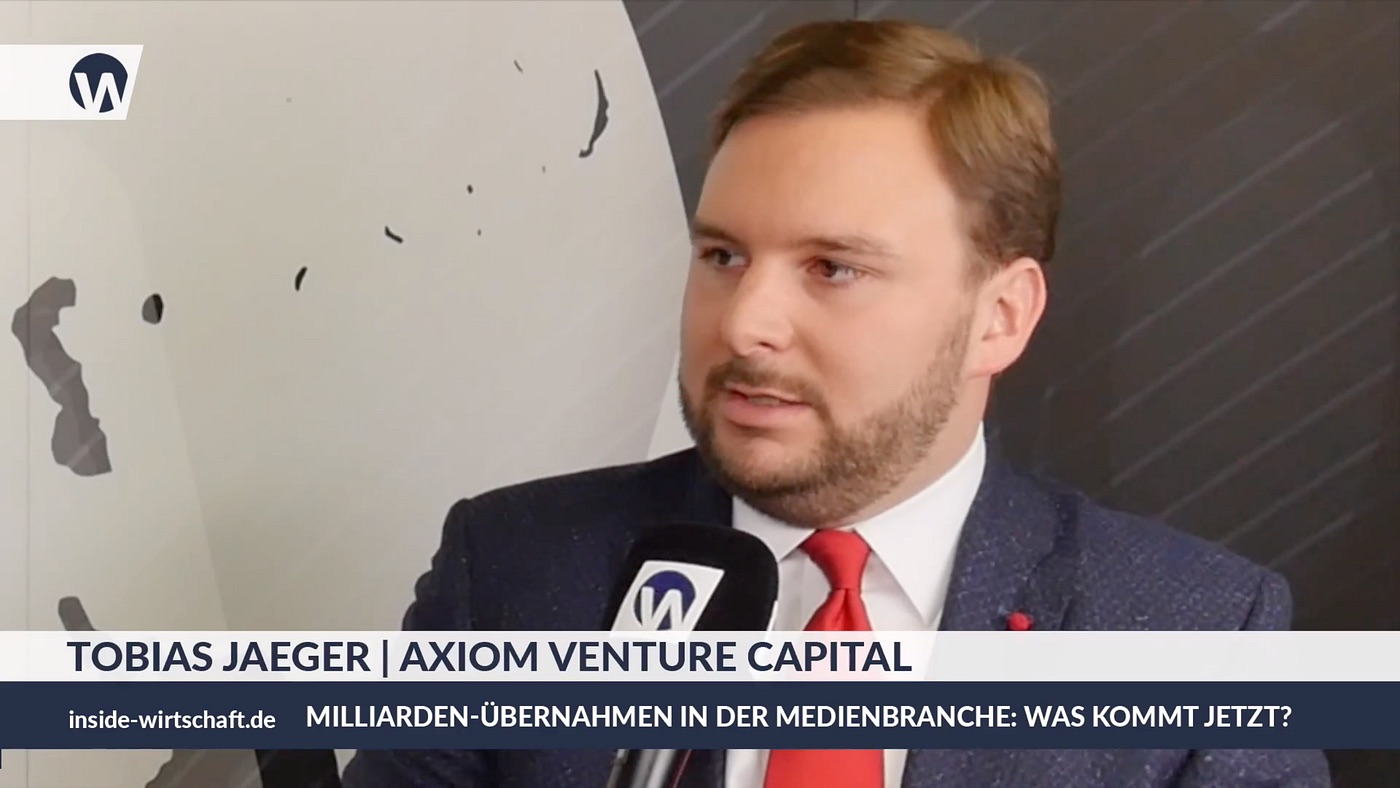
Tobias Jaeger, then at AXIOM Venture Capital. Still: Inside Wirtschaft
Manuel Koch: Talking about rights: what makes owning original programming so valuable for these large companies?
Tobias Jaeger: There are two important factors. One is the control you gain over the rights and their subsequent exploitation; the second is the exclusivity that comes with ownership. That is a huge factor in acquiring new subscribers, which in turn is immensely important for the future of a new company made up of one part delivering content and another part creating it.
Manuel Koch: But how profitable can these companies really become? We are talking about an $80 billion deal. You will have to work really hard to earn back that price tag.
Tobias Jaeger: Absolutely. The price tag is just amazing. On the other hand, and that is always the hope in a merger, the new company will have brand new synergies and efficiencies and will find it easier to earn back the purchase price. It’s very difficult to predict how the market will evolve but, as I mentioned, doing nothing is also not an option. Acquiring or extending ownership of the value chain is therefore essential, and it can hopefully be a great deal.
Manuel Koch: Looking at Germany, are we about to witness a similar deal here? Media giants merging?
“So even though you have the Justice Department indicating that they are happy with the broad strokes of the deal, there are factors that can delay a deal like that and ultimately make it unattractive.”
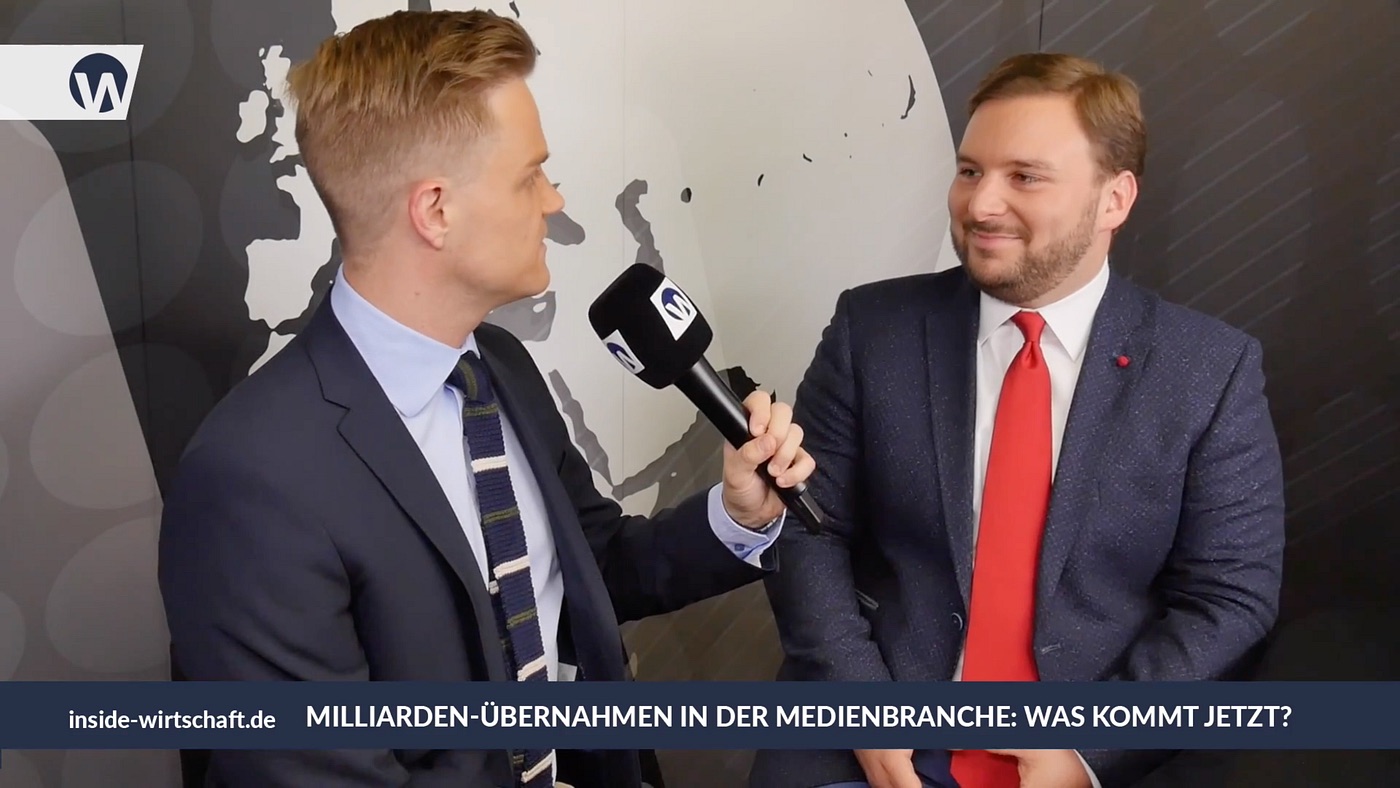
Manuel Koch and Tobias Jaeger on the regulatory wildcards. Still: Inside Wirtschaft
Tobias Jaeger: Germany has a fundamentally different media landscape, with two systems at work: public and private broadcasters. Two of the biggest companies, ProSiebenSat.1 and RTL, which is part of Bertelsmann, are constantly looking for acquisitions, and in digital ProSiebenSat.1 is pulling ahead, with RTL not far behind. I don’t think it’s likely that a German or even European telecom company will buy a big content company. Europe also has a very different regulatory environment, and in the AT&T–Time Warner case it is very handy that it is happening in the US. But even there you have a wildcard: the President, who has already said he is not happy about it, as one of Time Warner’s news channels isn’t a fan of his and vice versa. So even though the Justice Department has indicated it is happy with the broad strokes of the deal, there are factors that can delay a deal like that and ultimately make it unattractive.
Manuel Koch: We will keep an eye on how it all unfolds. Tobias Jaeger of AXIOM Venture Capital, thank you so much for being here, and thank you for watching. Until next time on Inside Wirtschaft.
This historical conversation is presented in its original context. The exact recording date has not been independently confirmed; the video’s publication date does not establish when it was recorded. Manuel Koch is a German TV host, stock market commentator and CEO of Inside Wirtschaft.
Added to Media CFO on 25 October 2026 from the original Medium post, with a link to the original German interview on YouTube. Spelling and small grammar slips are corrected, and an introduction sentence carried over from another article is replaced with one about this interview; the wording is otherwise unchanged.
Keep exploring
Research, insights and market context.
Two more ways to follow the business of entertainment.
Entertainment Wire
News · Deals · Company research
Research and insights for the entertainment business.
Track news and deals, research companies and explore reports, with links to the original sources.

 Watch on YouTube
 Entertainment Wire