
 Watch on YouTube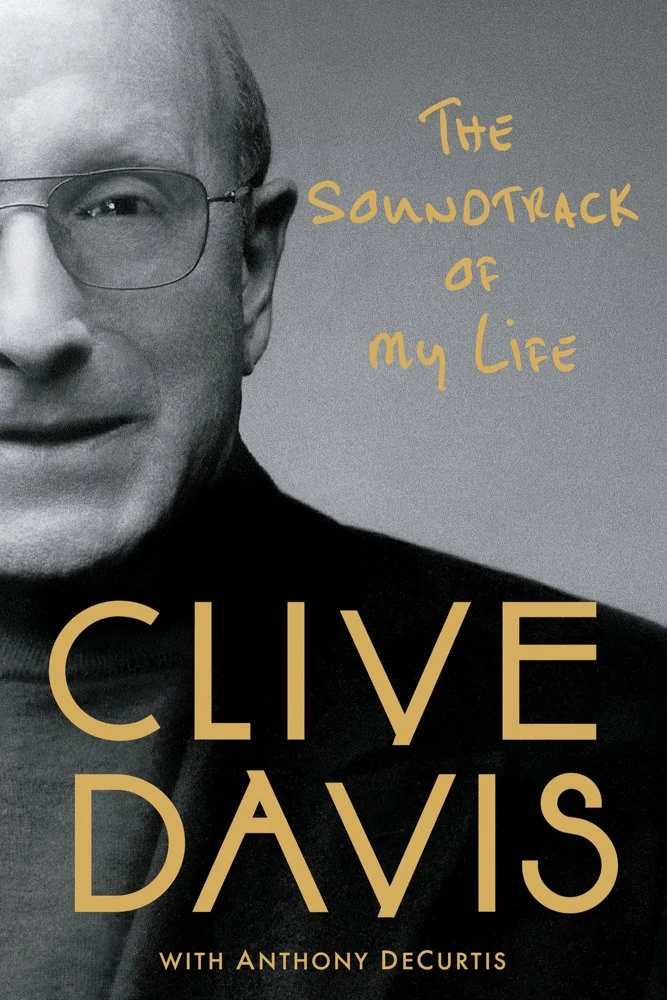
Clive Davis was a corporate lawyer at Columbia Records with no musical training whatsoever when he was made head of the label almost by accident. He then went to the Monterey Pop Festival in 1967, watched Janis Joplin, and understood that the business he had just inherited was about to be replaced.
He signed her. Then he signed a very large proportion of everyone else, across five decades and four companies, and never learned to play anything.
What the book actually covers
The arc covers sixty years. Columbia, where he was made president in 1967 and rebuilt the roster around rock. His abrupt dismissal in 1973 over expense allegations, which he addresses directly. Founding Arista and building it from nothing. Whitney Houston, whom he signed and whose career he shaped more comprehensively than any executive has shaped an artist's before or since. Then J Records, and the late-career run that included the Alicia Keys signing.
Davis's working method is the substance of the book. He listened to everything, personally, for decades — thousands of submissions a year. He involved himself in song selection to a degree most artists would find intolerable and many of his artists credited for their careers. He is unembarrassed about this: he believed the choice of material was the commercial decision, and that most artists chose badly.
He is also candid about the parts of his life he controlled less. He addresses the Columbia dismissal, and he writes about his sexuality — he came out as bisexual in this book, in his eighties, which was the news that accompanied publication.
The self-regard is considerable. He knows it. The book does not really apologize for it, and if you cannot tolerate an autobiography in which the author is the hero of every chapter, this will be a difficult read.
Why you should read it
Read it for the argument about the non-creative executive. Davis is the case for the person who cannot write a song being the most valuable person in the room, and the case rests on something specific: he was not judging quality, he was judging what an audience would respond to. Those are different skills and he was unusually clear about which one he had.
Read it for the A&R discipline. Whatever you make of the man, the practice was extraordinary — decades of personally auditioning material, at volume, without delegating. There is a lesson in that about where a leader's attention should actually go.
And read it as the third position on the same industry. Fredric Dannen documented the corruption. Ahmet Ertegun operated on instinct and charm. Davis operated on process — listening, selecting, structuring — and outlasted both. Three approaches to the same business across the same decades, and this is the one that looks most like a method rather than a personality.
Key takeaways
- Judging the audience is not judging quality. Davis was explicit that these are separate skills, and that he had the commercial one.
- Song selection is a capital allocation decision. He treated the choice of material as the highest-leverage decision available and refused to delegate it.
- Attention is the executive's scarcest asset. He spent his on listening, personally, for fifty years. Almost nothing else got that level of his time.
- The outsider can see the market more clearly. A lawyer with no musical training reading a festival crowd correctly in 1967 is the whole thesis in one anecdote.
Meet the author
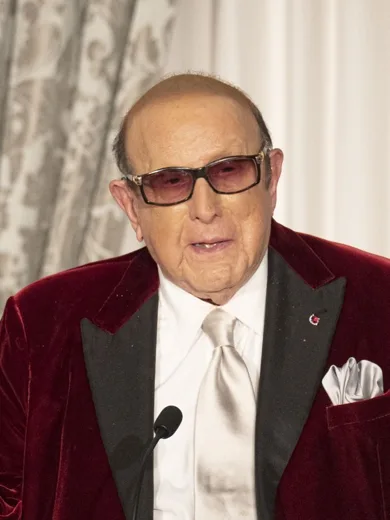
Clive Davis trained as a lawyer at Harvard Law School and joined Columbia Records as counsel, becoming president of the label in 1967 with no background in music. He was dismissed in 1973, founded Arista Records shortly afterwards, and later founded J Records, eventually returning to the Sony structure as chief creative officer. He died on 22 June 2026, aged 94.
Across that career he was associated with the careers of Janis Joplin, Bruce Springsteen, Barry Manilow, Patti Smith, Aretha Franklin's later work, Whitney Houston, Santana's Supernatural comeback, Alicia Keys and a great many others. He is in the Rock and Roll Hall of Fame as a non-performer.
The Soundtrack of My Life was published in 2013, written with the music journalist Anthony DeCurtis. Davis was eighty at publication and still working, which is itself part of the argument the book is making.
Get your copy
The Soundtrack of My Life
Where the proceeds go
Some book links on this site earn a commission. Every penny of it goes to the American Cancer Society.
The American Cancer Society funds cancer research, runs free patient-support programs, provides lodging for patients traveling for treatment, and staffs a 24-hour helpline. You do not need to buy a book to help.
This review contains affiliate links. As an Amazon Associate I earn from qualifying purchases, and all commission is donated — details on my disclosure page.