
 Watch on YouTube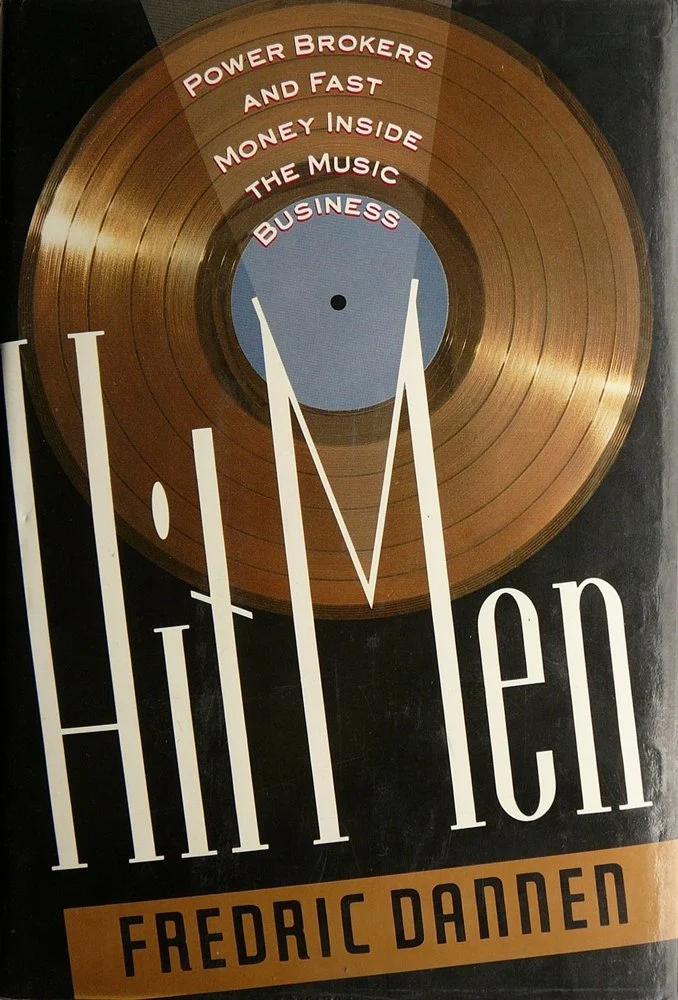
Prince Rupert Loewenstein fixed one band's finances from the inside. Fredric Dannen went and found out what the industry those finances sat inside was actually doing.
Hit Men is the book the record business did not want written. Published in 1990, it traces American music from Tin Pan Alley to the compact disc, and its central subject is not music at all — it is the machinery of promotion, payola and organized crime through which records were pushed onto radio, and the executives who ran it.
Billboard later placed it second on its list of the hundred greatest music books ever written. That is about right.
What the book actually covers
The spine is the Network — a small group of independent radio promoters who, by the late 1970s, had positioned themselves between the record labels and the radio stations so effectively that a major label could not reliably get a single onto a playlist without paying them. Enormous sums moved through this arrangement. Dannen follows the money and the people, including the organized-crime connections that came with them.
The human center is CBS Records, and specifically the rivalry between Walter Yetnikoff, who ran it, and Dick Asher, his deputy, who tried to break the label's dependence on the Network and discovered what that cost. It is a corporate governance story told as a thriller, and it is genuinely gripping.
What makes the book unusual is the discipline of it. Dannen was an investigative business journalist, not a music writer, and he is almost entirely uninterested in the artists. Musicians appear here as names on charts and as clients of powerful lawyers. If you want stories about rock stars, this is the wrong book. If you want to understand who was taking the money and how, there is nothing better.
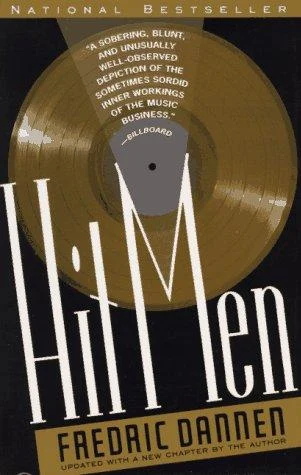
Later editions carry a follow-up chapter and an epilogue extending the story past the original 1990 ending.
Why you should read it
Read it as the structural companion to A Prince Among Stones. Loewenstein describes finding that his client did not own his own masters. Dannen describes the industry in which that was normal. Same decades, same question — where does the money go between the artist and the audience — approached from inside and from outside.
Read it if you work anywhere in music or rights today. The Network is gone and payola in that form is history, but the underlying structure has not changed: there is always a gatekeeping layer between the work and the audience, it always extracts, and the people making the work are usually the last to see the arithmetic. Substitute playlist placement for radio adds and the book reads uncomfortably current.
And read it as a piece of reporting. This is what happens when someone applies proper financial journalism to an industry that had never been subjected to it — the sourcing, the documentation, the willingness to name people. Sinead O'Connor's review of it ran to six words and recommended reading it.
Key takeaways
- The gatekeeper captures the margin. Whoever controls access to the audience prices it, and in this era that was a handful of independent promoters rather than the labels or the artists.
- A dependency you cannot audit is a governance failure. CBS could not get records played without the Network and could not properly examine what it was paying for. That is the whole story.
- Investigative method beats industry access. Dannen was an outsider, which is precisely why he could publish it.
- The artists are barely in this book, and that is the point. The economics of the industry were being decided in rooms they were never in.
Meet the author
Fredric Dannen is an American investigative journalist. Before Hit Men he was a co-recipient of the Overseas Press Club's 1986 Morton Frank Award for business reporting from abroad, and his work has appeared in the New York Times, Vanity Fair, Institutional Investor, Rolling Stone and Barron's.
Hit Men: Power Brokers and Fast Money Inside the Music Business was published by Times Books in 1990. It became a national bestseller, won the Ralph J. Gleason Music Book Award, and was ranked second on Billboard's list of the hundred greatest music books of all time.
He later co-wrote Hong Kong Babylon: An Insider's Guide to the Hollywood of the East with Barry Long, examining the links between the Hong Kong film industry and Asian organized crime — a change of subject that turns out to be less of a change than it sounds.
Get your copy
Where the proceeds go
Some book links on this site earn a commission. Every penny of it goes to the American Cancer Society.
The American Cancer Society funds cancer research, runs free patient-support programs, provides lodging for patients traveling for treatment, and staffs a 24-hour helpline. You do not need to buy a book to help.
This review contains affiliate links. As an Amazon Associate I earn from qualifying purchases, and all commission is donated — details on my disclosure page.