
 Watch on YouTube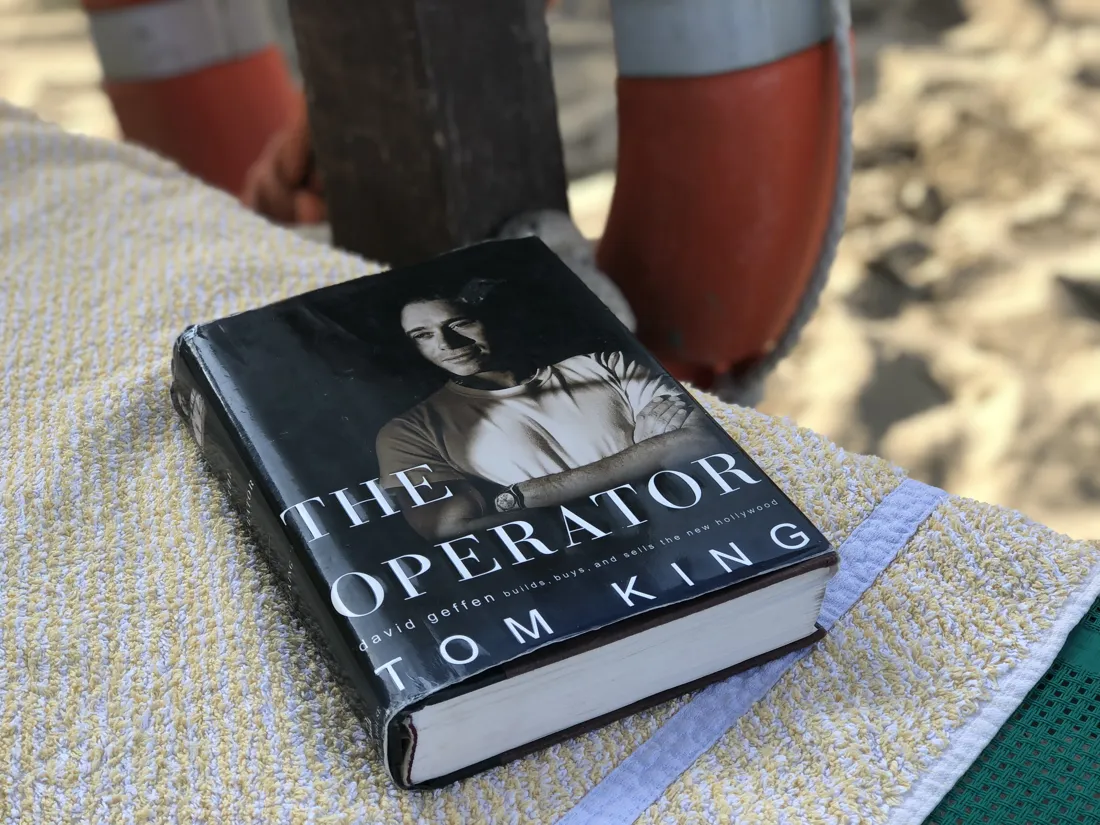
David Geffen agreed to cooperate with this book. Then he read where it was going, withdrew his authorisation, called it sensationalistic trash, and reportedly leaned on Random House to keep it off the shelves.
It came out anyway, in 2000, at 670 pages. That story is not a marketing detail — it is the central fact about the book, and you cannot read it well without holding it in mind.
What the book actually covers
Tom King approached Geffen in 1996. Geffen had already killed several attempted biographies simply by asking his circle not to talk. After months of persuasion he agreed instead to cooperate — sat for interviews, encouraged friends to do the same — and King got access no outsider had previously been given. A year or so later Geffen pulled out.
What King published traces Geffen from the William Morris mailroom through the record business, Broadway, Geffen Records, and on to the founding of DreamWorks SKG in 1994 alongside Spielberg and Katzenberg. Along the way: Crosby, Stills & Nash at Woodstock, Risky Business and the making of Tom Cruise, and thirty years in which Geffen was somewhere near the center of almost every shift in American popular culture. The supporting cast talks — Cruise, Yoko Ono, Warren Beatty, Courtney Love, Paul Simon, Cher.
The portrait is not flattering. King's Geffen is brilliant, magnetic, and by turns tantrum-prone and ruthless, and the book is at its strongest on the deals — how they were structured, who was outmanoeuvred, what each one was actually worth.

Why you should read it
Read it alongside Ovitz. Geffen and Ovitz both started in the William Morris mailroom, both built enormous leverage from nothing, and both are examined here from opposite epistemic positions — Ovitz writing his own case, Geffen having his written by someone who came to dislike him. Set the two side by side and you learn more about how to read a source than either book teaches on its own.
Read it for the deal history, which is genuinely excellent. Geffen's record was built on structural cleverness rather than taste alone, and King, as a working financial journalist, is good on the mechanics.
And read it with your eyes open. The critical reception split hard. Newsweek called it a crazy American epic. Others argued that King disliked his subject so thoroughly that the book cannot explain what made Geffen worth 670 pages in the first place — that it becomes an indictment rather than a portrait. Both readings are defensible. King himself, to his credit, conceded on the record that he had found Geffen's magnetism seductive.
If you want one book on how Hollywood power actually works, start with Ovitz. If you want to understand how a hostile source can be simultaneously unfair and indispensable, this is the better text.
Key takeaways
- Access is a lever the subject controls, and can withdraw. The most interesting thing here is what King published anyway, and what that cost the book.
- The William Morris mailroom is not a coincidence. Two of the era's most powerful men came out of the same entry-level job. The institution was a filter, and understanding it explains more than either individual biography.
- Structural cleverness beats taste over a career. Geffen's durability came from how deals were built, not only from what he signed.
- A biased source is still evidence. You read it for what it can prove, not for its verdict — which is the same discipline you apply to any interested party's account.

Meet the author
Tom King joined the Wall Street Journal as a news assistant in 1986, covered advertising, and moved to Los Angeles in 1991 to report on the entertainment industry from the paper's West Coast bureau. He spent nearly a decade on the beat before The Operator was published in 2000, and began writing the Journal's "Hollywood Journal" column the same year.
Colleagues described a reporter of considerable wit and energy who, despite years of studio access, still thought of himself as a kid from Iowa.
King died in April 2003, at thirty-nine. The Journal's newsroom was, by the account of its deputy managing editor at the time, devastated. He is survived by his partner, Ken Miller, and his family. The Operator remains his only book.
Get your copy
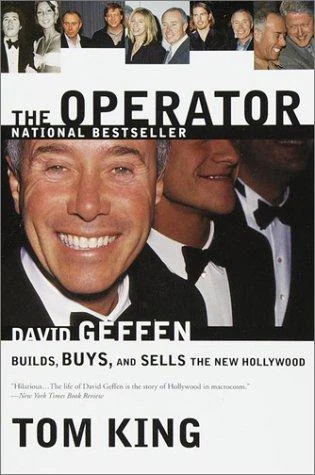
The Operator
Where the proceeds go
Some book links on this site earn a commission. Every penny of it goes to the American Cancer Society.
The American Cancer Society funds cancer research, runs free patient-support programs, provides lodging for patients traveling for treatment, and staffs a 24-hour helpline. You do not need to buy a book to help.
This review contains affiliate links. As an Amazon Associate I earn from qualifying purchases, and all commission is donated — details on my disclosure page.