
 Watch on YouTube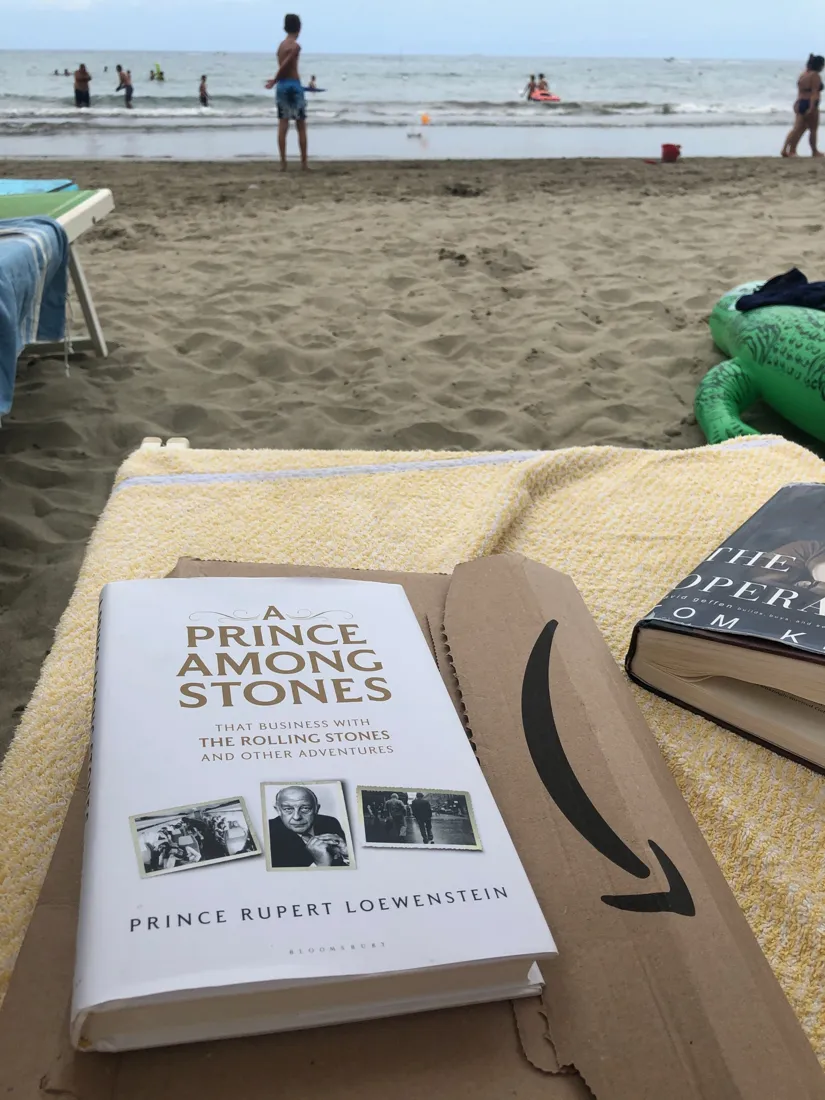
In 1968 Mick Jagger asked a merchant banker a question that should sound familiar to anyone who has ever been called into a creatively successful business: why are we broke?
The Rolling Stones were one of the biggest acts on earth. They had no money. The man Jagger asked was a Bavarian prince who had never heard of them, did not like rock and roll, and would spend the next thirty-nine years turning the band into one of the most profitable brands in the world.
If you only read one book on this list, it is probably this one.
What the book actually covers
The diagnosis, when Loewenstein arrived, was not that the Stones were overspending. It was that they did not own their own work.
Their Decca recording contract was poor. Worse, the rights to future earnings from the masters and copyrights had been sold to their American manager Allen Klein, and the band were bound to him through a dense mass of agreements. They were generating enormous revenue that was landing somewhere else entirely. Loewenstein's first job was extraction — from Klein, and from Decca.
What followed is the part worth studying. He restructured where the band was resident for tax, which is how a group of Englishmen came to record an album in the south of France. He introduced them to the promoter Michael Cohl and rebuilt touring from a promotional cost into the primary profit center, producing some of the most lucrative concert tours ever staged. He treated the catalog as an asset to be owned and defended rather than a byproduct of making records.
He describes the role himself as a combination of "bank manager, psychiatrist, and nanny", which is both funny and, for anyone who has done this work, uncomfortably precise.
The memoir is also a genuine social history. Loewenstein was the son of impoverished aristocrats, educated at a Quaker school in Hertfordshire and then at Oxford, where he read medieval history. His account of the City of London before it modernised — short hours, long lunches, everybody from the same handful of schools — is worth the price on its own.
Why you should read it
Read it if you are the financial person in a creative business. There is almost no literature on this role, and this is the best account of it that exists. The central insight — that the money problem in a creative company is nearly always a rights problem wearing a disguise — is worth more than most textbooks.
Read it for the distance. Loewenstein was never a fan, and says so plainly. He liked opera. That detachment is exactly why he could see the contracts clearly when everyone around him was arguing about the music, and it is the strongest argument in the book for hiring someone who is not in love with the product.
Read it also as a companion to the Hollywood books. Allen Klein is the music industry's version of the same story the agency books tell: whoever controls the rights controls the returns, and the talent is usually the last to work that out.
A note on how it landed. Mick Jagger was displeased by its publication, observing that a former bank manager ought not to discuss a client's financial affairs in public, and adding a remark about the manners of the well-brought-up. Loewenstein published anyway. Reasonable people can hold both views, and the disagreement tells you something real about the relationship the book describes.
Key takeaways
- A cash flow problem in a creative business is usually a rights problem. The Stones were not spending too much. They did not own their masters.
- Domicile is a lever, and it is a legitimate one. The tax restructuring was as consequential to the outcome as any record they made.
- Touring was reframed from marketing cost to profit center. That reclassification, more than any single deal, is what compounded over forty years.
- Not loving the product is an advantage. Detachment is what let him read the contracts properly.
Meet the author
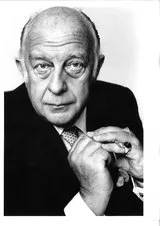
Prince Rupert zu Loewenstein was born in Palma, Majorca in 1933, into the princely house of Löwenstein-Wertheim. His family left Nazi Germany, and his childhood was spent moving around Europe. He was educated at a Quaker boarding school in Letchworth and then at Magdalen College, Oxford, where he read medieval history, before going into the City as a stockbroker and then a merchant banker.
He was introduced to Mick Jagger in 1968 by the art dealer Christopher Gibbs, and served as the Rolling Stones' business adviser and financial manager until 2007 — a tenure of thirty-nine years. In 1981 he founded his own firm, Rupert Loewenstein Ltd, where he preferred new-money clients to old on the grounds that they were more realistic about their position.
A Prince Among Stones was published by Bloomsbury in 2013. He died in London on 20 May 2014, aged eighty, following a long illness. Keith Richards, in his own memoir, described him simply as trustworthy — which from that quarter is a considerable statement.
Get your copy
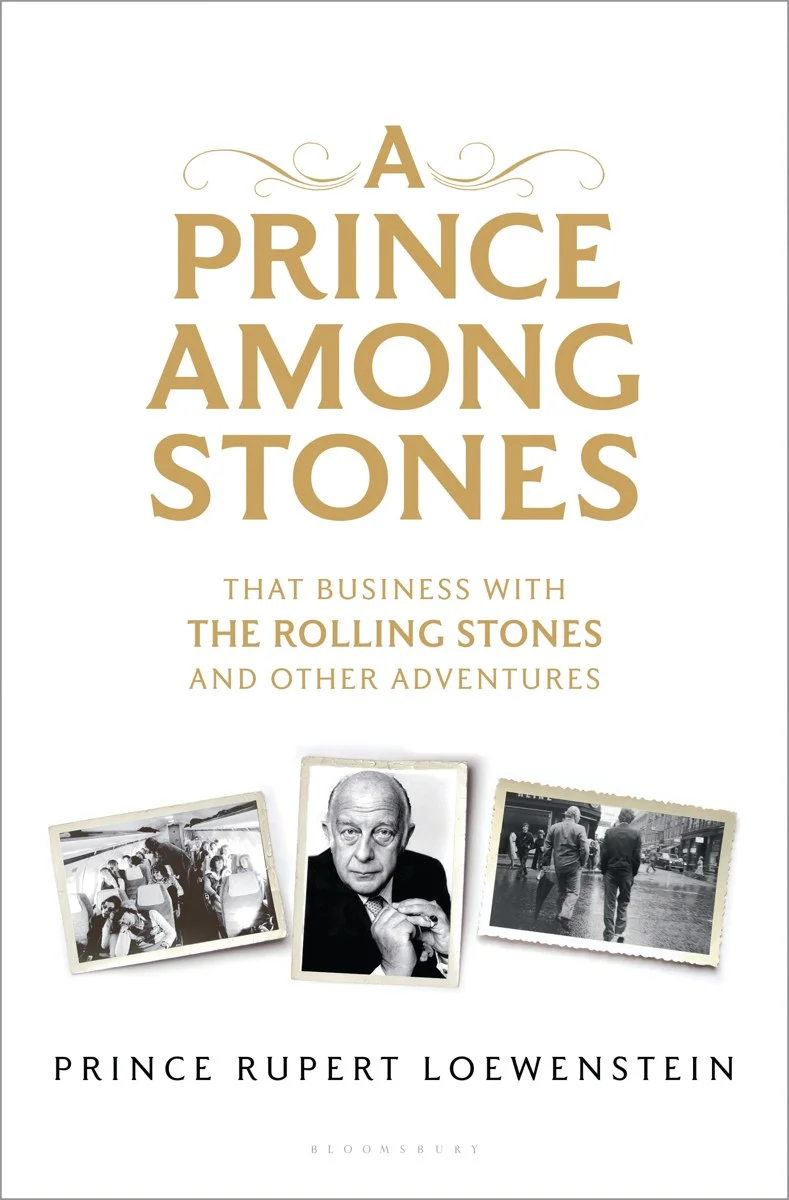
A Prince Among Stones
Where the proceeds go
Some book links on this site earn a commission. Every penny of it goes to the American Cancer Society.
The American Cancer Society funds cancer research, runs free patient-support programs, provides lodging for patients traveling for treatment, and staffs a 24-hour helpline. You do not need to buy a book to help.
This review contains affiliate links. As an Amazon Associate I earn from qualifying purchases, and all commission is donated — details on my disclosure page.