
 Watch on YouTube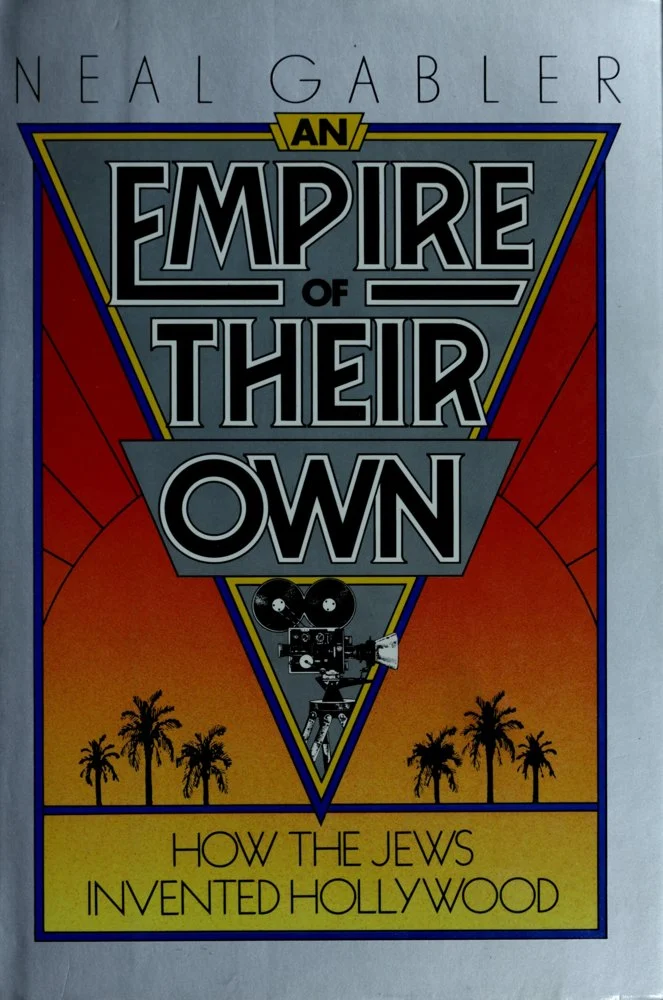
The men who founded Hollywood were almost all immigrants or the children of immigrants, mostly Jewish, mostly from Eastern Europe, mostly poor, and mostly excluded from every established American industry.
So they built one nobody wanted. And then, in the most consequential act of image-making in modern history, they used it to manufacture a picture of America that the country adopted as its own — a picture from which, in most cases, people like them were entirely absent.
What the book actually covers
Gabler's subjects are the founders: Adolph Zukor at Paramount, Carl Laemmle at Universal, William Fox, Louis B. Mayer, the Warner brothers, Harry Cohn at Columbia. He traces each from origin — the shtetl, the immigrant trade, the garment business, the nickelodeon — to the construction of a studio empire.
The commercial argument is the one worth extracting. These men entered film because it was disreputable and therefore available. Established capital would not touch it; established society would not have them. They took a novelty amusement for the working poor, integrated it vertically from production through distribution to the theaters themselves, and built the most profitable entertainment machine ever constructed. That vertical integration is the origin of the studio system, and the reason the eventual antitrust intervention mattered so much.
The cultural argument is the book's real subject and the source of its title. Gabler contends that these founders, excluded from the America they had arrived in, used their studios to invent an idealised version of it — small towns, clean families, unambiguous virtue — and that the invention was so persuasive the country accepted it as a self-portrait. The men who built the dream factory were producing a homeland they were not admitted to.
He is unsparing about what that cost. The assimilation was often total and often self-erasing, and the founders' relationships to their own origins were frequently anxious, sometimes hostile. This is not a celebratory book.
Why you should read it
Read it for the founding economics. Vertical integration from production to exhibition is the structural innovation that created the studio system, and understanding where it came from clarifies why the industry has repeatedly reassembled itself into integrated forms whenever regulation permits — which is exactly what the streaming era has done.
Read it for the outsider thesis, which generalises well beyond Hollywood. An industry that established capital dismisses is an industry available to people without access, and the pattern repeats — in technology, in independent finance, in every sector currently considered unserious. Gabler's founders are the canonical case.
And read it as the deep history underneath the rest of this shelf. The agencies in Powerhouse, the conglomerates in Epstein, the franchise economics in Elberse — all of it sits on the system these men built. This is the origin story, and it is better written than most.
Key takeaways
- Disreputable industries are the accessible ones. These founders entered film precisely because established capital and society would not have them. That is a repeatable pattern, not a historical curiosity.
- Vertical integration built the studio system. Production, distribution and exhibition under one owner is the structural innovation, and the industry keeps returning to it whenever allowed.
- They manufactured a national self-image. The commercial product was films; the cultural product was a version of America that the country adopted wholesale.
- Assimilation was the price, and it was steep. Gabler is direct about the personal cost of building a homeland you are still not admitted to.
Meet the author

Neal Gabler is an American cultural historian, journalist and biographer whose work centers on the intersection of entertainment and American identity. He has written on film history, on the way media reshapes public life, and on individual figures who defined American culture.
An Empire of Their Own: How the Jews Invented Hollywood, published in 1988, won the Los Angeles Times Book Prize and remains the standard account of the industry's founding generation. His later books include a substantial biography of Walt Disney and Life the Movie, on the entertainment-isation of public life.
His method is cultural history built on archival research rather than access journalism, which is why the book holds up nearly four decades on.
Get your copy
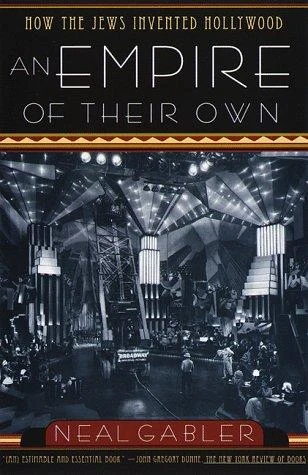
An Empire of Their Own
Where the proceeds go
Some book links on this site earn a commission. Every penny of it goes to the American Cancer Society.
The American Cancer Society funds cancer research, runs free patient-support programs, provides lodging for patients traveling for treatment, and staffs a 24-hour helpline. You do not need to buy a book to help.
This review contains affiliate links. As an Amazon Associate I earn from qualifying purchases, and all commission is donated — details on my disclosure page.