
 Watch on YouTube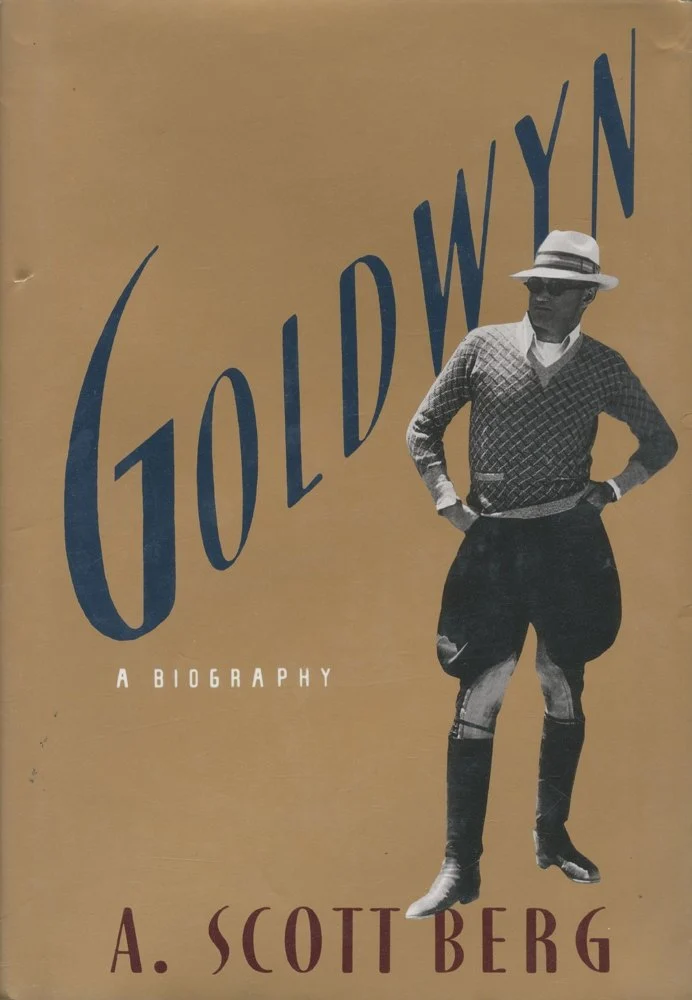
Samuel Goldwyn arrived in America as Schmuel Gelbfisz, a penniless teenager from Warsaw who had walked much of the way across Europe. He became a glove salesman, then — almost by accident — a film producer, and then the only major figure of his generation to build a lasting business without ever owning a studio.
That last part is the interesting bit, and it is why this biography belongs on a finance shelf rather than a film-history one.
What the book actually covers
Berg had access to the family archive and used it exhaustively, and the result is the definitive account of a man who was, by most accounts, extremely difficult to be around.
The commercial spine is Goldwyn's independence. Every other major figure of the founding generation — Zukor, Mayer, Warner, Cohn — built or ran an integrated studio with its own distribution and, for a while, its own theaters. Goldwyn did not. He produced films one at a time, financed them individually, and released through other people's distribution arrangements. He had no slate to average across and no captive exhibition to guarantee a floor.
That is a structurally harder business, and Berg is good on how Goldwyn survived it: by making the name itself the asset. A Samuel Goldwyn production carried a quality signal that let him attract talent and financing without the institutional backing everyone else relied on. He was, in effect, running a brand where his competitors were running infrastructure.
The personal material is unsparing. Goldwyn was tyrannical, litigious, spectacularly insecure, and capable of considerable cruelty to the people who made his films. Berg does not soften it. The famous malapropisms — the Goldwynisms — are shown to be at least partly manufactured publicity, which is itself instructive about how the brand was maintained.
Why you should read it
Read it for the independent's economics. Goldwyn's position — no distribution, no library averaging, each project financed on its own — is the position most producers occupy today, and this is the best long-form account of how someone made it work over decades rather than for a few pictures.
Read it for the brand argument. Goldwyn's substitute for infrastructure was reputation, deliberately built and aggressively defended. In a business where the independent cannot compete on balance sheet, the name is the balance sheet, and Berg documents exactly how that was constructed.
And read it alongside Gabler's An Empire of Their Own, covered here. Gabler gives you the whole founding generation as a cohort; Berg gives you one of them in complete depth. Read Gabler for the pattern and Berg for the specimen.
Key takeaways
- Independence is a harder business model, and reputation is what makes it viable. With no slate and no distribution, the name has to do the work the infrastructure would otherwise do.
- Brand can substitute for scale — deliberately, and at cost. Goldwyn's quality signal was built and defended as consciously as any studio built a distribution arm.
- The public persona was partly manufactured. The Goldwynisms served the brand, which tells you how carefully the whole thing was managed.
- Difficult and effective are not opposites. Berg refuses to reconcile Goldwyn's methods with his output, and the book is better for it.
Meet the author
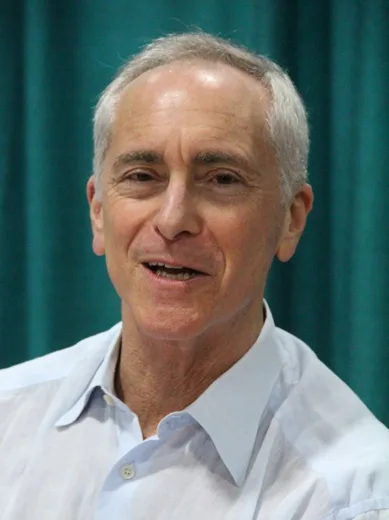
A. Scott Berg is one of the most decorated American biographers working. His first book, Max Perkins: Editor of Genius, won the National Book Award, and his Lindbergh won the Pulitzer Prize for Biography in 1999. He has also written on Katharine Hepburn, Woodrow Wilson and the publishing world.
Goldwyn: A Biography was published in 1989 and remains the standard life. Berg's method is archival and exhaustive — years of research, family cooperation, and a refusal to write the authorised version despite having the authorised access.
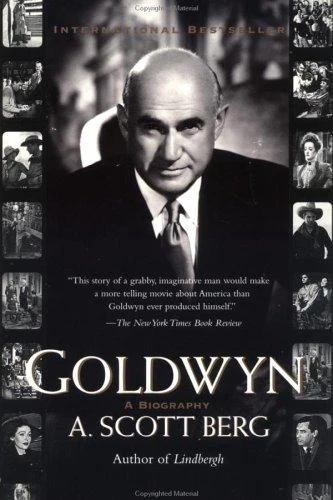
Get your copy
Where the proceeds go
Some book links on this site earn a commission. Every penny of it goes to the American Cancer Society.
The American Cancer Society funds cancer research, runs free patient-support programs, provides lodging for patients traveling for treatment, and staffs a 24-hour helpline. You do not need to buy a book to help.
This review contains affiliate links. As an Amazon Associate I earn from qualifying purchases, and all commission is donated — details on my disclosure page.