 Watch on YouTube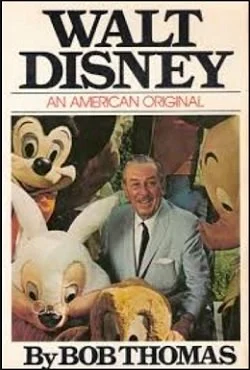
This is the biography the Disney family cooperated with, written by a veteran Associated Press Hollywood correspondent who had covered the man for years.
That fact cuts both ways, and you should know it going in. Thomas had access nobody else had — the family, the company, the archive. He also had every incentive not to write anything that would jeopardise it. Read accordingly, and it is still the most detailed account of how Walt Disney actually built the business.
What the book actually covers
Thomas covers the whole life: Marceline, the failed first studio in Kansas City, the loss of Oswald the Lucky Rabbit to a distributor — which is the formative event — and then Mickey Mouse, sound, color, the feature gamble with Snow White, the war years, the strike, television, and Disneyland.
The Oswald loss is the part every media financier should read. Disney created a successful character, and because of how the distribution agreement was structured, his distributor owned it and simply took it, along with most of his animators. He responded by creating Mickey Mouse and never again letting anyone else own his characters. Every subsequent decision — the insistence on retaining rights, the merchandising, the vertical control, the theme parks — follows from that one lesson learned expensively at the beginning.
Thomas is strong on the business mechanics generally: how Snow White was financed against enormous scepticism, how television was used as a marketing channel for the park rather than treated as a rival, and how the merchandising operation was constructed decades before anyone else took licensing seriously.
The labor material is where the authorised access shows. The 1941 animators' strike is covered, but sympathetically to Disney in a way later accounts are not. Neal Gabler's subsequent biography, which had archival access but no obligation, is the corrective.
Why you should read it
Read it for the origin of IP ownership as a strategy. The Oswald loss is the cleanest available illustration of why rights structure matters more than commercial success, and Disney's entire subsequent architecture was a response to it. If you finance content, that lesson is the whole job.
Read it for the licensing and windowing history. Disney was decades ahead on merchandising and on using one medium to sell another, and Thomas documents how those systems were actually built rather than simply noting that they existed.
And read it knowing what it is. This is the authorised version, and where it is soft — the strike, the politics, the treatment of collaborators — it is soft for a reason. Pair it with Gabler's later, independent biography and you have both the mechanics and the corrective.
Key takeaways
- Losing Oswald built the company. A badly structured distribution deal cost Disney his first successful character, and every rights decision he made afterwards was a response to it.
- Own the character, not the picture. The compounding asset is the IP, and Disney understood this before anyone in the industry.
- Use each medium to sell the next. Television funded and marketed the park; the park sold the films. The flywheel is the innovation.
- Read the authorised version critically. The access that produced the detail also produced the omissions.
Meet the author
Bob Thomas was a Hollywood correspondent for the Associated Press for more than half a century, covering the industry from the studio era into the modern one — an extraordinary run that made him one of the most widely read entertainment journalists in America.
He wrote biographies of Walt Disney, Roy Disney, Harry Cohn, Irving Thalberg and others, all from the position of a reporter with long-standing relationships inside the studios. Walt Disney: An American Original was published in 1976 and written with the cooperation of the Disney family and company.
Thomas died in March 2014, aged ninety-two.
Get your copy
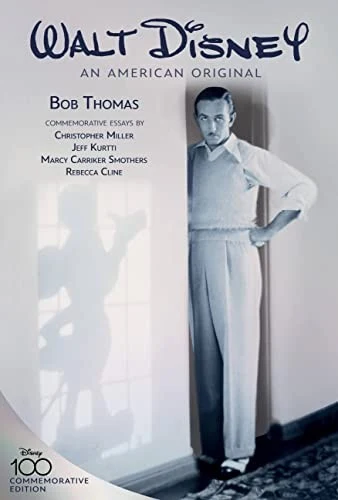
Walt Disney: An American Original
Where the proceeds go
Some book links on this site earn a commission. Every penny of it goes to the American Cancer Society.
The American Cancer Society funds cancer research, runs free patient-support programs, provides lodging for patients traveling for treatment, and staffs a 24-hour helpline. You do not need to buy a book to help.
This review contains affiliate links. As an Amazon Associate I earn from qualifying purchases, and all commission is donated — details on my disclosure page.