
 Watch on YouTube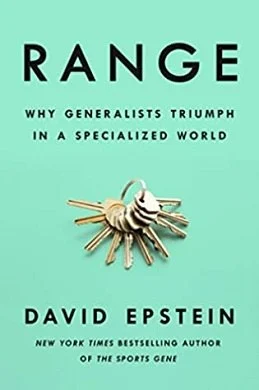
Tiger Woods had a putter in his hands before he could walk. Roger Federer played squash, badminton, skiing and football, and did not commit to tennis until his teens, by which point his mother — a tennis coach — had deliberately declined to coach him.
Both became the greatest of their generation. Only one of those stories became a template, and David Epstein's argument is that we picked the wrong one.
What the book actually covers
Epstein's target is the ten-thousand-hours consensus — the idea, popularised well beyond what the original research supported, that expertise comes from early specialisation and relentless deliberate practice.
His counter-argument turns on a distinction he borrows from the psychologist Robin Hogarth: kind learning environments versus wicked ones. In a kind environment the rules are fixed, the feedback is immediate and accurate, and the same situation recurs. Chess. Golf. Classical performance. In those domains early specialisation genuinely works.
Most of the world is not like that. In wicked environments the rules are unclear or shift, feedback is delayed and often misleading, and the situation you face has never occurred in that form before. Business. Medicine. Strategy. Almost anything involving people. In those domains, Epstein argues, the specialist's pattern recognition becomes a liability — they apply a familiar frame to an unfamiliar problem because the familiar frame is what they have.
He builds the case across a genuinely wide evidence base: research on match quality in careers, the finding that people who switch fields later often outperform, analogical thinking in problem-solving, the Kepler chapters, and a properly damning account of how NASA's specialized engineering culture contributed to the shuttle disasters.
The section on "sampling periods" is the practical core. People who try several fields before settling report better job fit and, on the evidence he assembles, perform better — because they had more information before choosing.
Why you should read it
Read it if your career looks unfocused on paper. Epstein's evidence is that late specialisation and lateral movement produce better outcomes in complex domains, and that the apparent cost — starting behind the specialists — is recovered by the quality of the eventual match.
Read it if you hire. The book is a sustained argument against filtering for narrow domain experience, and it is more empirically grounded than most of what gets written on that subject.
Read it especially if you advise across sectors. Epstein's account of analogical thinking — solving a problem by recognizing its structure in a completely unrelated field — is a description of what a good cross-sector adviser actually does, and it is useful to have a name and a literature for it.
Key takeaways
- Kind environments reward specialists. Wicked ones punish them. The distinction determines whether early specialisation helps or hurts, and most professional life is wicked.
- A sampling period is an investment, not a delay. Trying several fields produces better eventual match quality, and match quality drives performance.
- Analogies from distant fields beat depth in one. The transferable move is recognizing a problem's structure somewhere it has already been solved.
- Beware the confident specialist in an unfamiliar situation. Pattern recognition fails hardest precisely when the pattern is new.
Meet the author
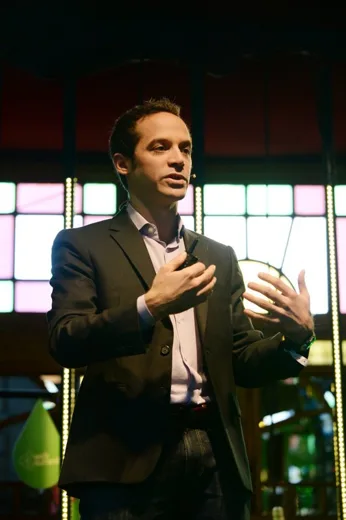
David Epstein was an investigative reporter at ProPublica and a senior writer at Sports Illustrated, and holds master's degrees in environmental science and journalism — which is itself a small demonstration of the book's thesis.
His first book, The Sports Gene, examined the interaction of genetics and training in athletic performance and became a bestseller. Range: Why Generalists Triumph in a Specialized World followed in 2019, reached number one on the New York Times bestseller list, and was named among Bill Gates's books of the year.
He is a careful writer with a reporter's habits — the book is unusually well sourced for something in the popular-psychology aisle, and he is generally scrupulous about the limits of the evidence he cites.
Get your copy
Where the proceeds go
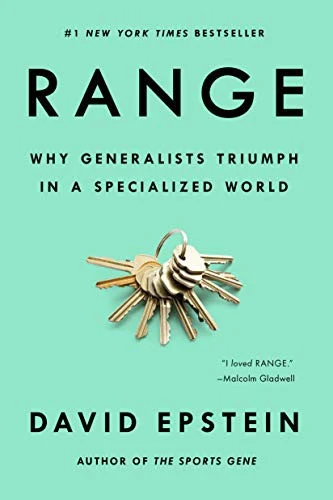
Some book links on this site earn a commission. Every penny of it goes to the American Cancer Society.
The American Cancer Society funds cancer research, runs free patient-support programs, provides lodging for patients traveling for treatment, and staffs a 24-hour helpline. You do not need to buy a book to help.
This review contains affiliate links. As an Amazon Associate I earn from qualifying purchases, and all commission is donated — details on my disclosure page.