
 Watch on YouTube
Mark Burnett arrived in Los Angeles in 1982 with about six hundred dollars, no contacts, and a recently completed tour with the British Parachute Regiment. His first job in America was as a live-in nanny in Beverly Hills. His second was selling T-shirts on Venice Beach.
Eighteen years later he made Survivor, and the television business changed shape around him.
The title is the argument. Jump in, even if you cannot swim.
What the book actually covers
The life is the argument, and it is genuinely a good one. Burnett grew up in Dagenham, in east London, the son of factory workers. He joined the army at seventeen and served with the Parachute Regiment, including in the Falklands. He left, emigrated with almost nothing, and spent his first American years doing whatever paid.
The pivot came through adventure racing. He discovered the Raid Gauloises, a French endurance event, competed in it, and then — with no production experience whatsoever — created his own version, the Eco-Challenge, and set about getting it filmed and sold. That is the whole method in one move: he did not learn television and then make a program. He made a program and learned television in the process of failing at it.
Survivor followed in 2000, adapted from a Scandinavian format, and became the most-watched show in America. The Apprentice launched in 2004, one year before this book was published — which means the book was written at the very beginning of the thing he is now best known for, not in retrospect.
The advice sections are what you would expect from the genre: act before you are ready, treat setbacks as information, sell before you have built. What lifts them above the standard is that the examples are unusually specific about failure. He is direct about the money he did not have, the pitches that went nowhere, and the years of doing unglamorous work while claiming to be something he was not yet.
Why you should read it
Read it for the format-as-asset insight, which is the part that matters commercially and which the book only half-articulates. Burnett's real achievement was not making hit shows — it was recognizing that the format itself was the property, and structuring his position accordingly. He held ownership in Survivor, The Voice and Shark Tank, and when he eventually sold his company into MGM the consideration reportedly exceeded a hundred million dollars. The shows were the output. The formats were the asset.
Read it if you are entering an industry from outside it. This is the best available account of doing that with no credentials, and Burnett is unsentimental about what it costs and how long it takes. Eighteen years from the T-shirt stall to Survivor is the actual timeline, and the book does not compress it.
And read it for the sales chapters. He was a door-to-door and beachfront seller before he was anything else, and his account of pitching — the preparation, the reading of a room, the willingness to be told no repeatedly — is more useful than most books written specifically about selling.
Key takeaways
- Own the format, not the episode. The transferable insight of Burnett's whole career is that the reproducible structure is the asset and everything else is delivery.
- Competence is acquired in motion. He made the program first and learned the industry while doing it. The book's title is a compressed version of that.
- The outsider has one advantage: no assumptions. He built Eco-Challenge the way he did because he did not know how it was supposed to be done.
- Eighteen years is the real timeline. The book is honest about duration in a way most books in this category are not.
Meet the author
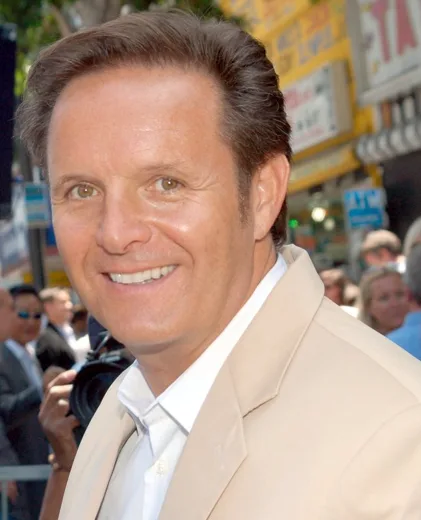
James Mark Burnett was born in London in 1960 and grew up in Dagenham. He served with the British Parachute Regiment, including during the Falklands conflict, before emigrating to the United States in 1982.
After the Eco-Challenge established him as a producer, he created or produced Survivor, The Apprentice, The Voice, Shark Tank and The Bible, the last with his wife, the actress Roma Downey. He has won thirteen Emmy Awards from around three dozen nominations.
He sold his production company into MGM across two transactions in 2014 and 2015 and subsequently served as chairman of MGM's Worldwide Television Group and later as president of MGM Worldwide Television.
Jump In! Even If You Don't Know How to Swim was published in 2005.
Get your copy
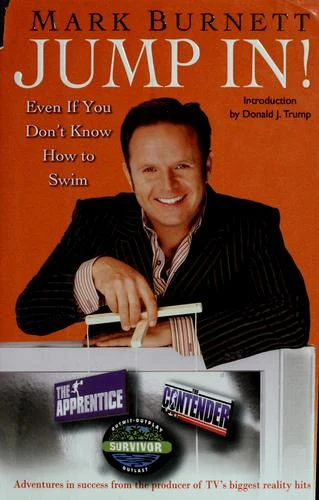
Jump In!
Where the proceeds go
Some book links on this site earn a commission. Every penny of it goes to the American Cancer Society.
The American Cancer Society funds cancer research, runs free patient-support programs, provides lodging for patients traveling for treatment, and staffs a 24-hour helpline. You do not need to buy a book to help.
This review contains affiliate links. As an Amazon Associate I earn from qualifying purchases, and all commission is donated — details on my disclosure page.