
 Watch on YouTube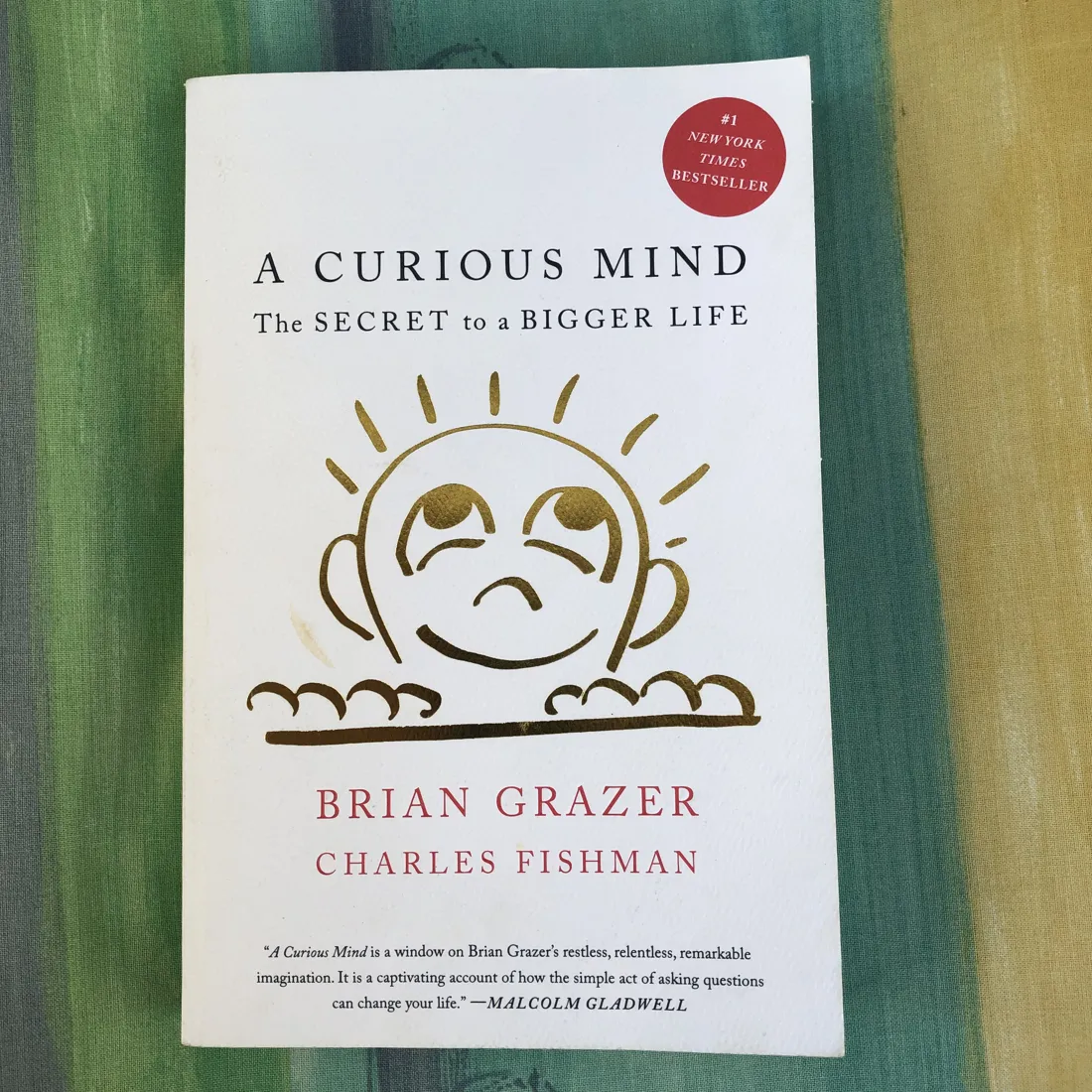
Every senior person I know says they value curiosity. Almost none of them have put it in the calendar.
Brian Grazer did. For decades he has booked a weekly conversation with someone he has no business reason to meet — a scientist, a spy, a Nobel laureate, a stranger whose work has nothing to do with a film getting made. He calls them curiosity conversations. This book is what came out of them.
What the book actually covers
Grazer is one half of Imagine Entertainment and the producer behind Splash, Apollo 13, A Beautiful Mind, 8 Mile, 24, Arrested Development and Empire. The book's argument is that this output is downstream of a habit, not of taste — that the films came from the conversations, and the conversations came from a discipline he has maintained for forty years.
He is honest about what the discipline costs. He describes it as an exercise routine, with one difference: he dislikes exercise and only wants the result, whereas he enjoys the conversations while they are happening and treats the results as a bonus. That distinction is the most useful line in the book, because it explains why the habit survived four decades when most professional-development habits die in six weeks.
Written with the business journalist Charles Fishman, the book alternates between argument and anecdote — the Michael Jackson conversation, the John McCain conversation, the ones that went nowhere. The back section is the part people underuse: a practical guide to running these conversations yourself, starting with opening questions for people who find the whole idea excruciating.

Why you should read it
Read it if your work runs on relationships you cannot forecast — which, if you are in media, investing, advisory or any business built on being called first, is most likely you.
The mechanism Grazer describes is the one nobody puts in a business plan: value that arrives a decade after the meeting, from a direction you could not have modeled. He is clear that he does not know in advance which conversation will pay. He just keeps having them.
It is worth acknowledging that Grazer is a rich, famous and extremely well-connected man, and that his access is not everybody's access. What he does with it is the more interesting fact. The people he pursues are overwhelmingly ones who can do nothing for him — physicists, intelligence officers, writers with no film in them — and he has kept doing it for forty years with no deliverable attached. Access without curiosity produces a good address book and nothing else. The transferable part here is not the guest list, it is the calendar entry. Meeting one person a week with no agenda works at any altitude; the names simply get less impressive.
Key takeaways
- Curiosity only compounds if it is scheduled. A weekly slot beats an enthusiastic intention, every time.
- No agenda is the whole point. The moment the conversation has a deliverable attached, it stops being the thing that produces the unexpected return.
- Questions travel further than answers. Grazer's working position is that the ability to ask is more valuable than the ability to know.
- Persuading someone to see you is part of the exercise. He is candid that busy, interesting people require steady effort to reach — the pursuit is not overhead, it is the practice.
Meet the author

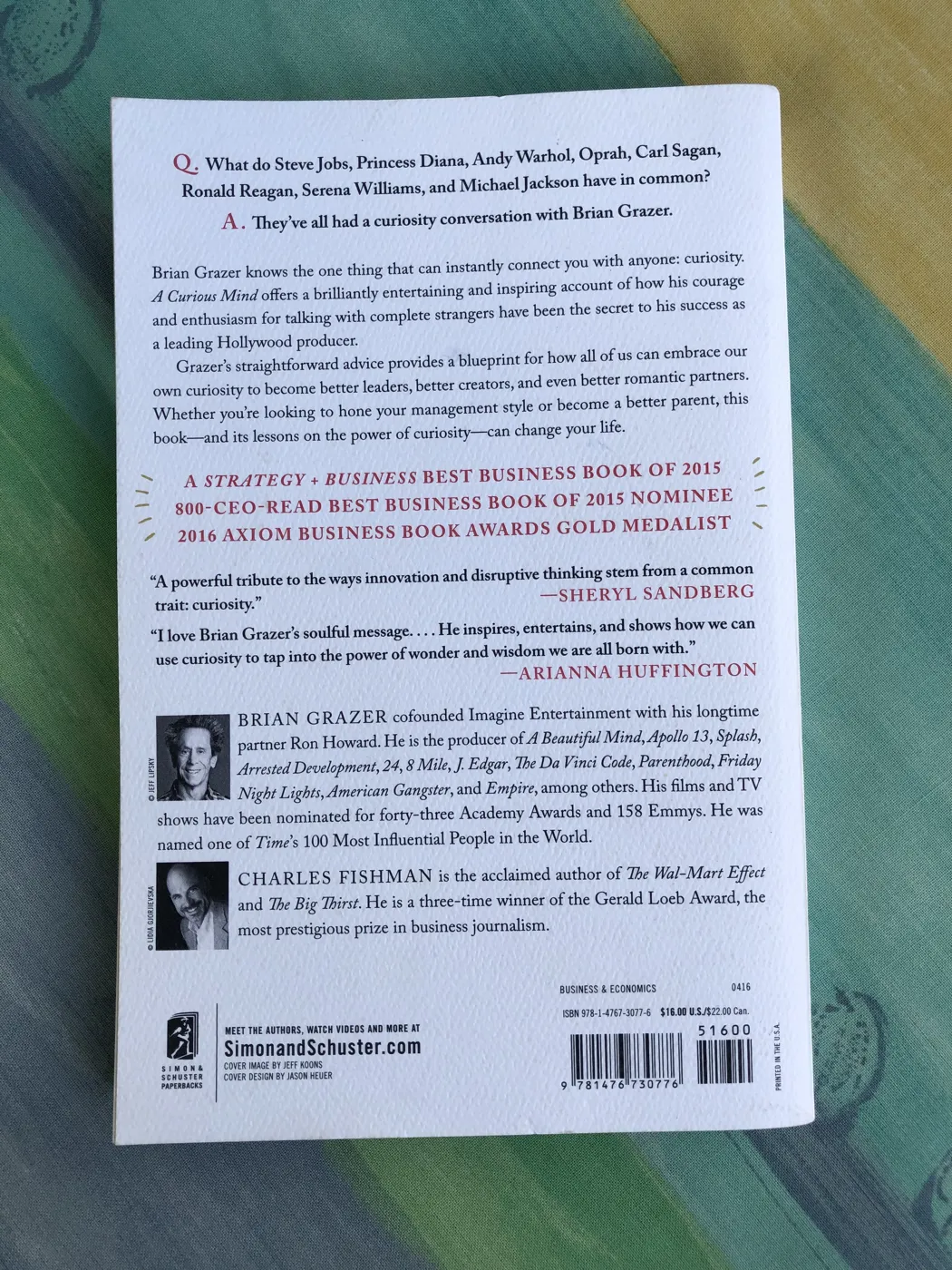
Brian Grazer is an Academy Award-winning producer and co-founder of Imagine Entertainment with Ron Howard. Across four decades in film and television he has produced work spanning Splash through Apollo 13, A Beautiful Mind, 8 Mile, 24 and Empire — a run notable less for any single title than for its persistence across three complete transformations of the industry that produced it.
A Curious Mind was co-written with Charles Fishman, a business journalist whose work brings structure to what could easily have been a memoir. It reached number one on the New York Times bestseller list and was a 2016 Audie Award finalist. An expanded edition has since been published, revisiting the argument with additional material.
Bob Iger, who has had a front-row seat to it, describes the energy Grazer's curiosity generates as infectious. Sheryl Sandberg called the book a tribute to the way disruptive thinking grows from a common trait.
Get your copy
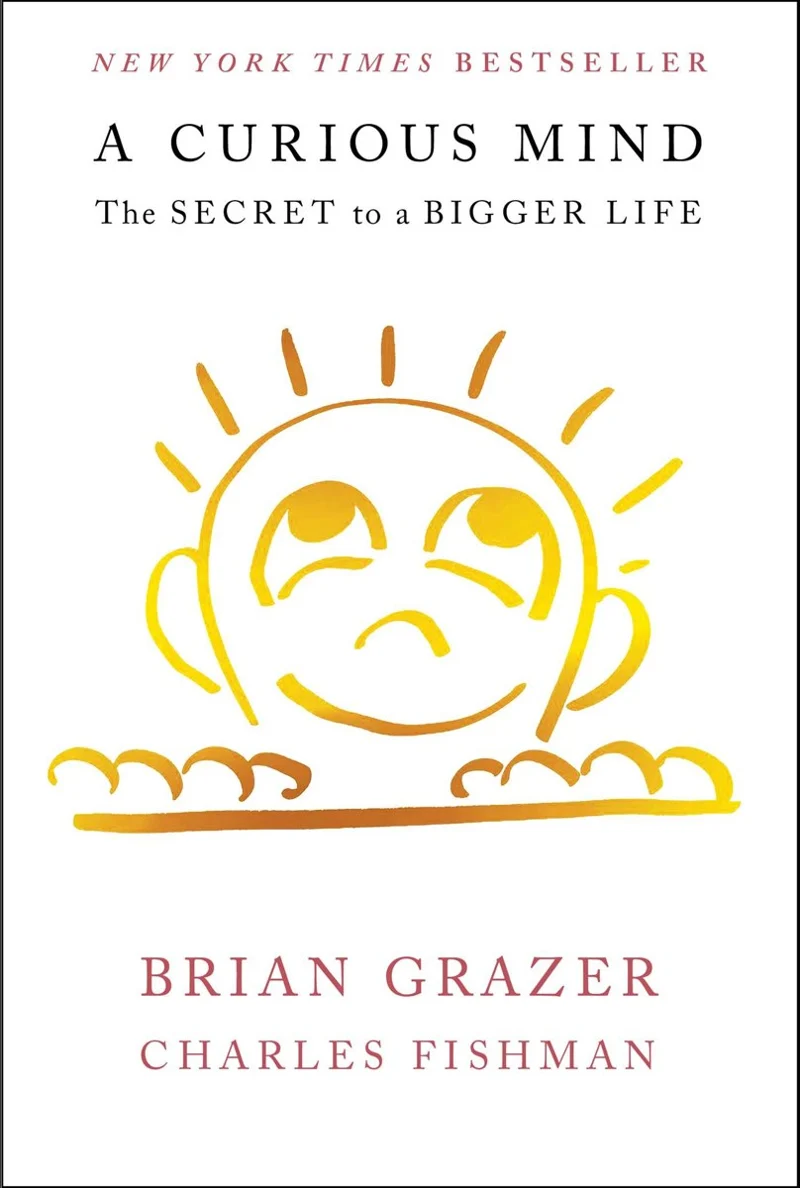
A Curious Mind
Where the proceeds go
Some book links on this site earn a commission. Every penny of it goes to the American Cancer Society.
The American Cancer Society funds cancer research, runs free patient-support programs, provides lodging for patients traveling for treatment, and staffs a 24-hour helpline. You do not need to buy a book to help.
This review contains affiliate links. As an Amazon Associate I earn from qualifying purchases, and all commission is donated — details on my disclosure page.