 Watch on YouTube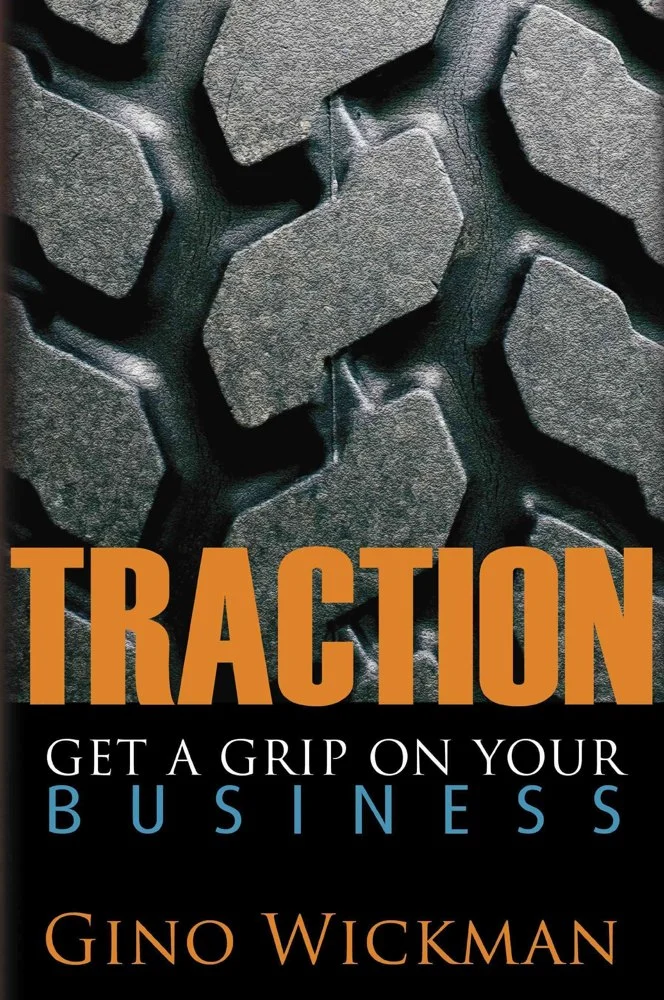
There is a specific stage in a growing business where everything that worked stops working. The founder can no longer hold the whole thing in their head, the team is arguing about priorities that were never written down, and every problem escalates to the same person.
Traction is a manual for that stage. It is not an interesting book. It is a useful one, and those are different things.
What the book actually covers
Wickman's Entrepreneurial Operating System has six components, and the book works through them in order.
Vision. Getting what is in the founder's head onto one page, in a form the rest of the company can act on. The Vision/Traction Organiser is the tool, and it forces answers to questions most founders have never written down — core values, ten-year target, three-year picture, one-year plan.
People. The right people in the right seats, assessed against two separate tests: do they fit the culture, and can they actually do the job. Wickman's point is that these fail independently and that most firms conflate them.
Data. A short scorecard of five to fifteen numbers, reviewed weekly, that tells you the state of the business without waiting for month-end.
Issues. A discipline for surfacing problems rather than working around them — list them, prioritize them, solve them permanently.
Process. Documenting the handful of core processes that actually run the company, at a level of detail that is useful rather than exhaustive.
Traction. The execution layer: quarterly priorities he calls Rocks, and a fixed weekly meeting structure — the Level 10 Meeting — with the same agenda, the same slot, every week, forever.
The meeting structure is the part that does the most work in practice, and it is also the part most companies abandon first.
Why you should read it
Read it if you are the bottleneck in your own business. That is the condition this book treats, and it treats it with a specificity that most management writing avoids.
Read it for the scorecard discipline. Five to fifteen numbers, weekly, is a genuinely good constraint — it forces a conversation about what actually indicates health, and most businesses find that harder than they expect.
And read it knowing what it is. This is a system book, not an ideas book. It is repetitive, the prose is functional, and there is a commercial apparatus attached — certified implementers, follow-on titles, a whole ecosystem. None of that makes the framework wrong. It does mean you should take the parts that fit and leave the parts that do not, rather than treating it as a doctrine. Companies that adopt EOS wholesale and companies that steal the weekly meeting and the scorecard often end up in a similar place.
Key takeaways
- Culture fit and capability fail independently. Wickman's right-people-right-seats distinction is the most transferable idea in the book.
- A weekly number beats a monthly report. The scorecard exists so that you find out in seven days rather than thirty.
- Quarterly priorities, and few of them. Rocks work because the constraint is the point — three to seven per person, not fifteen.
- The meeting is the mechanism. Same agenda, same time, every week. Almost all the value evaporates when this slips, which is why it slips.
Meet the author

Gino Wickman spent his twenties working in and then running his family's business, took it through a turnaround, and sold it — which is where the system comes from. EOS was built from what he had actually done rather than from theory, and it shows in both the strengths and the limits of the book.
He founded EOS Worldwide to train and license implementers, and the system has since been adopted by tens of thousands of companies, overwhelmingly in the small-to-mid range where it fits best. He has since stepped back from EOS Worldwide.
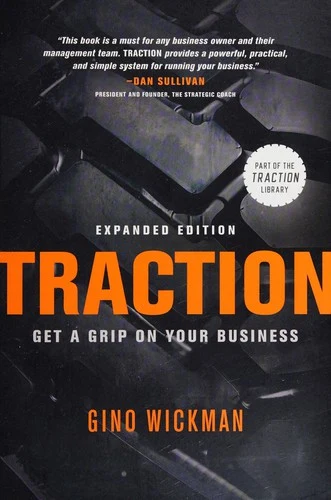
Traction: Get a Grip on Your Business was published in 2007 and revised subsequently. He has written several follow-ups, including Get A Grip, which tells the same material as a business novel, Rocket Fuel with Mark C. Winters on the Visionary and Integrator pairing, How to Be a Great Boss, and Entrepreneurial Leap, which is aimed at people deciding whether to start a business at all.
Get your copy
Traction
Where the proceeds go
Some book links on this site earn a commission. Every penny of it goes to the American Cancer Society.
The American Cancer Society funds cancer research, runs free patient-support programs, provides lodging for patients traveling for treatment, and staffs a 24-hour helpline. You do not need to buy a book to help.
This review contains affiliate links. As an Amazon Associate I earn from qualifying purchases, and all commission is donated — details on my disclosure page.