
 Watch on YouTube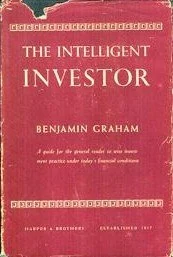
Warren Buffett has called this the best book on investing ever written, and has been saying so for roughly seventy years. He was Graham's student at Columbia and then his employee, and the chapters he singles out — eight and twenty — are the ones about temperament rather than technique.
That is the reason this book has outlived every other investment text of its era. The analytical methods have dated. The psychology has not.
What the book actually covers
Graham's foundation is the distinction between investment and speculation. An investment operation, in his formulation, promises safety of principal and an adequate return on the basis of analysis; everything else is speculation. The distinction is not about the asset but about the process, which is why it still bites.
Two concepts do most of the work.
Mr Market. Graham asks you to imagine a business partner who appears daily offering to buy your share or sell you his, at a price driven entirely by his mood. Some days he is euphoric, some days despairing. You are under no obligation to transact. His prices are an opportunity, not an appraisal. This is the most durable metaphor in investment writing, and it is doing psychological work rather than analytical work — its purpose is to sever your sense of value from the market's quotation.
Margin of safety. Buy at a sufficient discount to your estimate of intrinsic value that you can be substantially wrong and still not lose money. It is an admission of fallibility built into the method, which is precisely why it survives.
Graham also distinguishes the defensive investor from the enterprising one, and is clear that most people should be defensive — a conclusion that has been vindicated repeatedly since.
Why you should read it
Read it for the temperament argument. Graham's central claim is that investment success depends far more on emotional discipline than on analytical brilliance, and that the principal risk to an investor's capital is the investor. Buffett has spent seven decades confirming it.
Read it for margin of safety as a general principle. The concept transfers well beyond securities: build enough error tolerance into any valuation, forecast or structure that being wrong is survivable. For anyone modeling businesses with genuinely uncertain cash flows — which describes most of the media sector — that discipline is more useful than precision.
And read it knowing which parts have dated. The specific screening criteria and the particular market conditions Graham was writing about have moved considerably. The commentary in modern editions exists precisely to bridge that gap, and it is worth having.
Key takeaways
- Investment versus speculation is about process, not asset. Analysis, safety of principal, adequate return. Everything else is speculation, whatever it is called.
- Mr Market is a service, not an authority. The quotation is an opportunity to transact, not an appraisal of what you own.
- Margin of safety builds in your own fallibility. Buy at enough of a discount that being substantially wrong is survivable.
- The principal risk to your capital is you. Graham's most durable finding, and the reason the book has outlasted its own analytics.
Meet the author
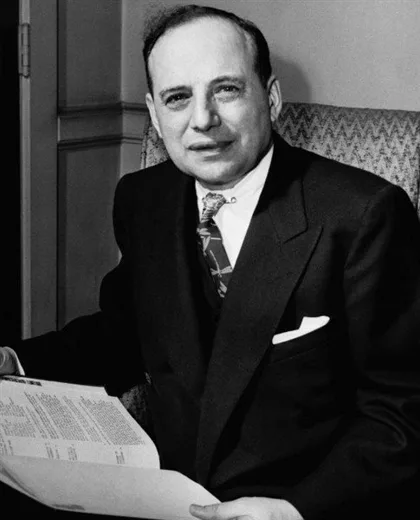
Benjamin Graham was born in London in 1894, raised in New York, and taught at Columbia Business School for decades while running his own investment partnership. He is generally regarded as the founder of security analysis as a discipline, and Security Analysis, written with David Dodd in 1934, remains the technical foundation of value investing.
The Intelligent Investor was published in 1949 as the accessible version for the general reader, and has been revised across editions since. Graham's students at Columbia included Warren Buffett, who has consistently described the book as the most important he has read on the subject.
Graham died in 1976, aged eighty-two.
Get your copy
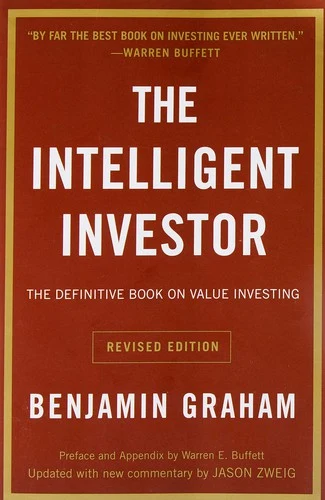
The Intelligent Investor
Where the proceeds go
Some book links on this site earn a commission. Every penny of it goes to the American Cancer Society.
The American Cancer Society funds cancer research, runs free patient-support programs, provides lodging for patients traveling for treatment, and staffs a 24-hour helpline. You do not need to buy a book to help.
This review contains affiliate links. As an Amazon Associate I earn from qualifying purchases, and all commission is donated — details on my disclosure page.