
 Watch on YouTube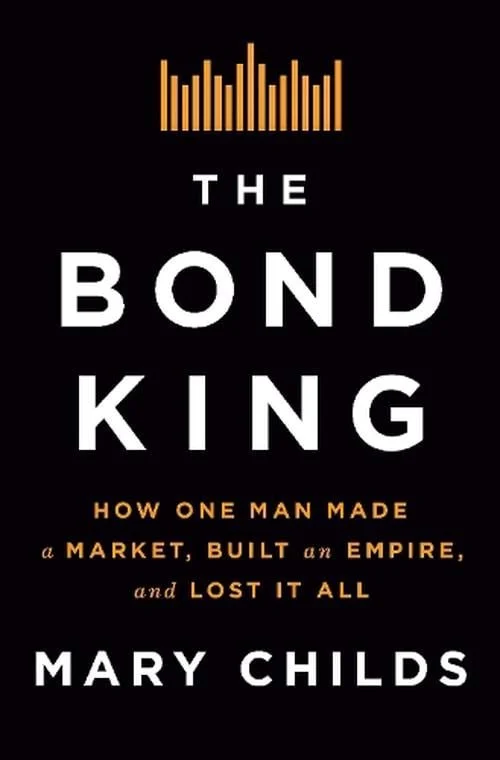
Bill Gross did not just run the world's largest bond fund. He substantially invented the idea that bonds were something you traded actively at all — and in doing so built PIMCO from a sleepy Californian outpost into a firm managing close to two trillion dollars.
Then, in 2014, he walked out. Or was pushed. The accounts differ, which is a large part of what makes this book worth reading.
What the book actually covers
Childs starts with the intellectual move that made everything else possible. Before Gross, institutional bond investing was largely a matter of buying and holding to maturity — you clipped the coupon and waited. Gross treated bonds as instruments to be actively traded, priced against each other and against a view on rates and credit. That reframing built the modern fixed-income market and made PIMCO its center of gravity.
Then the empire. The Total Return Fund became the largest mutual fund in the world. Gross became a genuine public figure, the man whose monthly investment outlook moved markets and whose personality — eccentric, superstitious, extraordinarily competitive — became part of the product.
Then the collapse. Childs is very good on the Mohamed El-Erian period: the heir apparent brought in as co-chief investment officer, the deterioration of the working relationship, El-Erian's departure in 2014, and the sequence of events that ended with Gross leaving for Janus and suing his former firm. The Wall Street Journal reporting, the internal factions, the question of whether a man of that temperament could ever have been succeeded — Childs covers all of it with the access of someone who covered the beat for years.
She is also good on the parts that are less flattering to the industry generally: how much of the outperformance was skill, how much was structural advantage available to a firm of that size, and how the fees were justified.
Why you should read it
Read it as a key-person risk case study. PIMCO's entire proposition was, for decades, one man's judgement. The firm survived his exit, but the process of surviving it was expensive, public and very nearly not survived at all. Anyone valuing a business built around a single reputation should read this before finalising the model.
Read it for the succession failure. The El-Erian arrangement is a textbook example of a founder appointing a successor without actually intending to be succeeded, and Childs documents the mechanics rather than just the personalities.
And read it alongside the Disney material on this shelf. Iger's succession collapsed, was reversed, and eventually worked. Gross's did not. The two cases share a structure — a founder or long-tenured leader whose institution had been built around their personal judgement — and the comparison is more instructive than either alone.
Key takeaways
- The reframing was the innovation. Treating bonds as tradeable rather than held-to-maturity created a market. The returns followed from the idea.
- A firm built on one reputation has a succession problem it cannot outsource. PIMCO could not manage its way around the fact that clients had bought Gross.
- Appointing a successor is not the same as intending to be succeeded. The El-Erian period is the clearest available illustration.
- Scale is its own edge, and its own trap. Some of PIMCO's advantage came from size rather than skill, which is worth separating when assessing any large manager's record.
Meet the author

Mary Childs is a financial journalist who covered PIMCO and the bond markets for years before writing this book — first at Bloomberg News, later at the Financial Times and Barron's. That beat reporting is what gives The Bond King its sourcing; she was talking to these people while the events were happening.
She went on to become a correspondent and co-host at NPR's Planet Money, where she did the same work in a very different register — explaining financial mechanics to a general audience without either dumbing it down or hiding behind jargon. In 2026 she left to host Mary in America, a weekly interview show.
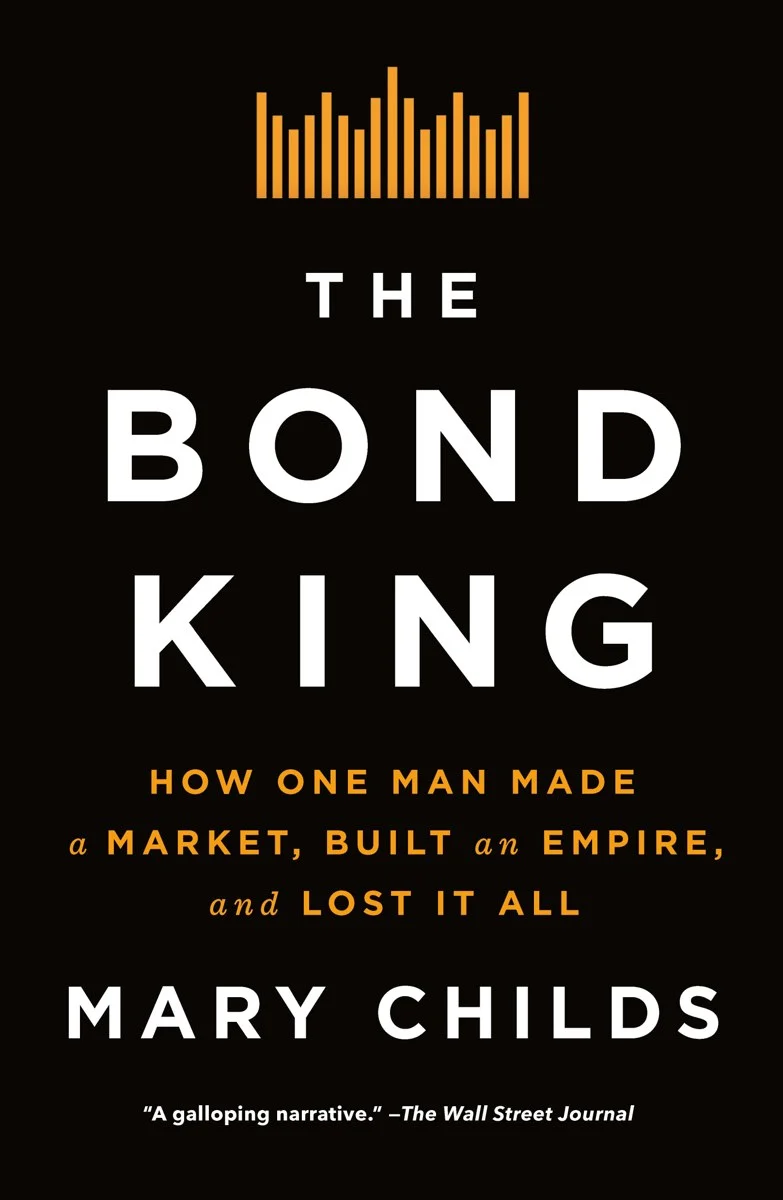
The Bond King: How One Man Made a Market, Built an Empire, and Lost It All was published in 2022.
Get your copy
The Bond King
Where the proceeds go
Some book links on this site earn a commission. Every penny of it goes to the American Cancer Society.
The American Cancer Society funds cancer research, runs free patient-support programs, provides lodging for patients traveling for treatment, and staffs a 24-hour helpline. You do not need to buy a book to help.
This review contains affiliate links. As an Amazon Associate I earn from qualifying purchases, and all commission is donated — details on my disclosure page.