 Watch on YouTube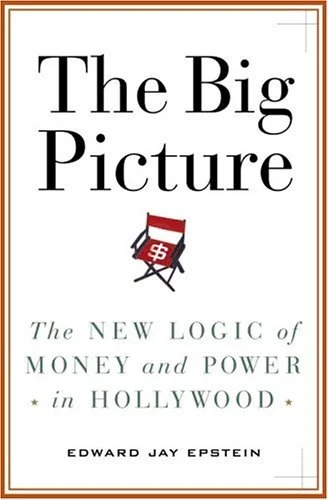
Two books on this shelf are called The Big Picture. One is by Ben Fritz and is about the collapse of the old studio model. This is the other one — Edward Jay Epstein's, from 2005 — and it is the book that explains the model before it collapsed.
Read together, in sequence, they are the fullest account available of how the modern film business was built and then unmade. Epstein describes the machine at the height of its logic. Fritz, thirteen years later, describes it breaking.
What the book actually covers
Where The Hollywood Economist is a collection of sharp forensic dispatches, The Big Picture is the systematic version — an attempt to describe the entire economic logic of the studio system as a single machine.
Epstein's central reframe is that the six major studios were not really in the business of making films. They were in the business of creating and exploiting intellectual property across a long chain of windows and territories, of which theatrical release was only the first and least profitable. The film was the seed. The value was in everything that followed: video, television, licensing, merchandising, and the international exploitation of each.
He traces the historical shift that produced this — from the old studio system, through the rise of the agencies and the packaging model, to the conglomerate era in which studios became subsidiaries of much larger media companies and were run for their contribution to a portfolio rather than as standalone film businesses.
He is characteristically strong on the hidden mechanics. How the collapse of the studio contract system reshaped the labor economics. How the rise of the multiplex and then home video changed what got made. How the studios' real customers became, in effect, other divisions of their own parent conglomerates. The book is dense with the kind of specific financial detail that Epstein spent his career extracting from institutions that preferred not to disclose it.
Why you should read it
Read it to understand the studio as a financial system rather than a creative one. Epstein's framing — six IP factories exploiting a chain of windows — is the correct mental model for assessing any company in the sector, and it is laid out here more completely than almost anywhere else.
Read it as the "before" to Ben Fritz's "after." Epstein describes, in 2005, the model at the peak of its coherence: the windows intact, the DVD money flowing, the logic humming. Fritz's book, covered here, shows what happened when the foundation of that model — home video revenue — collapsed. The two together are a complete before-and-after of a business transformation, and reading them in order is the way to do it.
And read it for the intellectual-property thesis, which has aged extremely well. Epstein understood two decades ago that the asset was never the film but the rights and their exploitation across windows and territories. That insight now describes the entire streaming and franchise economy, and Epstein saw it clearly when much of the industry did not.
Key takeaways
- The studios are IP factories, not film-makers. The film is the seed; the value is in the chain of windows and territories that follow. Assess them accordingly.
- The conglomerate changed the customer. Once studios became subsidiaries, their real customers were often other divisions of the same parent, which distorts every standalone number.
- Theatrical is the first and smallest window. Epstein's window analysis is the framework the entire streaming debate is still, effectively, arguing about.
- The rights are the asset. Epstein's central insight predates and predicts the franchise and streaming economy by nearly twenty years.
Meet the author

Edward Jay Epstein was an investigative journalist and former political science professor at Harvard, UCLA and MIT, who built a career on the assumption that official accounts were incomplete and that the real story was in the documents institutions did not want examined. He applied that method to the Warren Commission, the diamond cartel, Cold War intelligence, and — in this book and its companion — Hollywood.
The Big Picture: Money and Power in Hollywood was published in 2005. It grew out of the same long investigation into studio finance that produced his Slate column and The Hollywood Economist, and it is the most complete statement of his view of the industry.
He was born in New York in 1935 and died there in January 2024, aged eighty-eight. Of everyone who has written about the business of Hollywood, he was perhaps the most temperamentally suited to it — a professional sceptic in an industry built on persuasion.
Get your copy
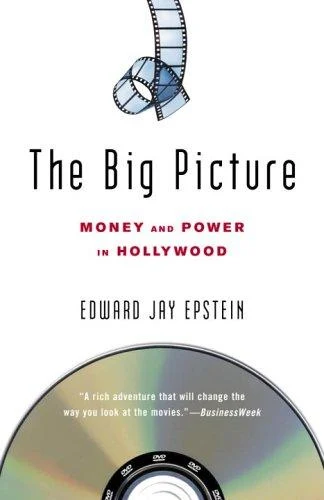
The Big Picture: Money and Power in Hollywood
Where the proceeds go
Some book links on this site earn a commission. Every penny of it goes to the American Cancer Society.
The American Cancer Society funds cancer research, runs free patient-support programs, provides lodging for patients traveling for treatment, and staffs a 24-hour helpline. You do not need to buy a book to help.
This review contains affiliate links. As an Amazon Associate I earn from qualifying purchases, and all commission is donated — details on my disclosure page.