 Watch on YouTube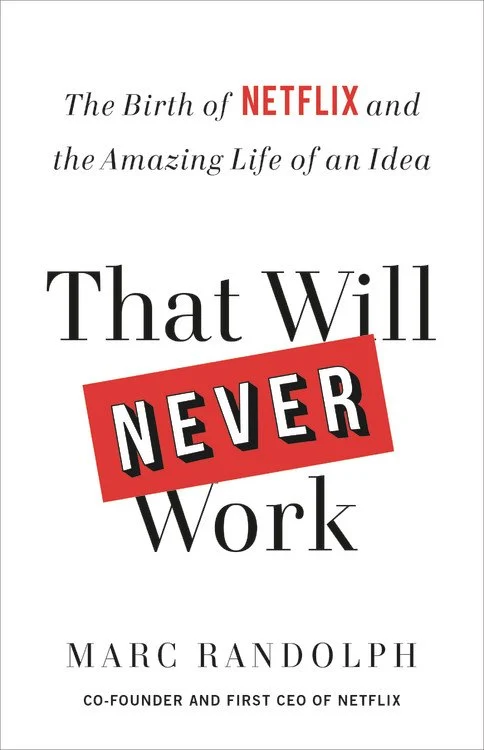
Everyone knows Netflix was Reed Hastings. Fewer people know that the man who came up with it, built it, and ran it as its first chief executive was Marc Randolph — and that within a few years he was out.
That Will Never Work is his account, and it is a much better book than the standard founder memoir because he is not trying to convince you he was right about everything. He is quite clear that on the single most important question, he was overruled, and that the person who overruled him was correct.
What the book actually covers
The origin story is deliberately unglamorous. Randolph and Hastings carpooled to work, and Randolph spent the drives pitching business ideas — most of them, by his own account, bad. Personalised shampoo by mail. Custom dog food. Hastings shot them down one after another, which is where the title comes from. The DVD-by-post idea survived because they tested whether a disc would arrive intact in an envelope, and it did.
What follows is the least mythologised startup narrative I have read. The early Netflix was a rental-and-sale website that nearly died, repeatedly. Randolph is precise about the pivots, about how close they came to selling to Blockbuster, and about the subscription model arriving not as a vision but as an experiment that worked.
The most valuable material is the transition. Hastings, initially an investor and board presence rather than an operator, came in as co-chief executive and eventually Randolph left. Randolph's account of this is remarkable for what it does not do: he does not settle scores. He describes recognizing that the company needed a different kind of leader for the next phase, and that he was not it.
Why you should read it
Read it for the culture of testing. Randolph's central discipline is that you cannot know in advance whether an idea works, so you build the cheapest possible experiment and let the result decide. The mailed DVD is the perfect example — a five-dollar test that resolved a question no amount of discussion would have.
Read it if you work with founding teams. The founder-to-scale-CEO transition is one of the most common structural crises in a growing company, and there is very little honest literature on it from the person who was replaced. Randolph writes it without bitterness and without pretending it did not sting.
And read it against No Rules Rules, also covered here. Hastings's book is the culture doctrine of the company Netflix became. Randolph's is the account of the company it was before that doctrine existed, by the man it was built by. Neither is complete. Read together they are the fullest picture available of one of the more consequential companies of the last thirty years.
Key takeaways
- Nobody knows anything in advance, so build the test. The cheapest experiment that resolves the question beats the most persuasive argument about it.
- The idea is not the asset. Netflix as originally conceived was a rental-and-sale site. Almost everything that made it valuable was discovered afterwards.
- The founder is not always the right chief executive. Randolph's account of accepting that is the most useful thing in the book and the rarest.
- Being told it will never work carries no information. It is the default response to anything new, which means it cannot be used as evidence either way.
Meet the author

Marc Randolph co-founded Netflix in 1997 and served as its first chief executive. Before that he had spent a career in direct marketing and had co-founded several other companies, which is why the early Netflix reads as a direct-marketing operation that happened to use the internet — because that is what it was.
He left Netflix in the early years of the company's life and has since built a second career as an investor, board member, mentor and speaker, working extensively with early-stage founders. That Will Never Work, published in 2019, was his first book and became a bestseller.
The gap between his public profile and Hastings's is itself instructive, and he seems entirely at peace with it — which, given that he named the company and came up with the idea, is a level of equanimity worth noting.
Get your copy
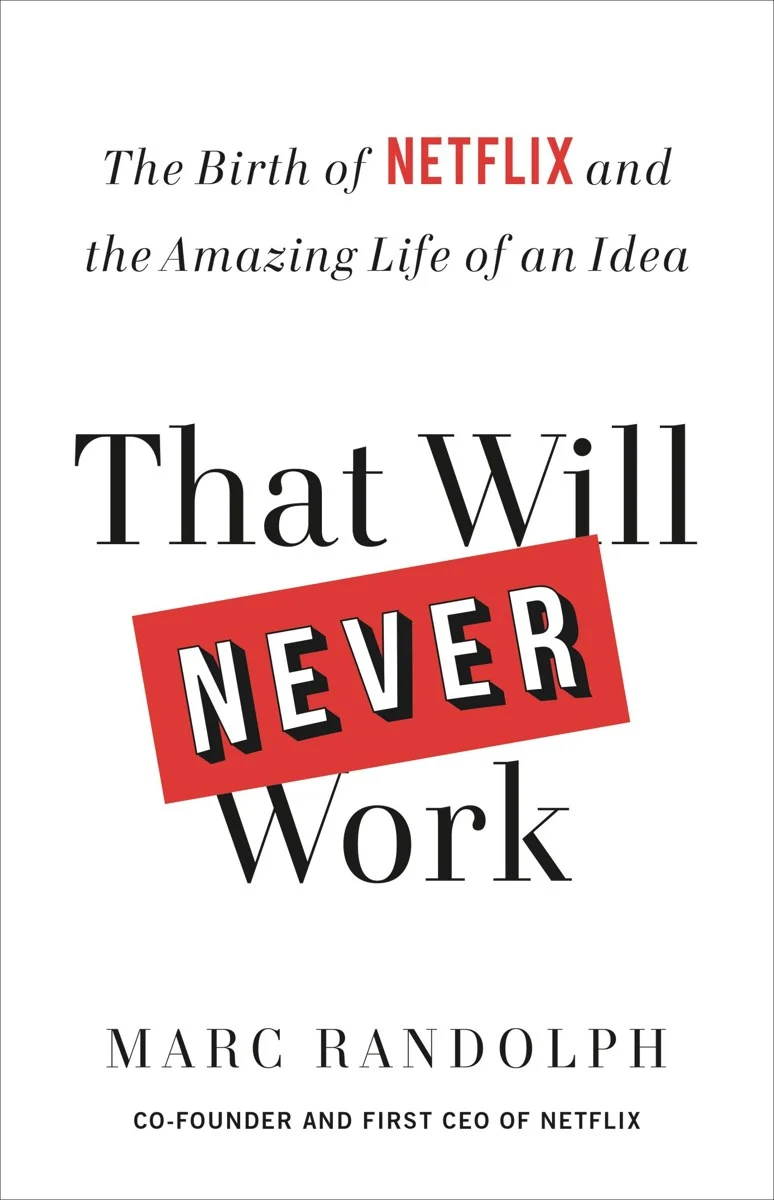
That Will Never Work
Where the proceeds go
Some book links on this site earn a commission. Every penny of it goes to the American Cancer Society.
The American Cancer Society funds cancer research, runs free patient-support programs, provides lodging for patients traveling for treatment, and staffs a 24-hour helpline. You do not need to buy a book to help.
This review contains affiliate links. As an Amazon Associate I earn from qualifying purchases, and all commission is donated — details on my disclosure page.