
 Watch on YouTube
Ray Dalio built the largest hedge fund in the world by trying to understand what he calls the machine — the mechanical relationships underneath economic outcomes. This book applies that instinct to five hundred years of history.
The question is simple and uncomfortable: is there a repeating pattern by which reserve-currency empires rise, peak and decline? Dalio thinks there is, that it is measurable, and that the United States is somewhere in the later part of it.
You do not have to accept the conclusion to find the framework useful. That is how I would read it.
What the book actually covers
Dalio identifies what he calls the Big Cycle, tracked across the Dutch, British and American reserve-currency periods, plus Chinese dynastic history. His claim is that each follows a recognisable arc: a rise built on education, innovation, competitiveness and financial strength; a peak in which the currency becomes the global reserve; and a decline marked by debt accumulation, widening internal wealth gaps, political polarisation, and eventually external challenge.
He constructs indices for the determinants he considers measurable — education, innovation, competitiveness, military strength, trade share, financial center status, reserve currency status — and charts each empire against them. The visual presentation of those indices is the most striking thing in the book.
Three forces do most of the analytical work: the long-term debt cycle, the internal order and disorder cycle driven by wealth gaps and political conflict, and the external order cycle governing relations between rising and established powers.
The tone is characteristically Dalio — systematic, repetitive, confident, and heavily diagrammed. He is explicit that he is offering a framework for thinking rather than a prediction, though the framework points fairly clearly in one direction.
Why you should read it
Read it for the framework rather than the forecast. Whatever you make of the specific conclusions, having a structured way to think about debt levels, internal cohesion and relative national position is more useful than reacting to individual headlines. For anyone with cross-border exposure, that structure has practical value.
Read it for the historical material, which is genuinely substantial. The comparative treatment of the Dutch and British reserve-currency periods is the best short introduction to that history available in a business book, and it explains the mechanics of how reserve status is gained and lost.
And read it critically. Dalio is pattern-matching across enormously different historical contexts, the indices involve considerable judgement in their construction, and the conclusion is one he had arguably arrived at before assembling the evidence. He would say the framework is falsifiable and the data is shown. Both things can be true — read it as a serious argument rather than a settled finding.
Key takeaways
- Three cycles interact: long-term debt, internal order and disorder, and external power relations. Most analysis tracks one and misses the interaction.
- Reserve currency status is earned and lost mechanically. The Dutch and British precedents show a sequence, not an accident.
- Internal wealth gaps are a systemic variable. Dalio treats domestic cohesion as an economic determinant, which most macro analysis does not.
- A framework is not a forecast. Use the structure; hold the conclusion loosely.
Meet the author
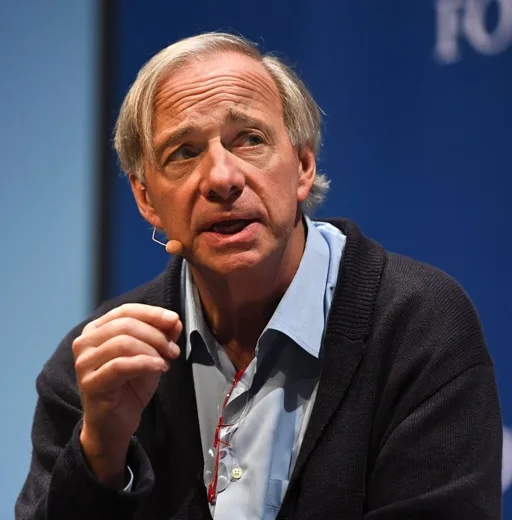
Ray Dalio founded Bridgewater Associates in 1975, building it into the largest hedge fund in the world by assets. His investment approach has been built around identifying and codifying the mechanical relationships underlying economic outcomes — an approach he extended into an unusually documented set of management and decision-making rules.
His earlier book Principles: Life and Work set out that philosophy directly. This volume applies the same systematising instinct to macroeconomic and geopolitical history.
He stepped back from control of Bridgewater in 2022 and has since focused on writing, teaching and philanthropy.
Get your copy
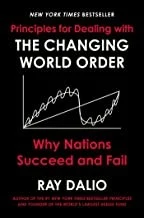
Principles for Dealing with the Changing World Order
Where the proceeds go
Some book links on this site earn a commission. Every penny of it goes to the American Cancer Society.
The American Cancer Society funds cancer research, runs free patient-support programs, provides lodging for patients traveling for treatment, and staffs a 24-hour helpline. You do not need to buy a book to help.
This review contains affiliate links. As an Amazon Associate I earn from qualifying purchases, and all commission is donated — details on my disclosure page.