
 Watch on YouTube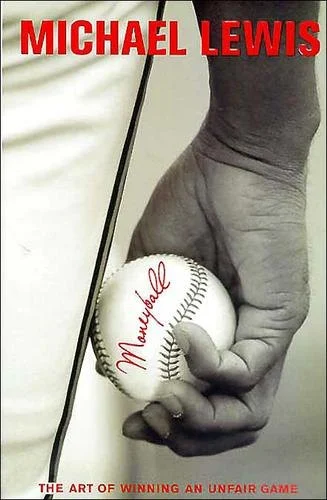
The Oakland Athletics had roughly a third of the payroll of the New York Yankees and kept winning anyway. Moneyball is the explanation, and it is not really about baseball.
It is about what happens when an organization stops valuing assets by consensus and starts valuing them by evidence — and about the fact that the mispricing existed because everyone in the industry was measuring the wrong things with total confidence.
If you value assets in an industry that relies on expert judgement, this is a book about your job.
What the book actually covers
Billy Beane, Oakland's general manager, faced a structural problem: a payroll that could not compete for the players everyone agreed were valuable. His response was to stop competing for them.
The insight came from outside the sport — the statistical work of Bill James and others, largely ignored by the industry for decades — and it was that the traditional evaluation metrics were poorly correlated with actually winning games. Scouts assessed players on appearance, athleticism and a set of statistics that measured the wrong things. Meanwhile qualities that did predict run-scoring, on-base percentage most notably, were systematically underpriced because nobody was bidding for them.
Oakland bought the undervalued attribute. The players were frequently unimpressive to look at, which was precisely why they were affordable.
Lewis is very good on the resistance, which is the transferable part. The scouts did not simply disagree with the analysis — they experienced it as an attack on the legitimacy of their expertise, which it was. The most instructive chapters are about the internal politics of imposing a measurement discipline on people whose professional identity rests on judgement.
Why you should read it
Read it as a mispricing framework. The general form of the argument is: where an industry's valuation practice rests on expert consensus rather than measured outcomes, systematic mispricing will exist, and it will persist because the experts are socially invested in the existing method. That description fits entertainment extremely well.
Read it for the implementation politics. Beane's analytical problem was solved relatively quickly; his organizational problem was not. Anyone who has tried to introduce a measurement discipline into a judgement-based culture will find the resistance chapters uncomfortably familiar.
And read it for what happened next, which the book cannot tell you. The approach was adopted across baseball and then across most professional sport, and the edge disappeared — because an edge that depends on other people not doing the analysis has a limited life. That is the honest coda to the whole argument.
Key takeaways
- Where valuation rests on expert consensus, mispricing persists. The inefficiency exists because everyone is confident about the same wrong measure.
- Buy the underpriced attribute, not the impressive asset. Oakland bought on-base percentage because nobody else was bidding for it.
- The resistance is professional, not analytical. Measurement threatens the legitimacy of judgement-based expertise, and will be fought on those grounds.
- The edge decays on adoption. Any advantage that depends on others not doing the work has a finite life.
Meet the author
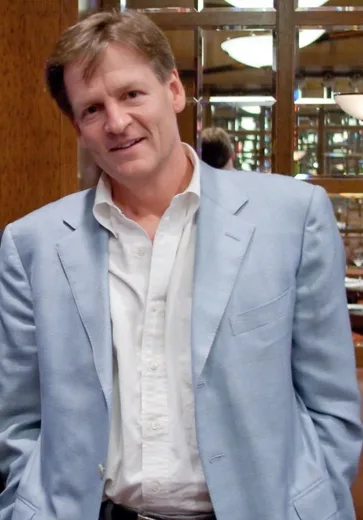
Michael Lewis is among the most successful non-fiction writers working, and reliably chooses subjects where a technical mechanism is producing consequences that non-specialists cannot see. He began with Liar's Poker, drawn from his own years at Salomon Brothers, and has since written The Big Short on the mortgage crisis, The Blind Side, Flash Boys on high-frequency trading, and The Undoing Project on Kahneman and Tversky.
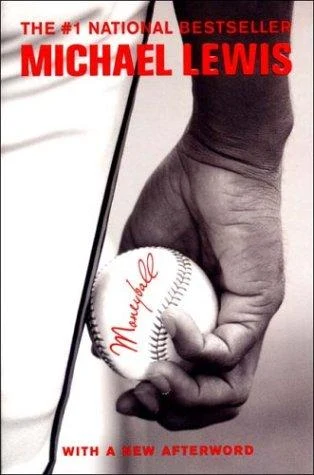
Moneyball: The Art of Winning an Unfair Game was published in 2003 and became one of the most influential business books of its era — read far more widely outside sport than within it, and adopted as a template for evidence-based valuation across a range of industries.
Get your copy
Moneyball
Where the proceeds go
Some book links on this site earn a commission. Every penny of it goes to the American Cancer Society.
The American Cancer Society funds cancer research, runs free patient-support programs, provides lodging for patients traveling for treatment, and staffs a 24-hour helpline. You do not need to buy a book to help.
This review contains affiliate links. As an Amazon Associate I earn from qualifying purchases, and all commission is donated — details on my disclosure page.