 Watch on YouTube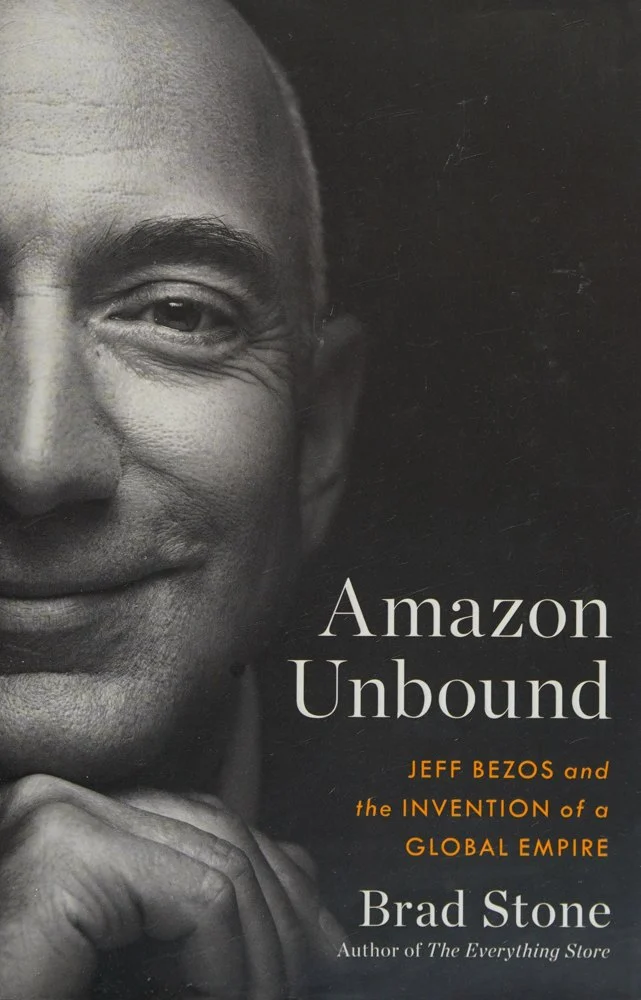
The Everything Store ended with Amazon as a large retailer with interesting ambitions. Amazon Unbound covers what happened next, which is that it became one of the most powerful institutions on earth and its founder became the richest man alive.
For anyone in media, the relevant chapters are the ones nobody expected to matter: Amazon Studios, the Prime Video strategy, and the moment a retailer decided it should own intellectual property.
What the book actually covers
Stone picks up around 2010 and runs to the present. The Alexa program, developed in secrecy and launched into a market that did not exist. Amazon Web Services becoming the profit engine that funds everything else. The marketplace and its fraught relationship with third-party sellers. The warehouse expansion and the labor questions that came with it. The regulatory and political attention that arrived once the company was large enough to be a subject of policy rather than commerce.
And the entertainment strategy, which is the section worth your time. Amazon Studios began badly — a crowdsourced script model that produced very little — and was rebuilt around the recognition that Prime Video was not a media business but a retention mechanism for Prime. Stone documents the internal reasoning: the metric was not viewership but subscriber behavior, and content was justified by what it did to churn and to spend.
Then the strategy escalated. The Lord of the Rings rights, acquired at a price that made sense only under that logic. The MGM acquisition, which bought a catalog and a franchise. Thursday Night Football. A retailer buying its way to owning IP outright.
Stone reports it from inside, with substantial access and considerable scepticism — Amazon did not cooperate with the first book and the relationship has been prickly since.
Why you should read it
Read it to understand your competitor's cost of capital. This is the crucial point for anyone financing content. Amazon does not need a film to earn a return as a film. It needs the film to change subscriber behavior, and it will pay a price that makes no sense to anyone who has to recoup on the asset itself. If you model against that, you lose.
Read it for the MGM logic. A catalog acquisition by a company whose actual business is retail and cloud is one of the more consequential IP transactions of the decade, and Stone is good on why the price was defensible on Amazon's terms and indefensible on anyone else's.
And read it as the counterpart to Ben Fritz's The Big Picture, also covered here. Fritz shows you the old studio model failing from inside Sony. Stone shows you one of the things that replaced it. The two books are describing the same transfer of power from opposite ends.
Key takeaways
- Content was never the product. Prime Video existed to reduce churn and increase Prime spending. Every content decision followed from that, including the ones that looked irrational.
- A different cost of capital is a different game. Competing against a company that does not need the asset to recoup is not a fair fight and should not be modeled as one.
- Buying the catalog beats building it. MGM delivered franchise IP that would have taken a decade to originate.
- Scale attracts a different kind of scrutiny. Past a certain size, the binding constraint becomes political rather than commercial.
Meet the author

Brad Stone is a senior executive editor for technology at Bloomberg News and has covered Silicon Valley for more than two decades, previously at Newsweek and the New York Times.
The Everything Store, his 2013 book on Amazon's early years, won the Financial Times and Goldman Sachs Business Book of the Year Award and remains the standard account of the company's founding. Amazon Unbound, published in 2021, is the sequel. He also wrote The Upstarts, on Uber and Airbnb.
His method is consistent: extensive interviewing with current and former employees, built into narrative reporting rather than analysis. He is not an insider and does not write like one, which is the reason to read him rather than the corporate histories.
Get your copy
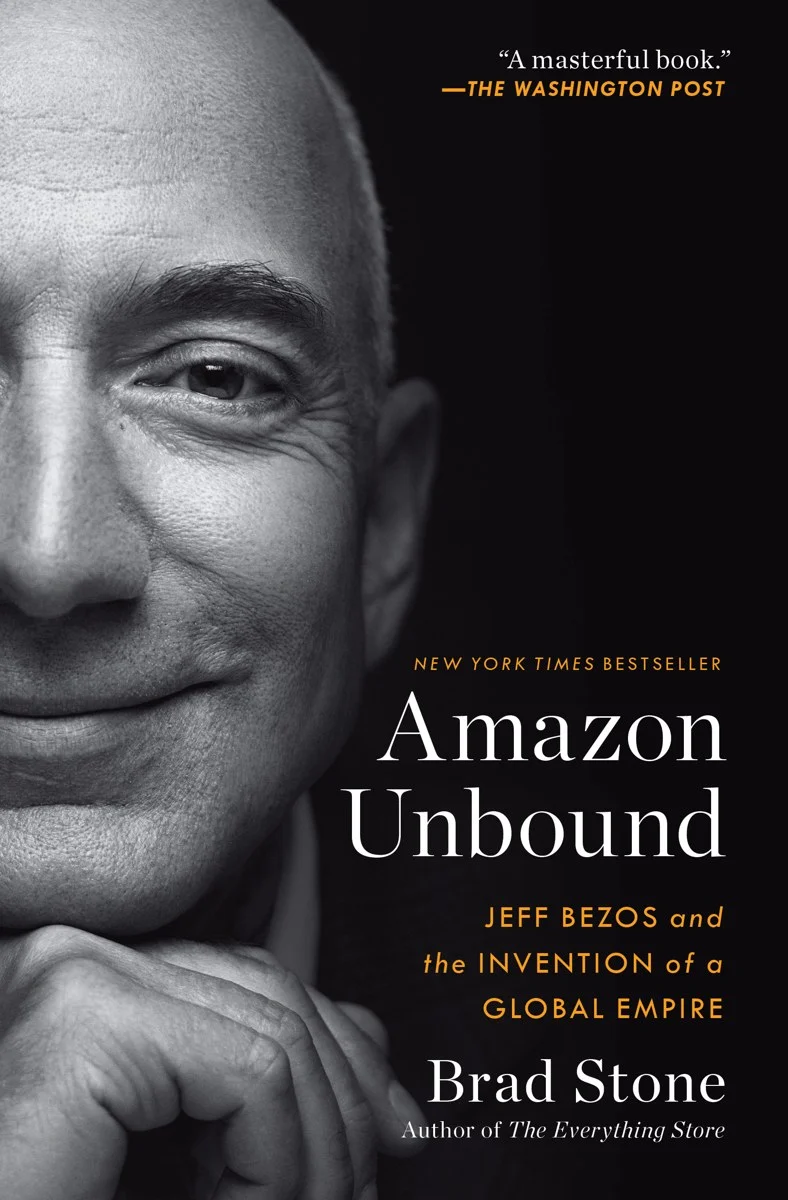
Amazon Unbound
Where the proceeds go
Some book links on this site earn a commission. Every penny of it goes to the American Cancer Society.
The American Cancer Society funds cancer research, runs free patient-support programs, provides lodging for patients traveling for treatment, and staffs a 24-hour helpline. You do not need to buy a book to help.
This review contains affiliate links. As an Amazon Associate I earn from qualifying purchases, and all commission is donated — details on my disclosure page.