 Watch on YouTube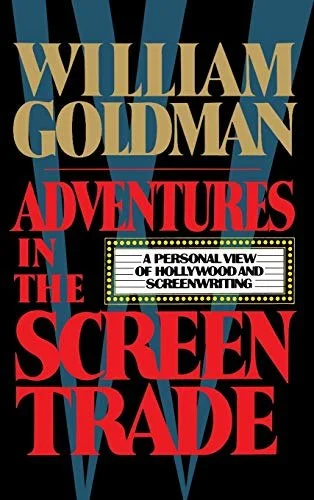
Three words from this book have done more damage to bad film-investment decisions than any due diligence process ever written.
Nobody knows anything.
William Goldman meant it precisely. Not that the industry is stupid, but that no one — no studio head, no star, no analyst — can reliably predict which film will work. Every green light is a guess dressed as a judgement. He had two Academy Awards and four decades of evidence when he wrote it, which is why it has never been credibly refuted.
What the book actually covers
Goldman wrote Butch Cassidy and the Sundance Kid and All the President's Men, winning an Academy Award for each, alongside Marathon Man, The Princess Bride and a great deal else. This is his account of how the business actually works from the writer's position, which is the least powerful seat with the clearest view.
The first half is anecdote as evidence — how specific films were made, what was cut and why, which decisions were driven by craft and which by fear, ego or scheduling. The Robert Redford material and the studio-politics chapters are the ones people remember. He is very funny and consistently indiscreet.
The second half is a working seminar. He takes one of his own short stories, walks through how he would adapt it, and then hands it to a director, a cinematographer, a producer and others to comment on their part of the same problem. It is the best demonstration in print of how a film is actually assembled by competing specialists, and why the result rarely resembles anyone's intention.
Underneath the humor is a consistent economic argument. Films are not selected on merit because merit is not detectable in advance. They are selected on comparables, star availability, fear of being blamed, and the previous thing that worked. Goldman's contempt for this is total and his diagnosis is accurate.
Why you should read it
Read it because "nobody knows anything" is a statement about risk distribution, not a joke. If outcomes in a business are genuinely unpredictable at the individual-asset level, then everything follows from that: portfolio construction over selection, downside protection over upside modeling, and deep scepticism toward anyone claiming a reliable process. Anita Elberse's Blockbusters, covered here, is essentially a formal response to Goldman's problem.
Read it for the account of how decisions actually get made, which is the least documented part of any creative industry. Goldman shows you the room — who is protecting themselves, who is chasing the last hit, who is deciding on grounds nobody would put in a memo.
And read it because it is a genuinely great book. Forty years on, it remains the most quoted and most enjoyable thing ever written about the film business, and the reason people still quote it is that the observations keep being right.
Key takeaways
- Nobody knows anything. Outcomes are not predictable at the level of the individual film, and any process claiming otherwise is performing confidence rather than possessing it.
- Unpredictability is an argument about structure. If selection cannot work, portfolio construction and downside management must do the work instead.
- Decisions are made defensively. Comparables, star availability and fear of blame drive more green lights than any assessment of the material.
- The film is assembled by competing specialists. The second half of the book demonstrates why the finished thing rarely resembles anybody's intention — including the writer's.
Meet the author
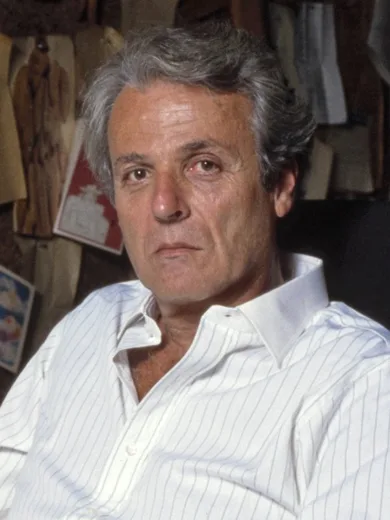
William Goldman was one of the most successful screenwriters in the history of American film, and one of the very few to become famous as a writer rather than despite being one. He won Academy Awards for Butch Cassidy and the Sundance Kid in 1970 and All the President's Men in 1977, and wrote Marathon Man, A Bridge Too Far, Misery and The Princess Bride, the last adapted from his own novel.
He was also a prolific novelist and a much-used script doctor, brought in to fix other people's films — a role that gave him an unusually broad view of how productions fail.
Adventures in the Screen Trade was published in 1983 and remains the standard text on the industry from the creative side. He followed it with Which Lie Did I Tell?, covering the subsequent decades.
He was born in Chicago in 1931 and died in New York in November 2018, aged eighty-seven.
Get your copy
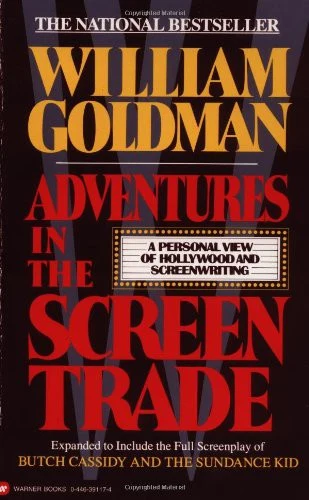
Adventures in the Screen Trade
Where the proceeds go
Some book links on this site earn a commission. Every penny of it goes to the American Cancer Society.
The American Cancer Society funds cancer research, runs free patient-support programs, provides lodging for patients traveling for treatment, and staffs a 24-hour helpline. You do not need to buy a book to help.
This review contains affiliate links. As an Amazon Associate I earn from qualifying purchases, and all commission is donated — details on my disclosure page.