 ← Back to the issue
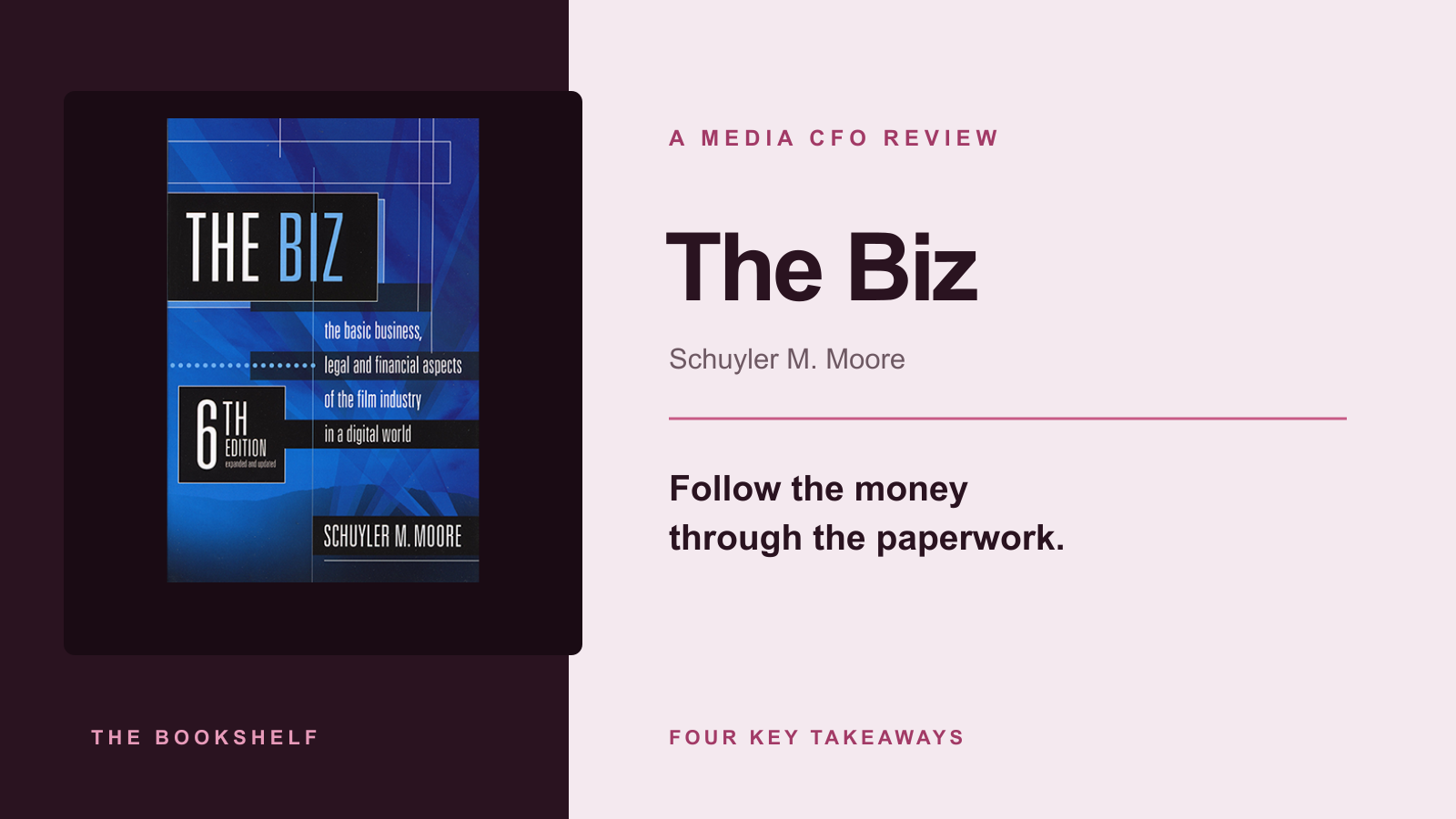
The Biz: follow the money through the paperwork
A film can have an audience, a distributor and an impressive financing plan and still leave its participants with very different expectations about who gets paid. The Biz is useful because it brings the business discussion back to the agreements that govern the money.
Schuyler M. Moore's book covers the business, legal and financial architecture of film: raising finance, structuring the business, distribution agreements, accounting, contingent payments and tax. Its value is the connection between those topics. The financing cannot be considered in isolation from the rights granted to a distributor or the definitions used to calculate what is payable.
For producers, the practical use is preparation. A commercial discussion becomes more productive when everyone can identify the entity entering the agreement, the rights being committed and the route by which receipts reach the project. For financiers, it is a way to ask more precise questions about what sits behind a presentation. For anyone moving between creative and financial roles, it provides vocabulary for the conversation between them.
The book's breadth also makes it a useful starting point for identifying the work a transaction still needs. A term that sounds straightforward in a meeting may require several connected definitions in the documents. An attractive participation can mean very little until the reader understands which receipts enter the calculation, which deductions come first and when statements and payments are due.
Media CFO interviewed Sky Moore in 2019. Pairing that archive conversation with the book puts a practitioner's explanation of his work alongside a reference to the underlying business mechanics. The interview remains a historical conversation; the book's value here is the discipline of asking how the deal operates.
Four key takeaways
- Map the cash path. Identify who receives each payment, what can be deducted and who gets paid next. A revenue headline does not describe the full payment sequence.
- Read the rights alongside the financing. The territories, media and duration being licensed shape the commercial opportunities that remain available to the project.
- Treat definitions as economic terms. Receipts, fees, costs and participation calculations can determine the outcome as much as the headline percentage.
- Make the documents work together. A financing assumption is useful only if the relevant agreements, reporting obligations and payment mechanics support it.
The reason to put The Biz on a media-finance reading list is straightforward: it helps connect a deal's commercial promise to the machinery needed to deliver it.
Continue the conversation
Media CFO's 2019 interview with Sky Moore.
The Biz, sixth edition, at Silman-James Press. Publisher information; no affiliate link.